
An insurance company's AI underwriting assistant both speeds up policy issuance and helps agents close more new policies. Which framing best captures a comprehensive ROI for this initiative?
Select an answer to reveal the explanation.
Short Explanation
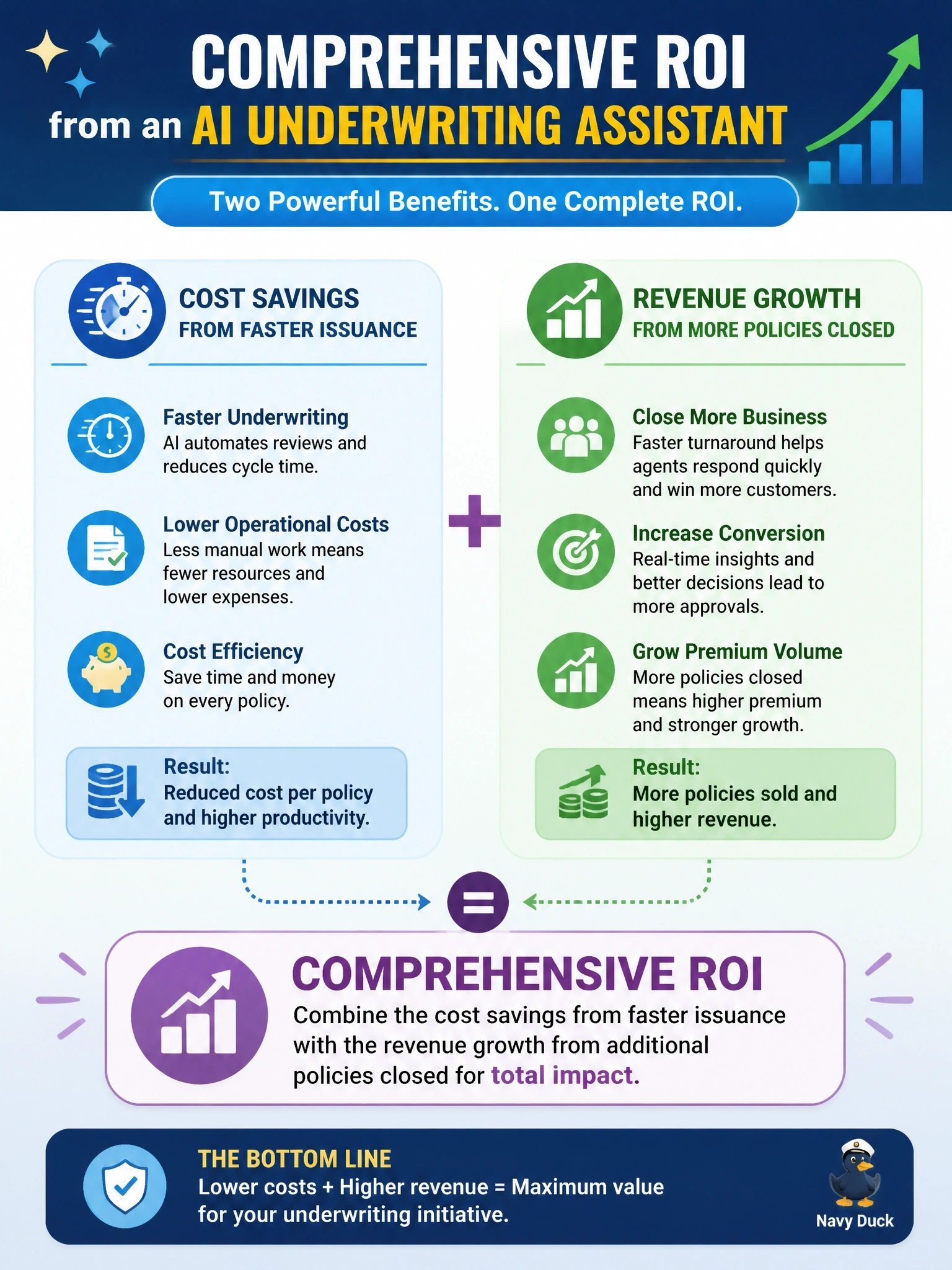
This tool pays off two ways at once — faster issuance saves you labor cost, and more closed policies grow revenue. A comprehensive ROI figure adds both together instead of picking whichever number sounds better in the meeting.
Full Explanation
Because this initiative creates value in two distinct categories — cost savings from faster issuance and revenue growth from additional policies closed — a comprehensive ROI figure has to combine both rather than reporting either one alone. One answer captures real value by counting only the additional revenue from new policies, but it ignores the cost-side benefit of faster issuance entirely, understating the tool's total return. Another answer makes the same mistake in reverse, reporting only the labor cost saved from faster issuance while leaving out the revenue the tool helped generate through additional closed policies. A third answer reports the number of policies the AI assistant reviewed during the quarter, which is an activity count reflecting usage volume, not a dollar figure representing benefit delivered. The pattern to watch for: whenever a stem describes a tool improving both a cost metric and a revenue metric, the strongest answer combines the two into one value estimate, while answers that isolate a single category — no matter how easy to verify or how attractive to leadership — understate the true return.