
An automotive manufacturer is building an ROI framework for its predictive-maintenance AI program before presenting it to the finance committee. Which approach best reflects a comprehensive ROI framework?
Select an answer to reveal the explanation.
Short Explanation
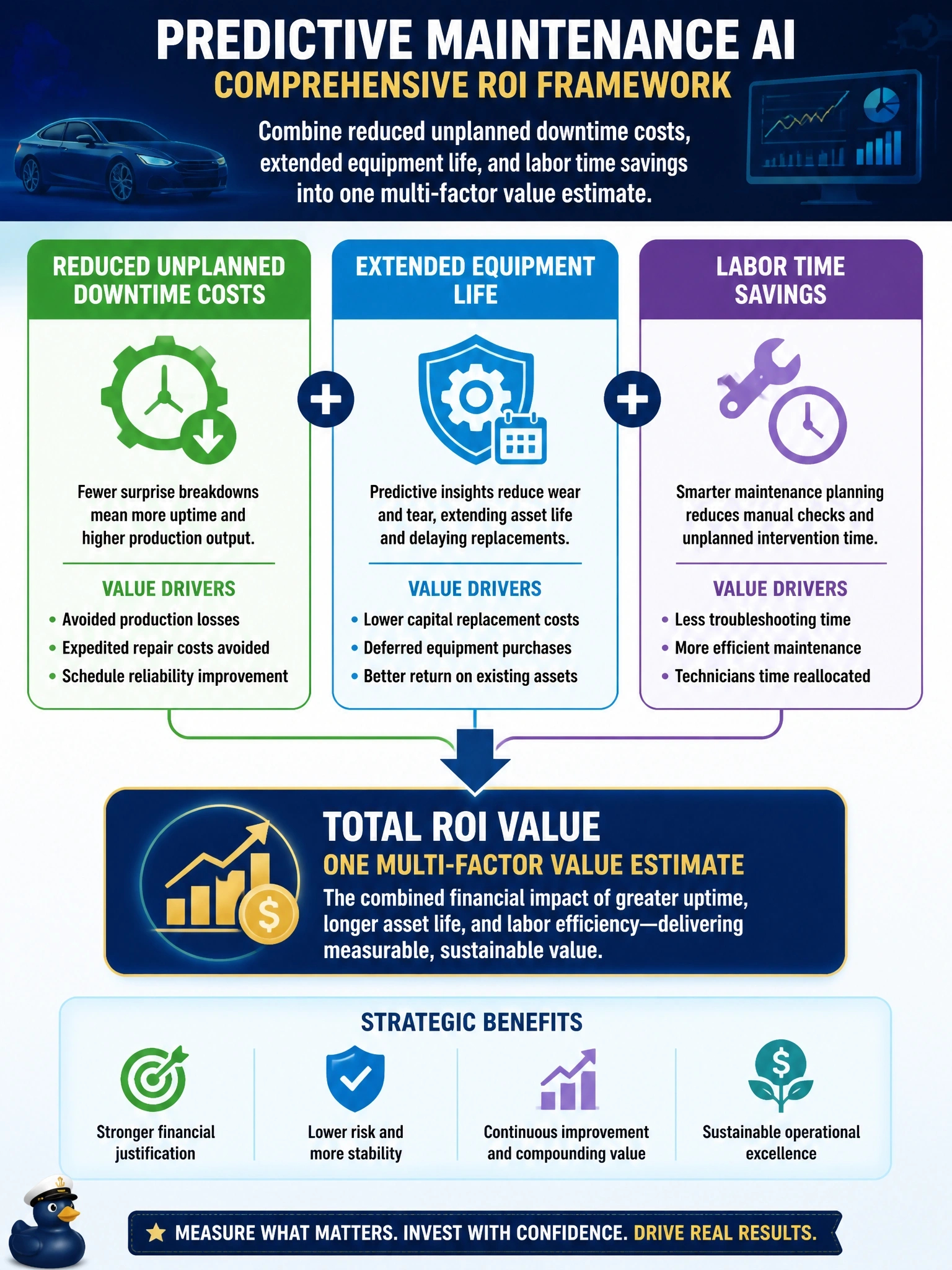
A finance committee wants the whole picture, not just the flattering slice. Blend downtime-cost avoidance, longer equipment life, and labor savings into one number, and you've built something that reflects the program's total value rather than a single cherry-picked metric.
Full Explanation
A comprehensive ROI framework aggregates every material benefit stream — here, downtime-cost avoidance, extended equipment life, and labor time savings — into one combined value estimate rather than leaning on a single convenient figure. One answer reports only the reduction in downtime costs because it's the easiest number to defend to finance, but cherry-picking the strongest single metric still leaves real value on the table and doesn't reflect a comprehensive view. Another answer reports only the platform's annual subscription cost, which is a cost figure with no benefit attached at all — a return can't be calculated without a benefit side of the equation. A third answer reports the number of maintenance alerts generated during the pilot, which is an activity count; it shows the system was busy but says nothing about dollars saved or value created. The general test-taking cue: when a stem describes an AI initiative producing value in more than one form, the comprehensive answer is almost always the one that combines those value streams rather than the one that isolates a single tempting number.