
An auto parts supplier is preparing to launch an AI demand-forecasting tool on Amazon SageMaker AI to replace manual inventory forecasts. Before go-live, what should the program team do first?
Select an answer to reveal the explanation.
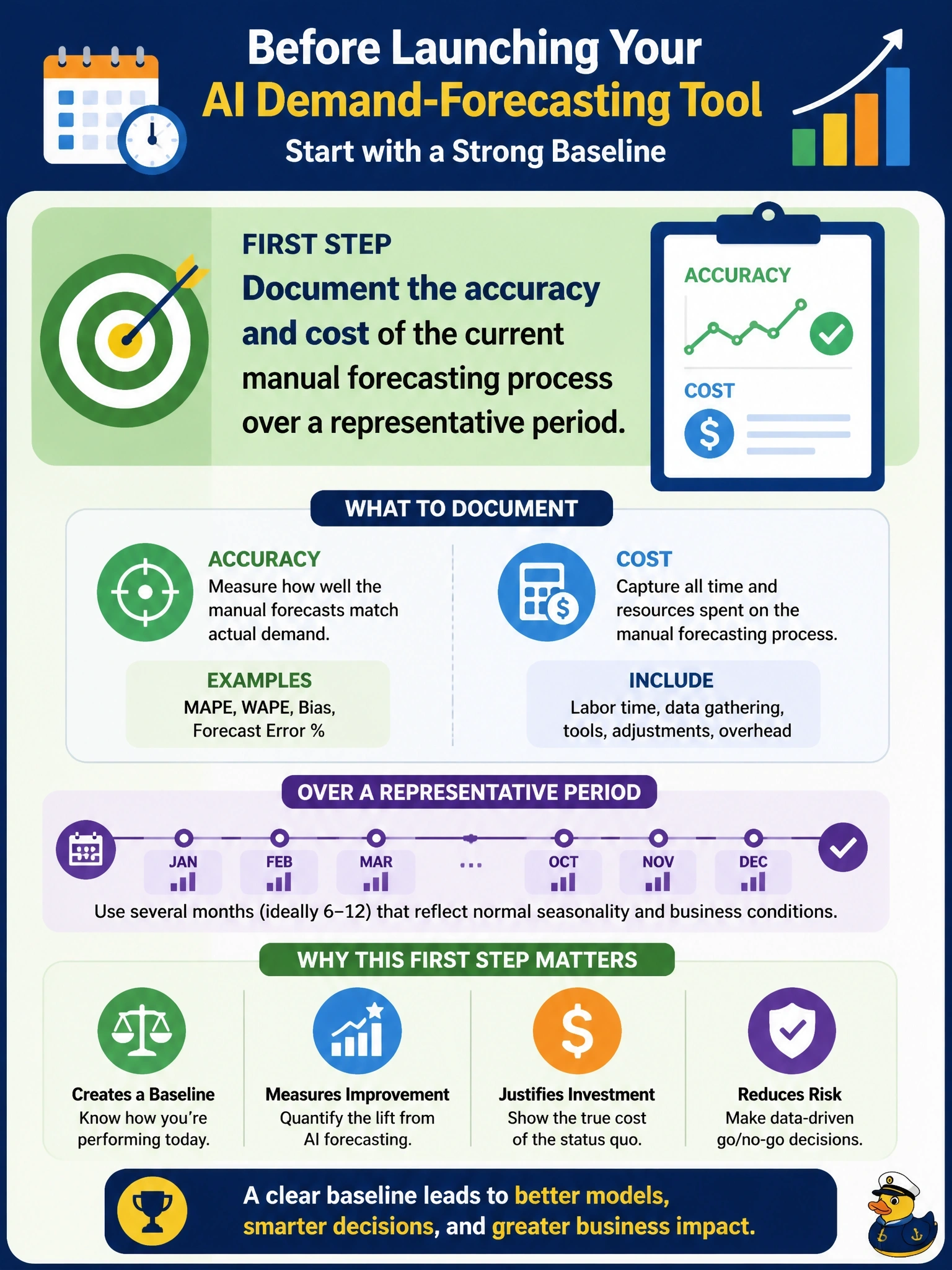
Short Explanation
Think of it like this: you can't tell if a new tool made forecasts better if you never wrote down how good the old forecasts were. Documenting the accuracy and cost of the current manual process before go-live gives you the yardstick everything else gets measured against. Skip that step, and every claim about improvement afterward is just a guess dressed up as a number.
Full Explanation
Documenting the accuracy and cost of the current manual forecasting process before go-live is the correct first step because it's the only source of truth for what "improvement" will mean later — you need your own numbers, from your own data, before the new tool starts touching the process. Selecting the AI vendor's default accuracy target as the success benchmark substitutes someone else's generic number for this supplier's actual performance; a vendor's benchmark reflects their training data and their other customers, not this company's specific product mix or historical accuracy, and using it as the bar can make a genuinely good deployment look like it underperformed, or hide a mediocre one. Announcing a target forecast accuracy improvement to stakeholders before launch is a step out of order — you can't credibly commit to an improvement number until you know the starting point, and doing so risks locking in a target that's either trivially easy or unrealistically ambitious. Waiting until the AI tool has been live for a full quarter before measuring anything is the most damaging option, because it skips baseline capture at the only moment it's actually possible: before the new tool starts influencing outcomes. Once the manual process is retired, that pre-deployment condition is gone for good. The operational check: if you can still measure the "before" state, you haven't missed your window — capture it now, in this company's own numbers, before anything changes.