
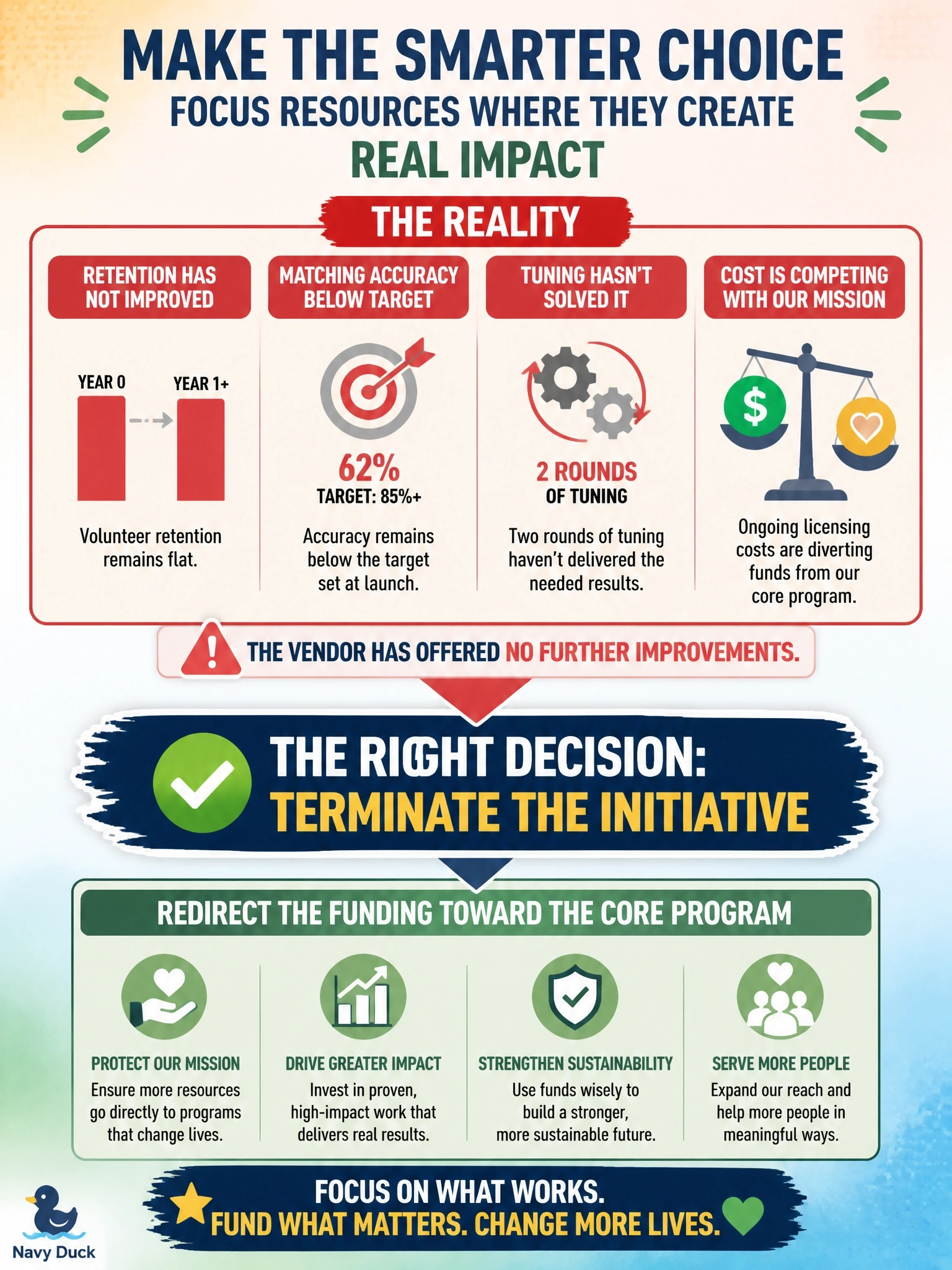
A non-profit's AI-based volunteer-matching tool has been in production for over a year. Volunteer retention has not improved, matching accuracy remains below the target set at launch despite two rounds of tuning, and the tool's ongoing licensing cost is now competing directly with funding for a core program. The vendor has offered no further improvements. What is the most appropriate decision?
Select an answer to reveal the explanation.
Short Explanation
Think of it like an apartment that keeps failing inspection after two rounds of repairs the landlord already tried — at some point you stop paying rent and move your money somewhere it works. A year in, two tuning attempts down, a vendor with nothing left to offer, and licensing now eating into mission funding: that's not a pause situation, that's termination.
Full Explanation
Termination fits because every signal that normally argues for patience has already been exhausted: a full year in production, two separate tuning cycles, and a vendor confirming it has no further improvements to offer. That's not an early-stage stumble, it's a mature initiative that had its fair chance and missed its target on both key metrics, retention and matching accuracy. Continuing to run the tool indefinitely because volunteer matching is inherently valuable work confuses the worth of the mission with the performance of this specific tool; a good cause doesn't justify continued spending on a tool that isn't delivering. Expanding the tool to additional volunteer programs would only spread a proven-ineffective approach across a wider footprint, generating more data about a system that has already shown it can't hit its target. Pausing for another six months without changing anything is really a third tuning attempt in disguise, since the organization already tried adjusting the system twice without success, and holding steady with no new plan won't produce a different outcome. What tips this firmly to termination is the opportunity cost: licensing fees are now competing directly with a core program's funding, so every dollar spent keeping an underperforming tool alive is a dollar not spent on mission-critical work. Check for this pattern whenever a tool has had a genuine trial period, a real attempt at correction, and still can't clear its bar while draining resources elsewhere.