
A film production company is comparing GenAI tools for summarizing lengthy script drafts. One option supports a much larger context window than the other but costs more per use. The scripts the team works with are rarely longer than a few pages. Which consideration should most influence the decision?
Select an answer to reveal the explanation.
Short Explanation
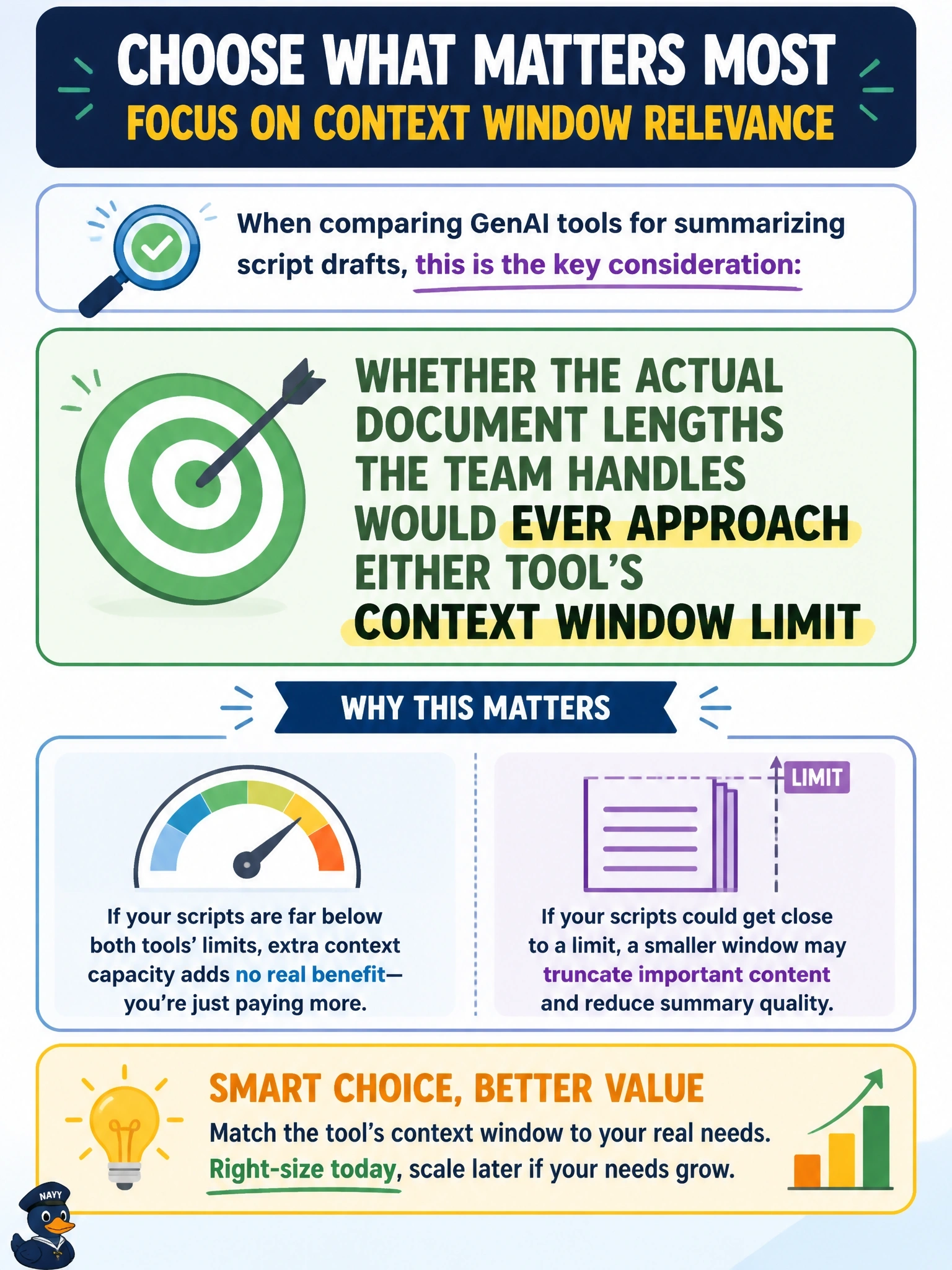
Think about buying a truck to move a studio apartment's worth of furniture — more capacity than you'll ever use just means paying for space that sits empty. The real question is whether the team's actual script lengths would ever come close to either tool's context window limit; since scripts run a few pages, the smaller, cheaper option is almost certainly plenty.
Full Explanation
The right call is matching capability to actual need: since the scripts in question rarely exceed a few pages, the smaller context window is very likely more than sufficient, and paying extra for a much larger one buys headroom the team will never use. Always defaulting to the largest available context window ignores the team's real usage pattern and pays for capacity that provides no practical benefit here. Swinging the other way and always picking the cheapest option regardless of fit is just as risky — it could reintroduce the very truncation and quality problems context windows exist to prevent if actual documents ever ran longer than expected. Dismissing context window as a "purely technical" detail irrelevant to a business decision misses that it directly drives cost and output quality — exactly the kind of technical concept a business decision-maker needs to reason about strategically, even without configuring it themselves. The operational check: before comparing price tags, size up the team's typical document lengths against each option's limit, and only pay for extra headroom if there's a real chance of needing it.