
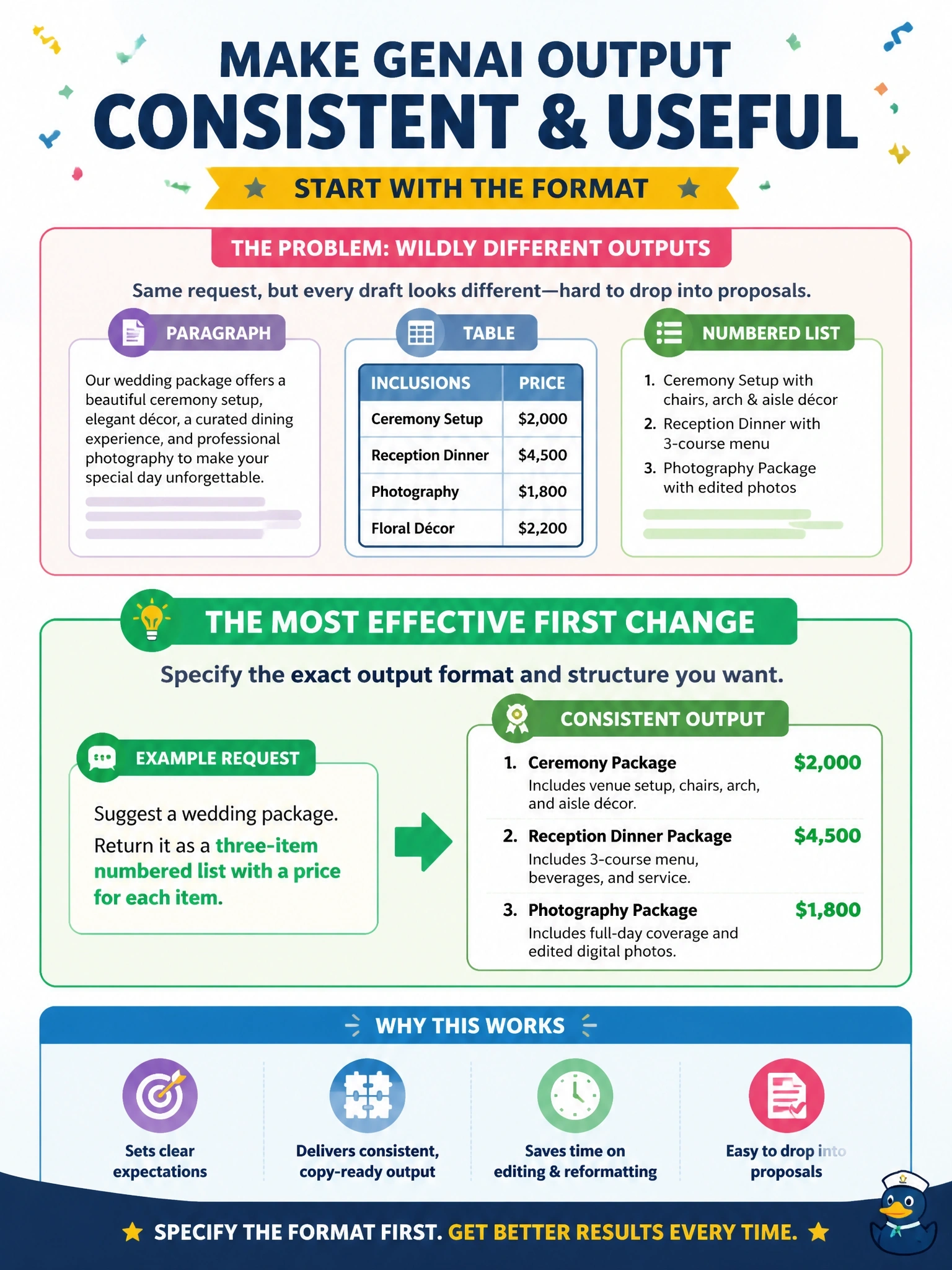
A resort's events team asks a GenAI tool to "suggest a wedding package," and the drafts vary wildly in structure — sometimes a paragraph, sometimes a table, sometimes a numbered list — making them hard to drop straight into proposals. What is the most effective first change the team should make to their requests?
Select an answer to reveal the explanation.
Short Explanation
Ordering off a menu with no photos versus pointing at exactly what you want is the difference here — a vague request gets vague, inconsistent drafts back. Tell the tool the exact output format you want, like a three-item numbered list with a price per item, and the guesswork disappears.
Full Explanation
Inconsistent structure is almost always a symptom of an underspecified request, and the direct fix is to state the desired format explicitly — a numbered list, a fixed number of items, a price per line — rather than leaving structure up to chance. Submitting the same request repeatedly and cherry-picking whichever draft happens to be well-formatted treats a solvable problem as a lottery; it burns time regenerating output instead of fixing the actual cause in the request itself. Disabling formatting options entirely doesn't produce the specific structure the team wants either — it would strip formatting rather than create the consistent numbered-list-with-pricing layout they're after, so it solves the wrong problem. Switching to a different vendor's tool jumps to a drastic step before the far cheaper option — rewording the request — has even been tried, and a new tool given the same vague prompt would likely produce the same scattershot results. The operational habit to build: whenever output format varies request to request, describe the target structure explicitly before concluding the tool itself is unreliable.