
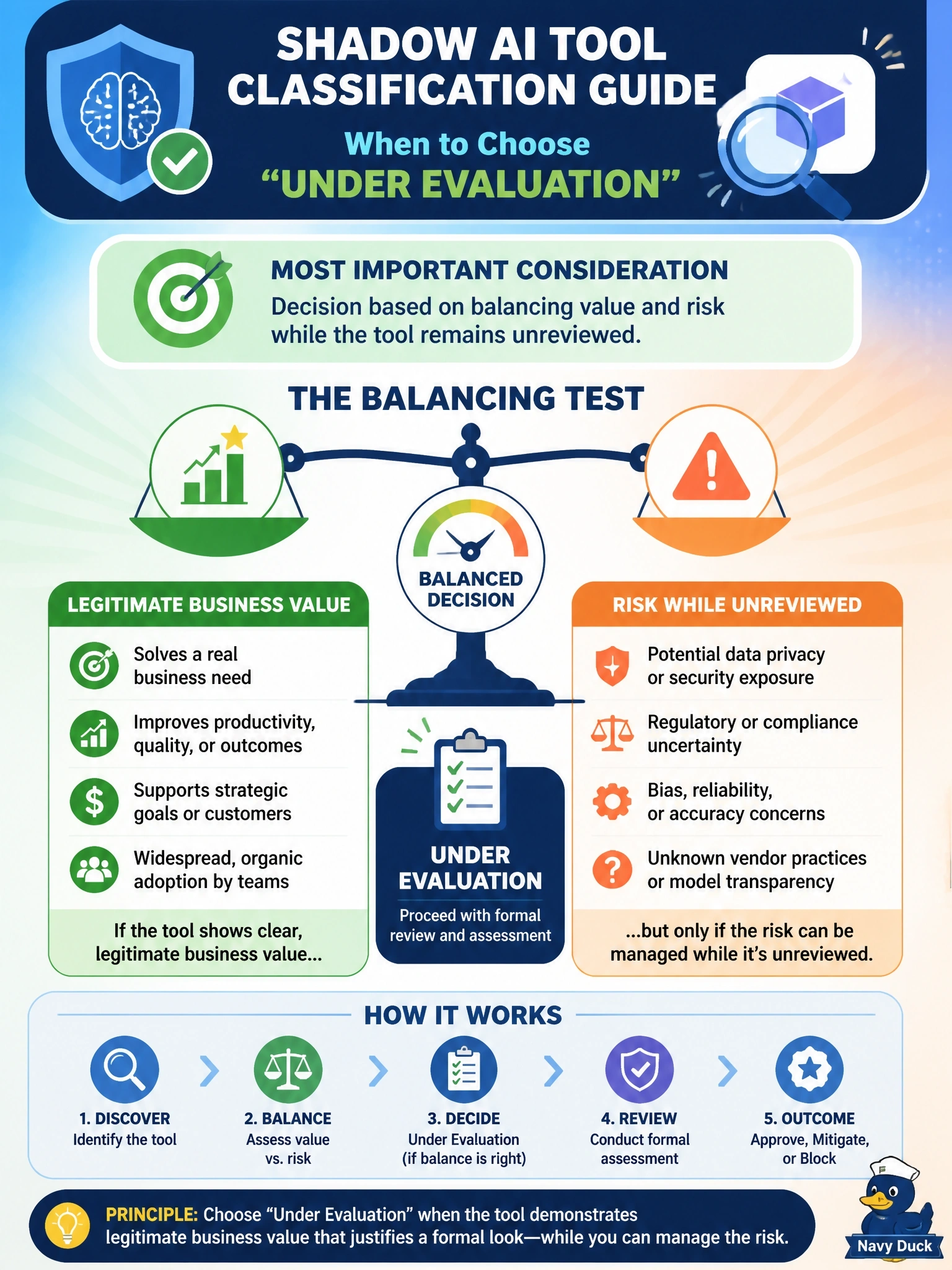
A retailer's AI governance committee is designing its shadow AI classification system. Which consideration is most important when deciding whether a newly discovered tool should be labeled "under evaluation" rather than immediately "blocked"?
Select an answer to reveal the explanation.
Short Explanation
A doctor weighs whether a procedure's benefit is worth its risk before you'd ever see it greenlit. 'Under evaluation' exists for tools with real business value where that tradeoff genuinely favors a closer look, not because a vendor's name is familiar to you or a memo would be awkward to write.
Full Explanation
The purpose of an "under evaluation" status is to hold a tool that shows genuine business value pending formal review, while weighing that potential value against the risk of leaving it unreviewed in the meantime, which is the substantive judgment a governance committee must make. The discovery-channel option focuses on how the tool was found, but complaint versus audit has no bearing on whether the tool itself merits evaluation versus immediate blocking. The communication-difficulty option lets communication convenience drive a risk decision, which inverts the priority; classification should be driven by risk and value, with communication handled as a separate, secondary step. The vendor-reputation option substitutes brand recognition for actual risk and value assessment; a well-known vendor doesn't guarantee the tool has been reviewed or is appropriate for the company's data and use cases. The general principle: classification decisions should be grounded in a genuine risk-versus-value assessment of the tool itself, not the discovery method, communication ease, or vendor name recognition.