
Which of the following best describes why "data quality" is a business concern, not just a technical one, for AI initiatives?
Select an answer to reveal the explanation.
Short Explanation
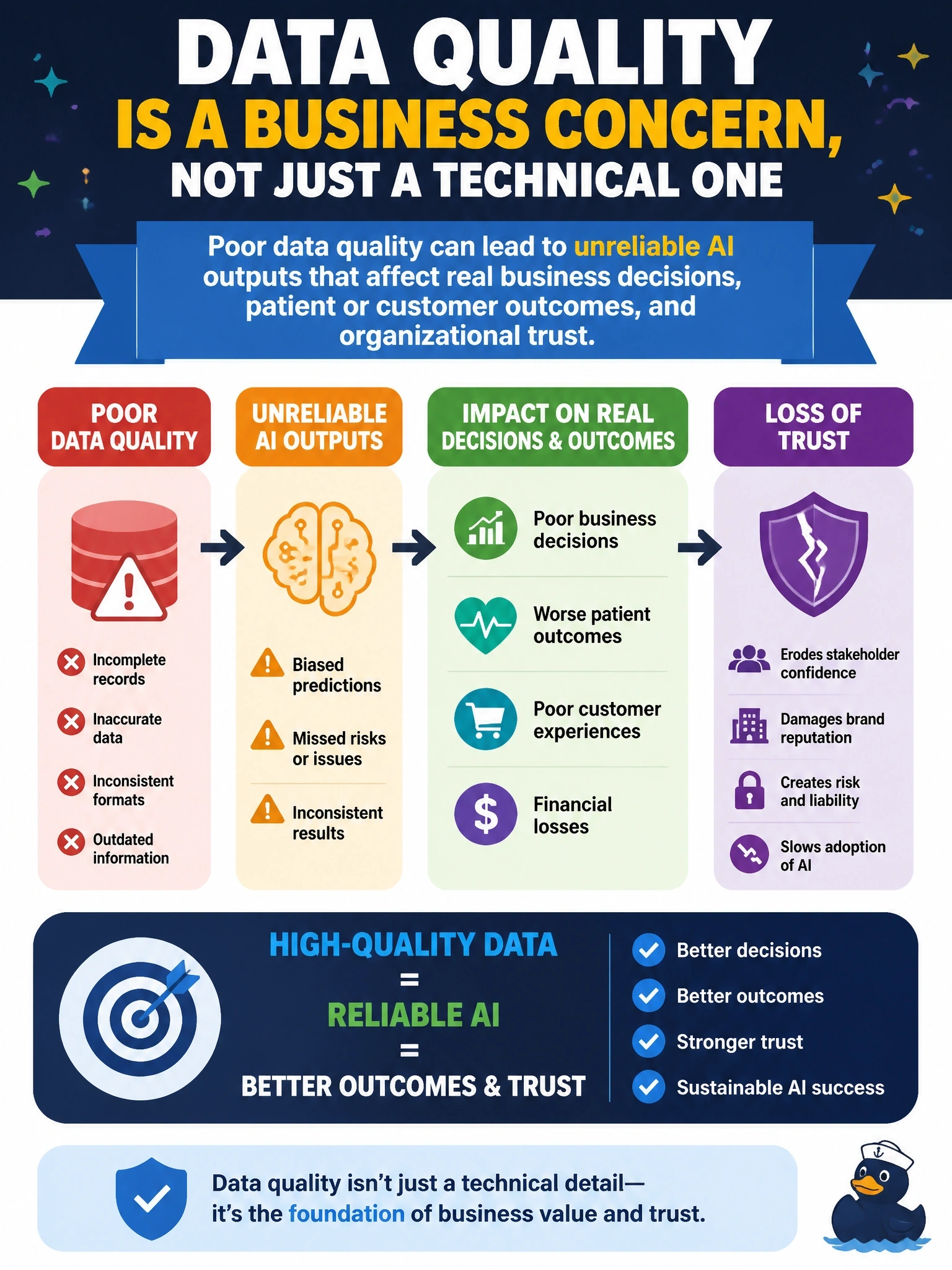
No matter how skilled the chef, spoiled ingredients still ruin the meal — and that's exactly the risk when the data feeding your model is inaccurate or incomplete. Poor data quality can produce unreliable outputs that affect real business decisions, customer outcomes, and the trust you've built on top of them.
Full Explanation
Poor-quality data doesn't stay a technical footnote — it travels straight through the model into the decisions, patient or customer outcomes, and organizational trust that depend on its outputs. That's what makes data quality a business issue: the consequences of a flawed model show up in denied claims, missed churn signals, or misallocated resources, not just in an engineer's error log. The claim that responsibility rests solely with the AI vendor ignores that most organizations supply and continue to feed data into the systems they operate, making data quality a shared obligation rather than something to outsource entirely. The idea that simply labeling a product "AI-powered" resolves quality issues is a marketing fantasy — a label changes nothing about whether the underlying data is accurate, complete, or representative. Suggesting leaders don't need to think about data quality until after deployment gets the timing backwards: flawed training data shapes a model's behavior from day one, so quality problems caught late are often the hardest and most expensive to fix. The operational check for leadership: before approving or trusting an AI initiative, ask who owns data quality, how it's measured, and whether it's reviewed continuously — not just at launch.