
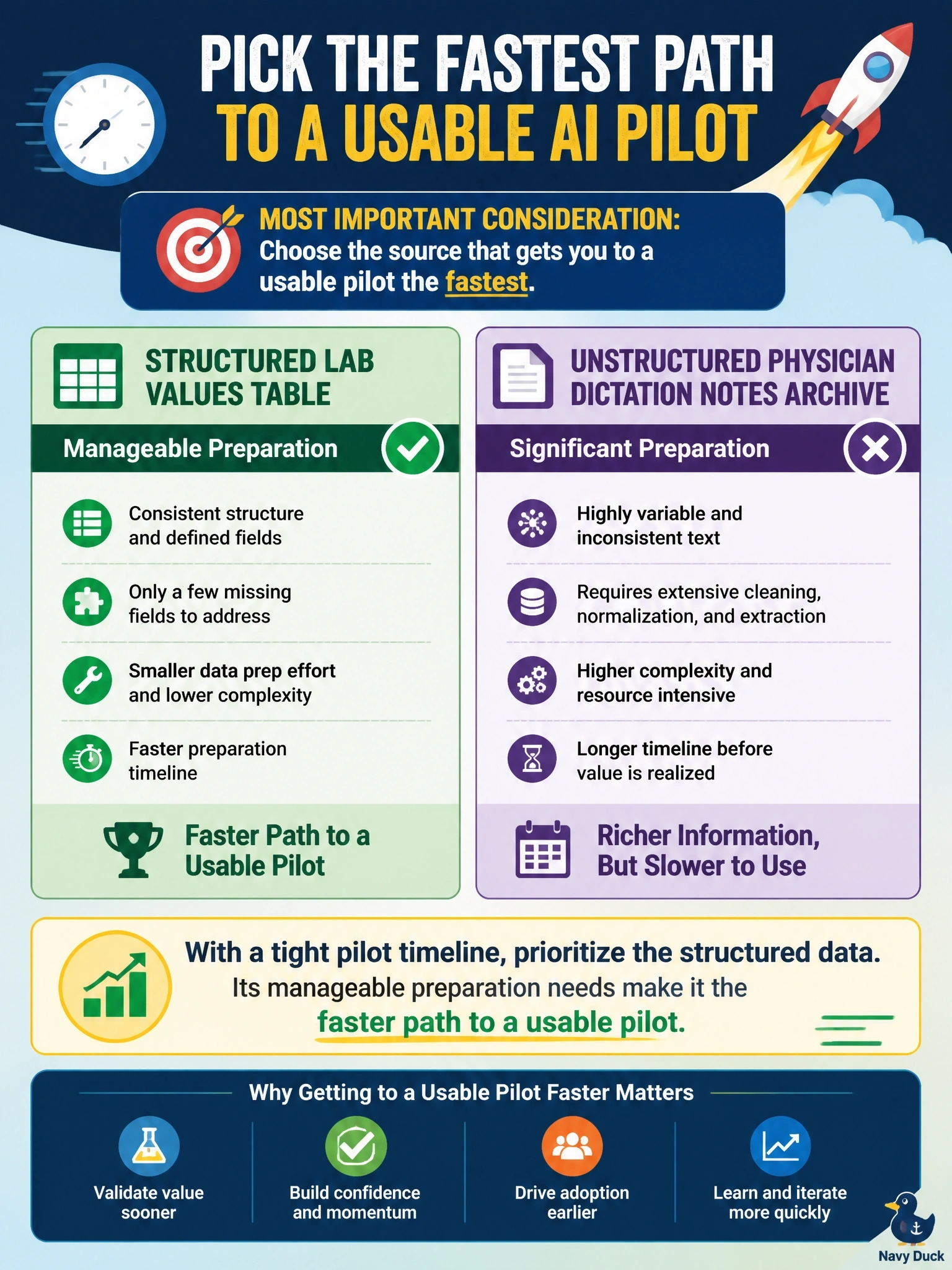
A hospital's AI steering committee is choosing which data source to prioritize for an initial pilot: a structured table of lab values with a few missing fields, or a large archive of unstructured physician dictation notes that would need significant preparation. Given a tight pilot timeline, what is the most important consideration?
Select an answer to reveal the explanation.
Short Explanation
Think of it like choosing a route under a deadline: the highway with a couple of potholes gets you there fast, even if the scenic backroad has better views along the way. The structured lab table has minor gaps but is close to ready, while the dictation archive — however rich — needs real construction work before it's drivable. On a tight timeline, readiness wins.
Full Explanation
Given a tight timeline, the committee should weigh how quickly each source can realistically become usable: structured data with minor gaps is typically faster to prepare than a large unstructured archive requiring significant processing, even though the unstructured source might eventually offer richer insight. Focusing on total file size does not indicate how ready a data source is for use — a large archive can still require extensive preparation regardless of its size. Proposing to relabel the data type would not change the actual structure of the table or make planning more accurate; it simply introduces confusion. Focusing on recording equipment quality has no bearing on whether the data is structured or unstructured, or on how quickly it can be prepared for a pilot. The underlying principle is that data type directly affects project feasibility within a given timeline, not just theoretical data richness.