
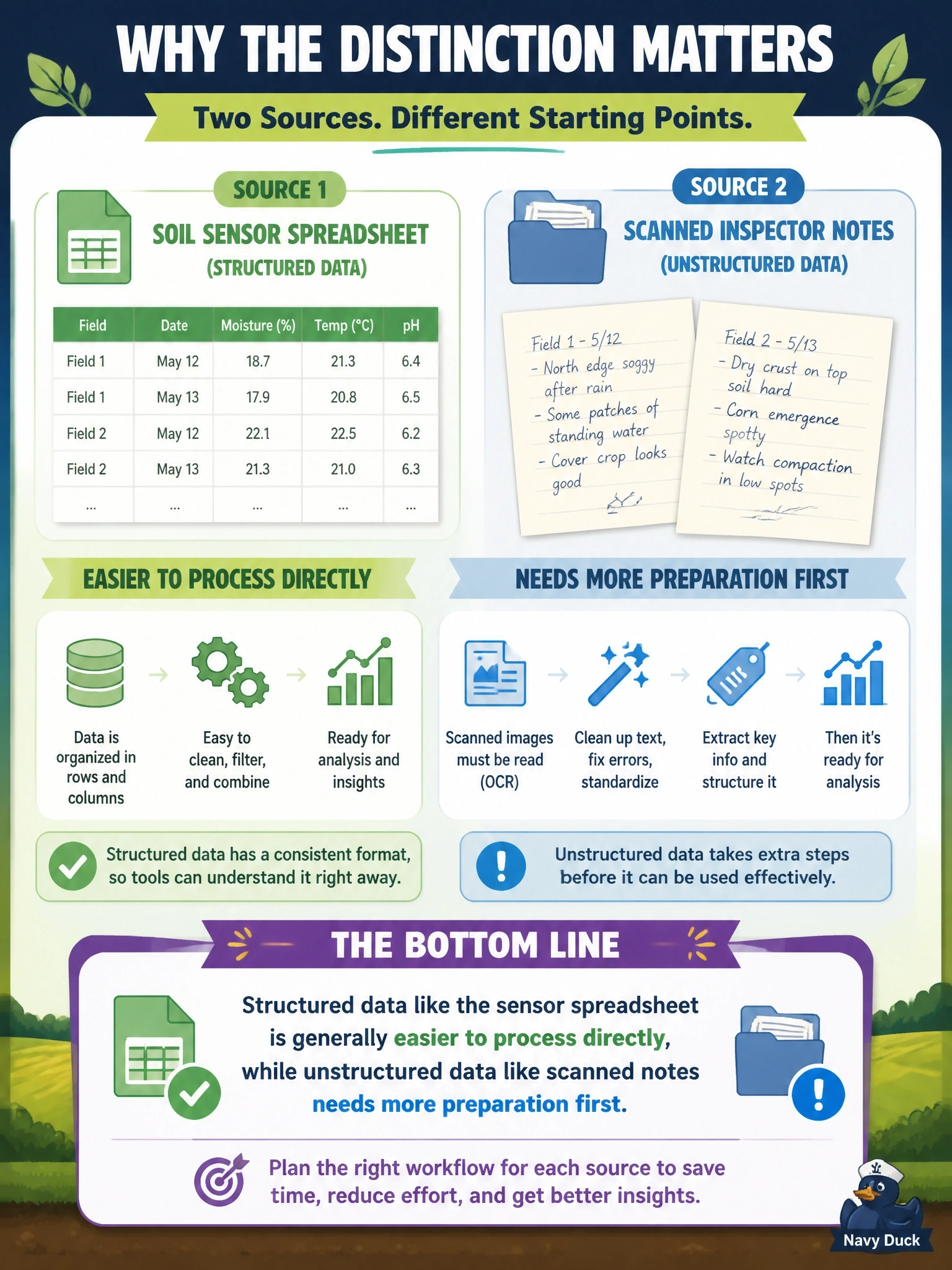
A cooperative's AI initiative will draw on two sources: a spreadsheet of soil-sensor readings organized by field and date, and a folder of scanned handwritten inspector notes. Why does this distinction matter for planning the initiative?
Select an answer to reveal the explanation.
Short Explanation
Picture meal prep: the sensor spreadsheet is already chopped and measured, ready to go straight into the pan. The scanned handwritten notes are still whole vegetables in the crate — someone has to wash, peel, and chop them before you can use them, and that's exactly why this distinction matters for planning, right down to the prep time.
Full Explanation
Structured data's predefined fields make it more directly usable, while unstructured sources like scanned handwritten notes typically require extraction and processing steps before an AI system can use them — a real difference that shapes project scope and timeline. Claiming both sources are equally ready glosses over this practical difference, which risks the cooperative underestimating the work involved in preparing the scanned notes. Claiming unstructured data is always more valuable overgeneralizes; unstructured data can be valuable, but claiming it is "always" more valuable than structured data ignores that value depends on relevance and quality, not just data type. Claiming the distinction does not matter denies a well-established practical reality: different data types require different handling, and AI systems do not treat all sources identically. For planning purposes, recognizing this distinction lets the cooperative sequence its initiative realistically, starting with data that requires less preparation.