
A hospital's data team is preparing information for an upcoming AI initiative. Which example correctly pairs a data type with its category?
Select an answer to reveal the explanation.
Short Explanation
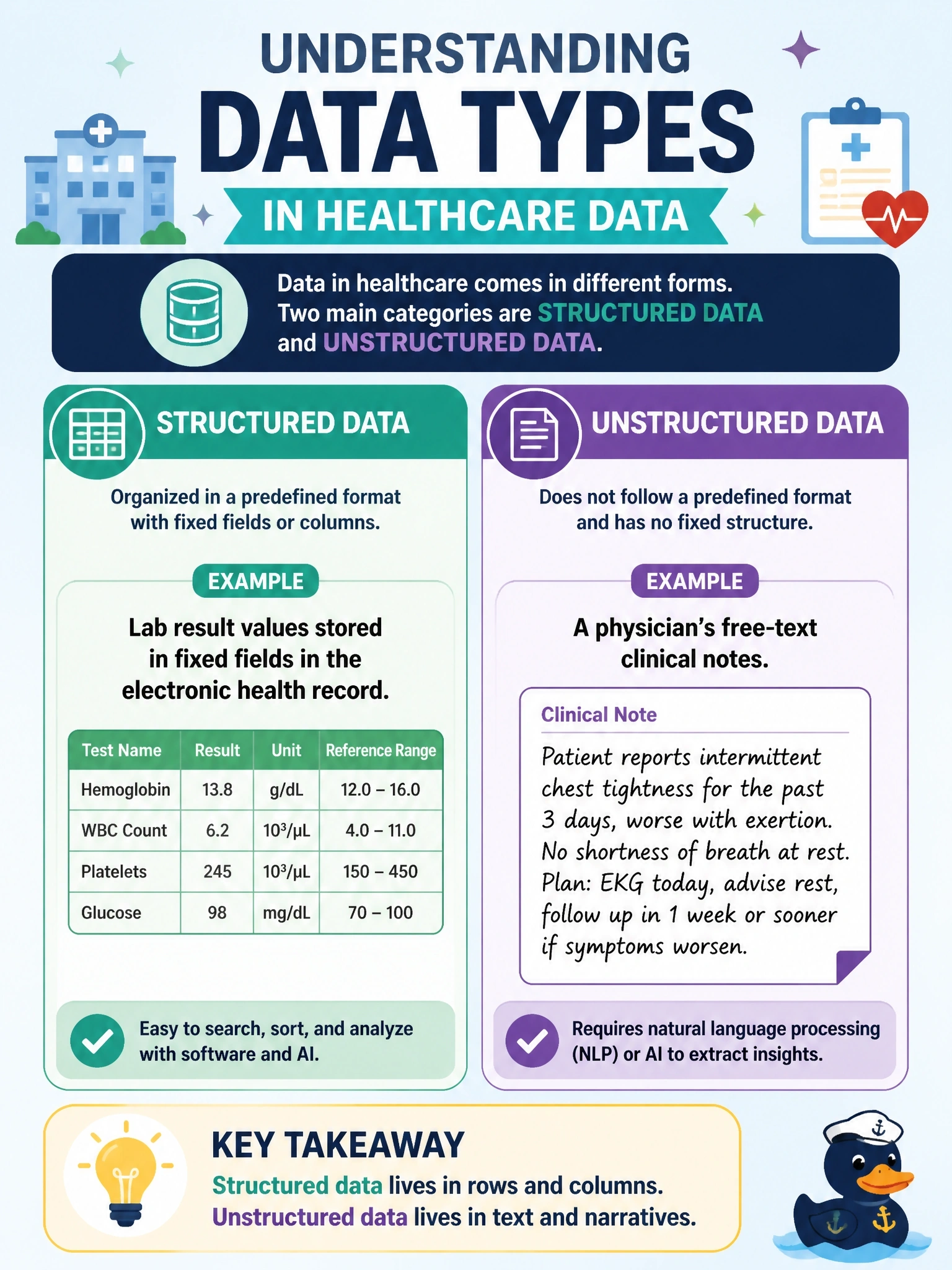
Picture a filing cabinet next to a shoebox of loose papers: lab values live in labeled drawers — fixed fields you can already read — while a physician's free-text notes are just prose sitting in a folder, waiting for NLP to sort out what it means. Same record, two very different levels of readiness for your project.
Full Explanation
Structured data is organized into predefined fields, such as numeric lab values in dedicated record fields, while unstructured data — like free-text physician notes — lacks that fixed format and requires additional processing to extract meaning. Labeling appointment times as unstructured confuses frequency of change with structure; times stored in defined date and time fields remain structured data regardless of how often they are updated. Labeling free-text notes as structured mistakenly treats grammatical, readable text as structured simply because it follows language rules — structure in this context refers to predefined data fields, not linguistic correctness, so free text remains unstructured. Claiming the two categories are really the same collapses an important distinction that affects how much preparation each data type needs before it can be used effectively in an AI initiative. Recognizing which records fall into each category helps the data team scope realistic timelines, since unstructured sources like notes typically require more preparation than structured fields.