
After an audit finds that a packaging line shipped cartons with missing lot codes, an investigator asks why the code was missing, why the printer was offline, why no alarm sounded, and why the sensor bypass was never logged, uncovering an unmaintained preventive-maintenance schedule. Which problem-solving technique is the investigator applying?
Select an answer to reveal the explanation.
Short Explanation
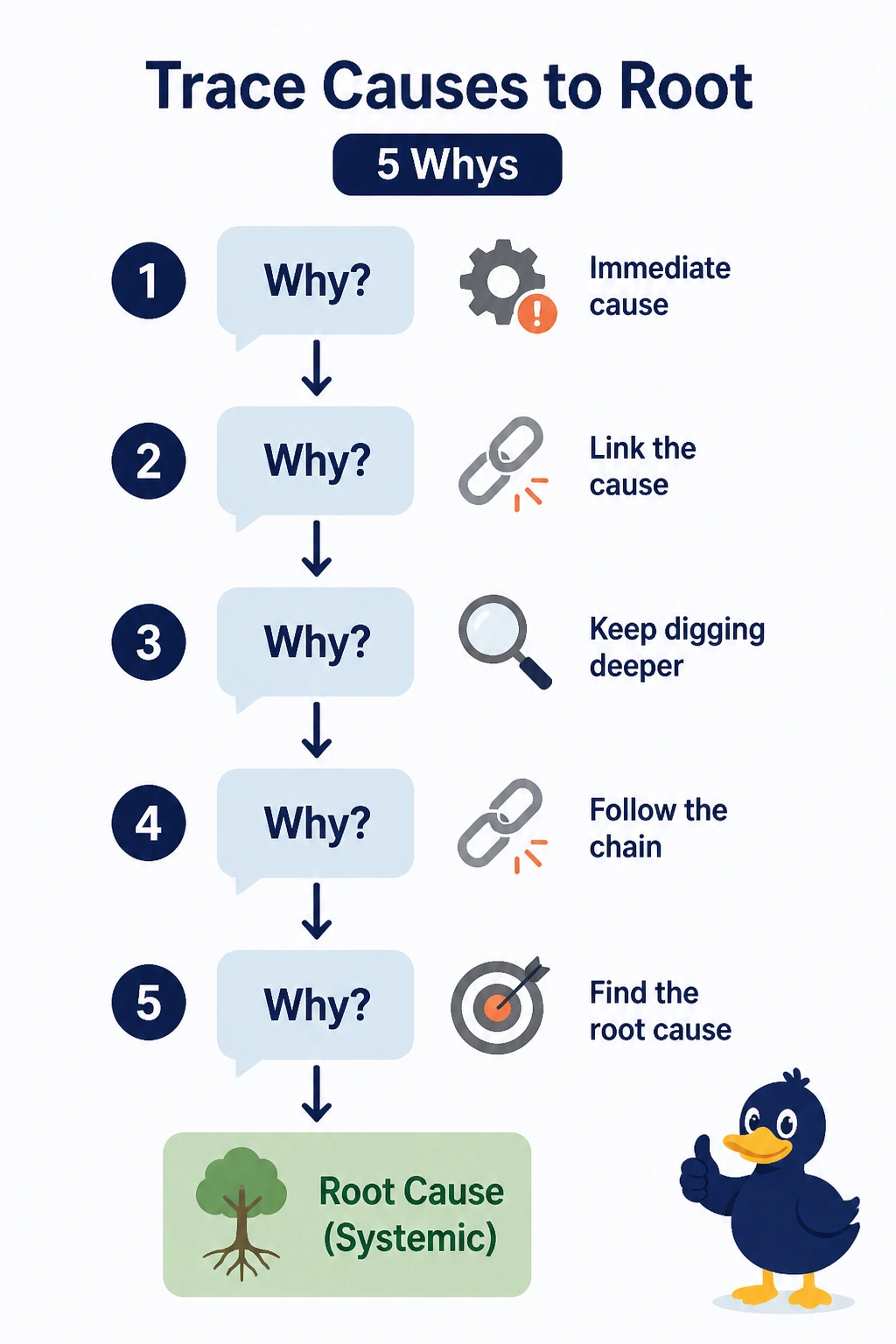
Stopping at 'the printer was offline' is like blaming a dead battery without asking why the alternator failed! When you peel back successive layers of 'why' until you hit a broken maintenance system, you are using the 5 Whys technique. The trap is confusing this step-by-step root-cause drill-down with statistical or ranking tools.
Full Explanation
Effective corrective action depends on tracing an immediate symptom back to the underlying management system failure that allowed it to occur. Applying The 5 Whys technique to trace successive cause-and-effect links to a systemic root cause guides the investigator past surface excuses like operator oversight to actionable gaps such as a missing preventive-maintenance schedule. This iterative questioning is simple to facilitate and works well for linear cause-and-effect chains. Choosing A scatter diagram to measure correlation between conveyor speed and print legibility tests whether two numerical variables move together rather than uncovering why a control was bypassed. Selecting A prioritization matrix to rank competing printer vendors against weighted budget criteria is a decision-making tool for comparing options, not a root-cause investigation method. Using A histogram to display the frequency distribution of carton weights across shifts summarizes measurement spread and centering rather than tracing causal chains. As a caveat, complex failures with multiple interacting branches may require a cause-and-effect diagram alongside iterative questioning. When reviewing an auditee's CAPA submission, check that each 'why' step is backed by objective evidence rather than unsupported assumptions.
Prefer to study offline? Printable PDF study book + test engine ($7.50, unofficial). These questions stay free here.