
During a post-audit root-cause workshop at a regional hospital, a quality team notices that two senior physicians dominate open brainstorming, causing junior nurses and technicians to withhold their ideas. Which facilitation tool should the team use to ensure equal participation and structured prioritization?
Select an answer to reveal the explanation.
Short Explanation
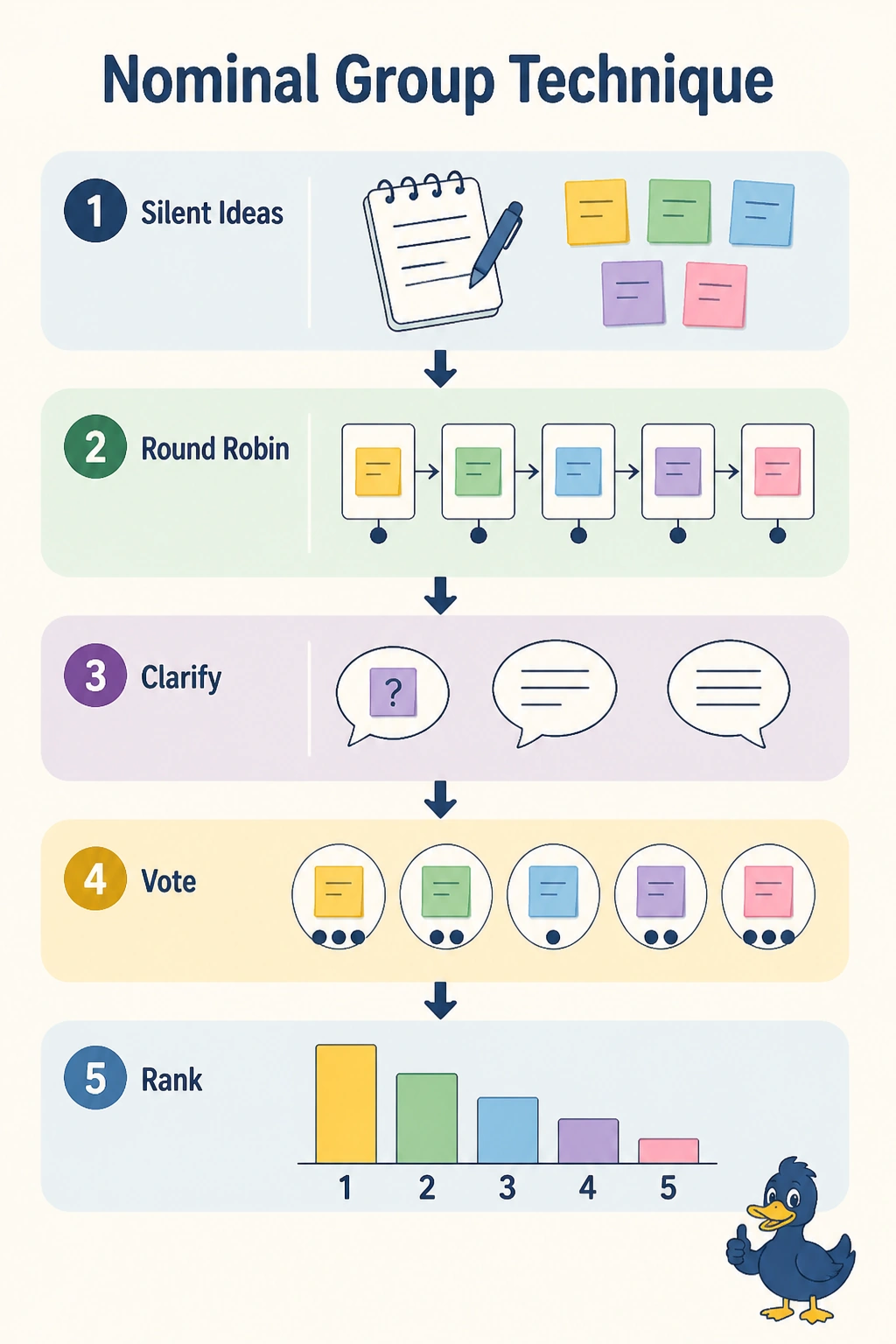
When loud voices hijack a room, quiet experts tune out—and that is exactly when you need a tool that gives everyone an equal microphone on paper first. The trap is picking a diagramming or scheduling tool instead of a structured group-facilitation method. Use silent idea generation followed by round-robin sharing and voting.
Full Explanation
To counter hierarchy and vocal dominance in a cross-functional workshop, the team should use a Nominal group technique. This structured method separates silent individual idea generation from round-robin sharing and weighted voting, ensuring junior nurses and technicians contribute equally before senior members steer the discussion. An Interrelationship digraph is designed to map complex cause-and-effect links among already identified factors rather than eliciting quiet participants' ideas during brainstorming. A Failure mode and effects analysis proactively scores potential process failure modes, severity, occurrence, and detection, but it does not solve group-dynamics dominance on its own. An Activity network diagram sequences interdependent project tasks and identifies the critical path for implementation, which happens after solutions are chosen. As a caveat, nominal group technique requires a neutral facilitator to enforce silent writing and prevent side debates during the round-robin phase. Operationally, collect written ideas on cards from every participant before any group discussion begins, then tally individual priority votes.
Prefer to study offline? Printable PDF study book + test engine ($7.50, unofficial). These questions stay free here.