
Following an audit of an injection-molding line with persistent warpage defects, an engineering team suspects that mold temperature, holding pressure, and cooling time interact to drive part distortion. Which quality technique should the team use to test all three factors and their interactions efficiently?
Select an answer to reveal the explanation.
Short Explanation
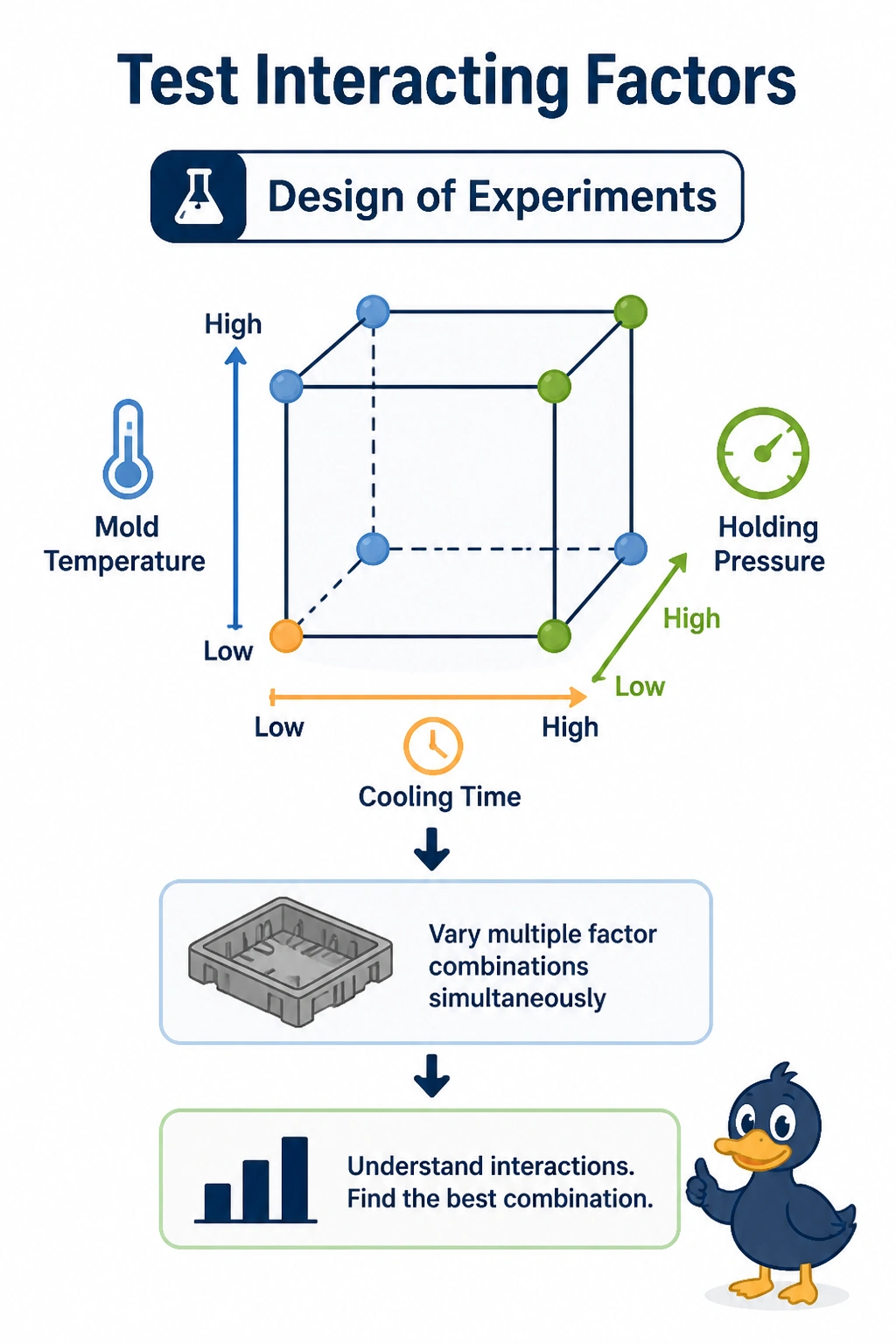
Changing one knob at a time feels tidy, until two variables team up behind your back. When process factors interact, the trap is relying on one-at-a-time trials or basic defect tallies—you need Design of Experiments to test factor combinations together and spot real interactions.
Full Explanation
When multiple process parameters may interact, the most effective analytical method is Design of Experiments varying multiple factor combinations simultaneously. By running structured combinations of temperature, pressure, and cooling time, the team can quantify both individual main effects and cross-factor interactions in a fraction of the runs required by ad-hoc testing. Relying on Single-factor-at-a-time trial runs holding two settings constant misses interaction effects completely and can lead the team to a false optimum. Using A check sheet tallying warpage counts across morning and night shifts only records defect frequency over time without testing causal parameter combinations. Building A Pareto chart ranking warpage against other molding defect types helps prioritize which defect to tackle first, not how molding settings interact to cause warpage. As a caveat, experimental runs should be randomized and conducted only after confirming that measurement gauges are capable and stable. For an operational check, verify that the corrective action plan includes confirmation runs at the selected optimal settings before closing the audit finding.
Prefer to study offline? Printable PDF study book + test engine ($7.50, unofficial). These questions stay free here.