
An audit program manager uses a risk-based schedule that audits high-risk sterile-processing lines quarterly while repeatedly deferring low-risk administrative support processes. After three years, a neglected administrative process causes widespread training-record errors. How should the audit program manager adjust the program governance?
Select an answer to reveal the explanation.
Short Explanation
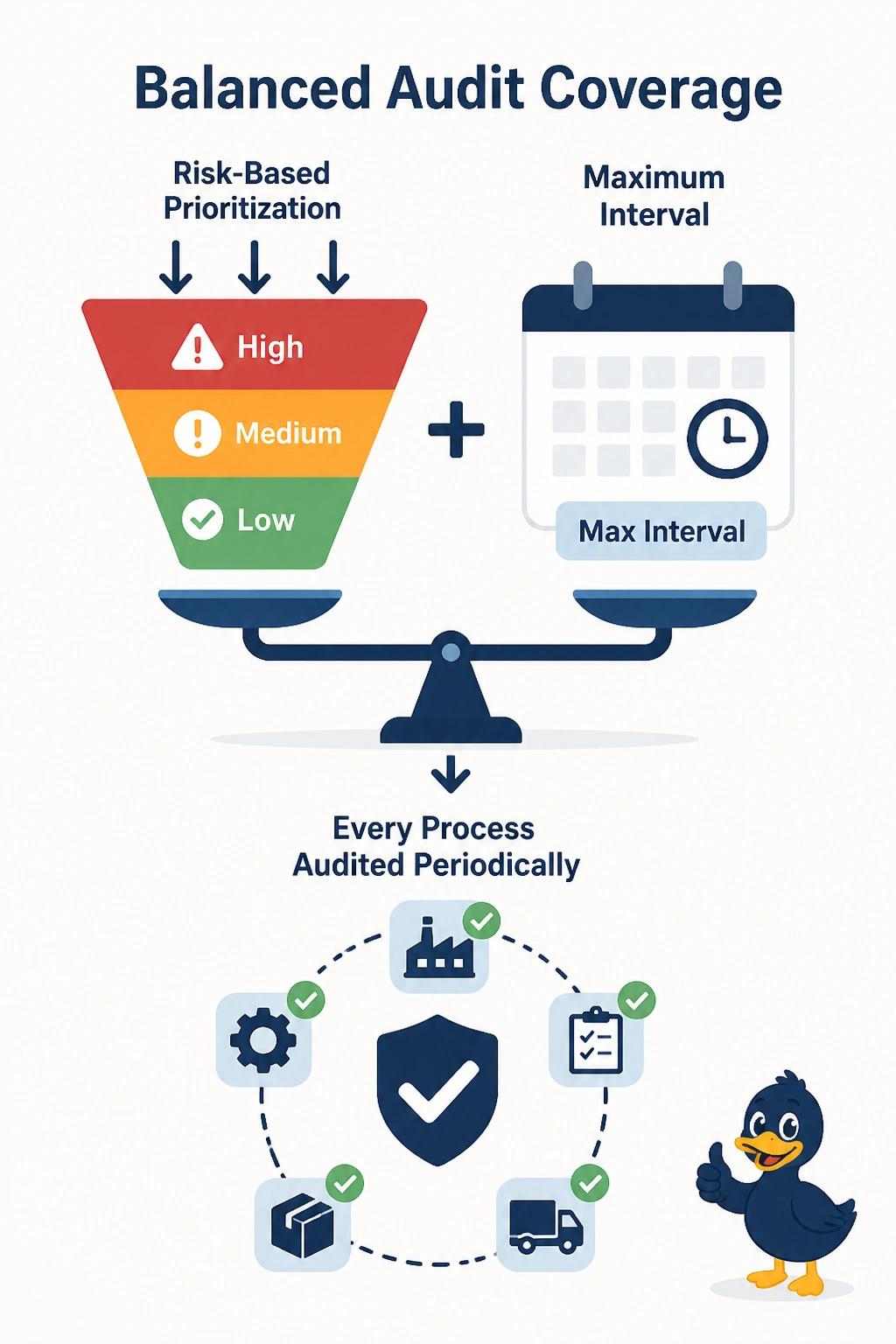
Risk-based scheduling means high-risk lines get more attention, not that low-risk support processes get forgotten forever. The trap is swinging to the opposite extreme by auditing everything at the exact same pace or dropping support areas altogether. Keep your risk weighting, but set a maximum interval so nothing falls off the map.
Full Explanation
Risk-based audit scheduling concentrates limited auditor hours on high-impact operations without abandoning baseline oversight of supporting processes. Choosing to Keep risk-based prioritization while setting a maximum interval so every process is audited periodically preserves resource efficiency for sterile processing while guaranteeing that administrative functions like training administration are verified on a defined outer cycle. The other adjustments weaken program governance. Choosing to Eliminate risk-based scheduling entirely and audit every department with identical frequency wastes scarce audit capacity on low-risk areas at the expense of critical sterile controls. Choosing to Remove administrative support processes from the audit universe because they do not touch product ignores how training, document control, and HR records directly affect product compliance. Choosing to Require administrative managers to self-certify compliance annually instead of using auditors sacrifices independent verification and introduces self-review bias. One caveat is that a process's risk rating should never stay static; significant errors or staffing turnover should temporarily move a low-risk area into a higher-frequency tier. As an operational check, add a 'time since last audit' column to the annual program matrix and trigger mandatory scheduling whenever any process approaches its maximum allowed interval.
Prefer to study offline? Printable PDF study book + test engine ($7.50, unofficial). These questions stay free here.