
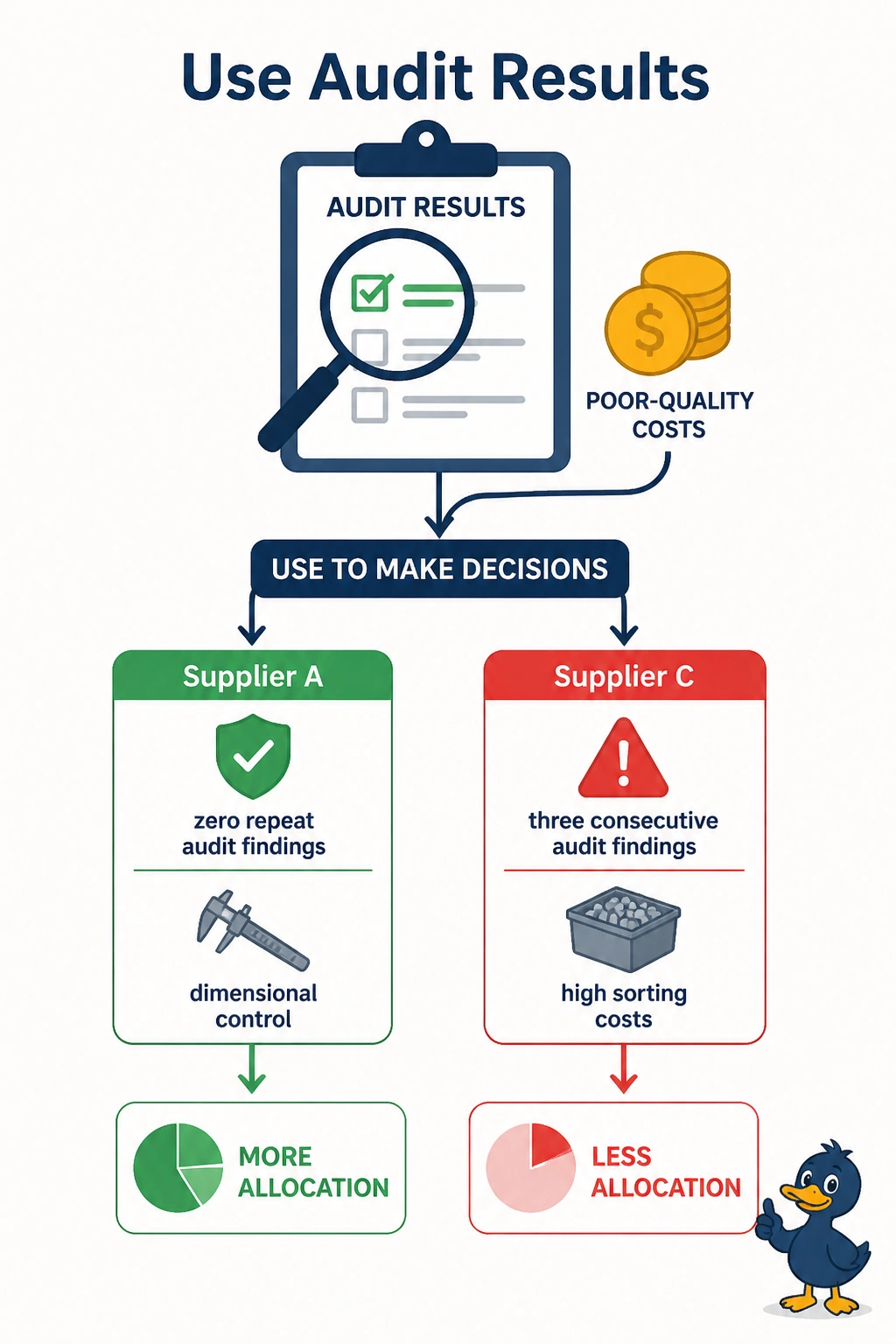
A medical-electronics manufacturer sources machined housings from three suppliers. Supplier A has zero repeat audit findings and minimal incoming scrap, whereas Supplier C had three consecutive audit findings on dimensional control and high sorting costs. How should management apply these audit program results?
Select an answer to reveal the explanation.
Short Explanation
Audit findings are not meant to sit in a binder—they are business intelligence that helps you steer money toward reliable partners. The trap is treating quality audits and purchasing decisions as separate worlds, or rewarding a struggling supplier with more volume. Use audit results to protect your supply chain.
Full Explanation
An audit program delivers maximum organizational value when its findings inform strategic sourcing and risk management. Choosing to Factor audit performance and poor-quality costs into supplier tiering and sourcing allocation decisions connects objective audit evidence and failure costs directly to supplier qualification, volume allocation, and risk mitigation. Deciding to Award Supplier C additional order volume so its higher production throughput offsets its internal sorting expenses rewards chronic nonconformance and increases defect exposure. Choosing to Eliminate all incoming inspection for Supplier C because it already underwent three formal quality audits ignores verified control failures and removes a critical containment barrier. Opting to Keep audit results strictly confidential from procurement so commercial negotiations remain unaffected prevents supply-chain leaders from pricing in hidden sorting, rework, and risk costs. As a caveat, commercial decisions should weigh sustained trend performance and corrective action responsiveness alongside single-audit snapshots rather than reacting to one minor lapse. Operationally, present quarterly supplier audit scorecards and poor-quality cost summaries at cross-functional sourcing reviews with procurement and engineering.
Prefer to study offline? Printable PDF study book + test engine ($7.50, unofficial). These questions stay free here.