
After strengthening supplier and pre-shipment process audits, an appliance manufacturer sees a sharp drop in field warranty repairs, product returns, and customer-service replacements. How should the audit program manager classify these post-shipment savings when presenting Cost of Quality results to leadership?
Select an answer to reveal the explanation.
Short Explanation
Think of Cost of Quality like a timeline of where a defect gets caught—and once a product leaves your shipping dock, every repair bill hits the most expensive bucket. When your audits prevent defective units from reaching customers, those saved warranty claims and returns belong under external failure costs, not in-house rework or inspection.
Full Explanation
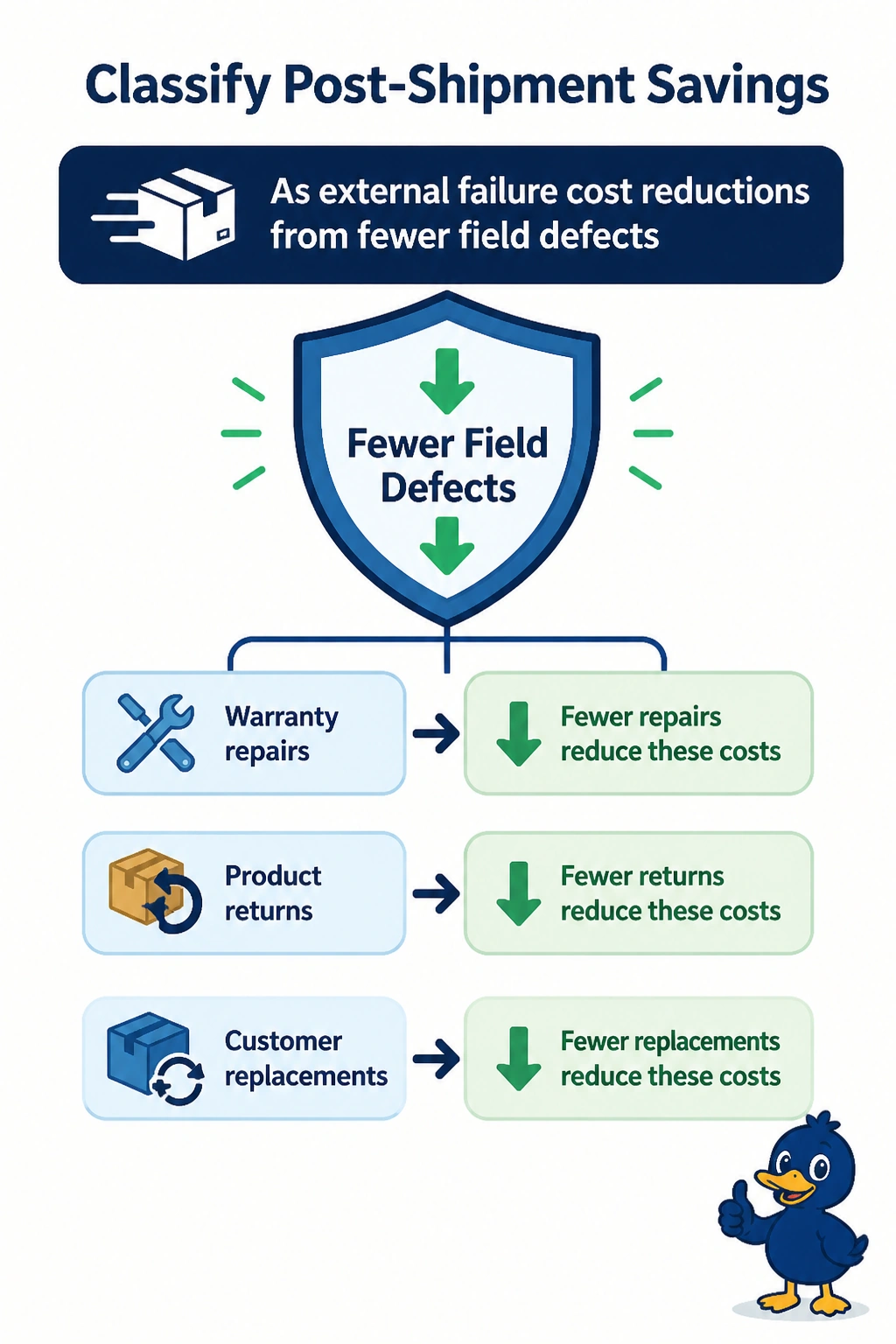
In the Cost of Quality framework, post-shipment expenses—including field warranty repairs, customer returns, complaint handling, and replacement shipments—are external failure costs because the defect escaped the organization and reached the customer. Classifying these savings As external failure cost reductions from fewer field defects accurately connects stronger upstream audits to reduced customer-facing losses and stronger business value. Each alternative misclassifies where the cost occurred. Treating the savings As appraisal cost reductions from lower inspection labor confuses field failure expenses with the routine cost of evaluating, testing, or auditing products and processes. Treating them As prevention cost reductions from fewer training hours confuses failure losses with proactive investments made to keep defects from happening in the first place. Treating them As internal failure cost reductions from less in-house rework mislabels customer-facing losses as defects caught inside the factory before shipment. One important caveat is that audit programs themselves increase appraisal costs initially, so leadership reviews should compare audit execution spend against total failure reductions rather than looking at one category alone. As an operational check, reconcile warranty-claim ledgers and return-merchandise authorizations by defect code before and after audit-driven corrective actions so every claimed savings figure ties back to verified financial records.
Prefer to study offline? Printable PDF study book + test engine ($7.50, unofficial). These questions stay free here.