
At a multi-site electronics manufacturer, several internal audit findings remain stuck for months because department managers dispute their validity and no formal path exists to resolve disagreements. What should the audit program manager establish in program governance?
Select an answer to reveal the explanation.
Short Explanation
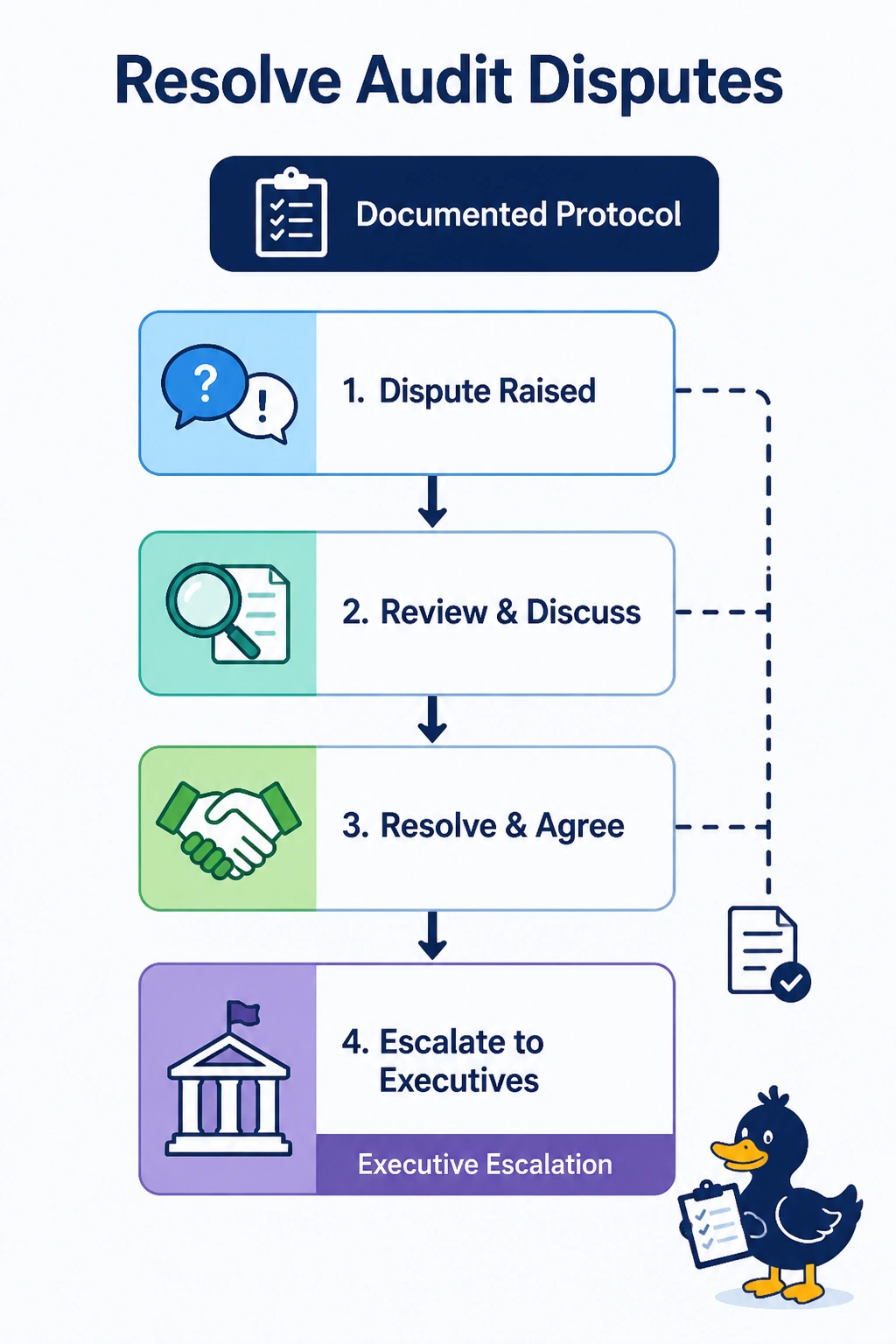
When an auditee and an auditor hit a stalemate, letting the finding sit in limbo helps nobody. The trap is either caving to operational pushback or freezing your whole audit schedule while people argue. Build a clear escalation path into your program charter so unresolved disputes move up to leadership for a timely, evidence-based decision.
Full Explanation
Unresolved disagreements over audit findings can stall corrective actions and undermine the credibility of the entire audit program. Establishing A documented dispute-resolution and executive escalation protocol ensures that when a lead auditor and a department manager cannot agree on objective evidence, a defined timeline and impartial leadership tier resolve the impasse. Creating A rule allowing department managers to delete any disputed audit finding destroys audit independence and lets process owners bury valid compliance gaps. Implementing A policy pausing all future internal audits until every dispute settles penalizes the entire organization and leaves other high-risk processes unmonitored. Adopting A requirement that auditors rewrite findings to please operations compromises integrity and turns objective assessments into rubber-stamp exercises. As a caveat, escalation should occur only after the auditor and auditee have reviewed the raw objective evidence and criteria together. For an operational check, review the audit program charter to confirm it specifies escalation timeframes, decision-makers, and how unresolved disputes are logged in final reports.
Prefer to study offline? Printable PDF study book + test engine ($7.50, unofficial). These questions stay free here.