
A medical-electronics company tracks its Quality Assurance spending using the Cost of Quality model. How should the audit program manager classify the labor hours spent conducting routine internal quality audits and supplier compliance reviews?
Select an answer to reveal the explanation.
Short Explanation
In the Cost of Quality model, checking whether processes and suppliers meet the rules is like hiring a home inspector before you buy. The trap is lumping all quality work into prevention, when routine audits and compliance reviews are actually appraisal costs.
Full Explanation
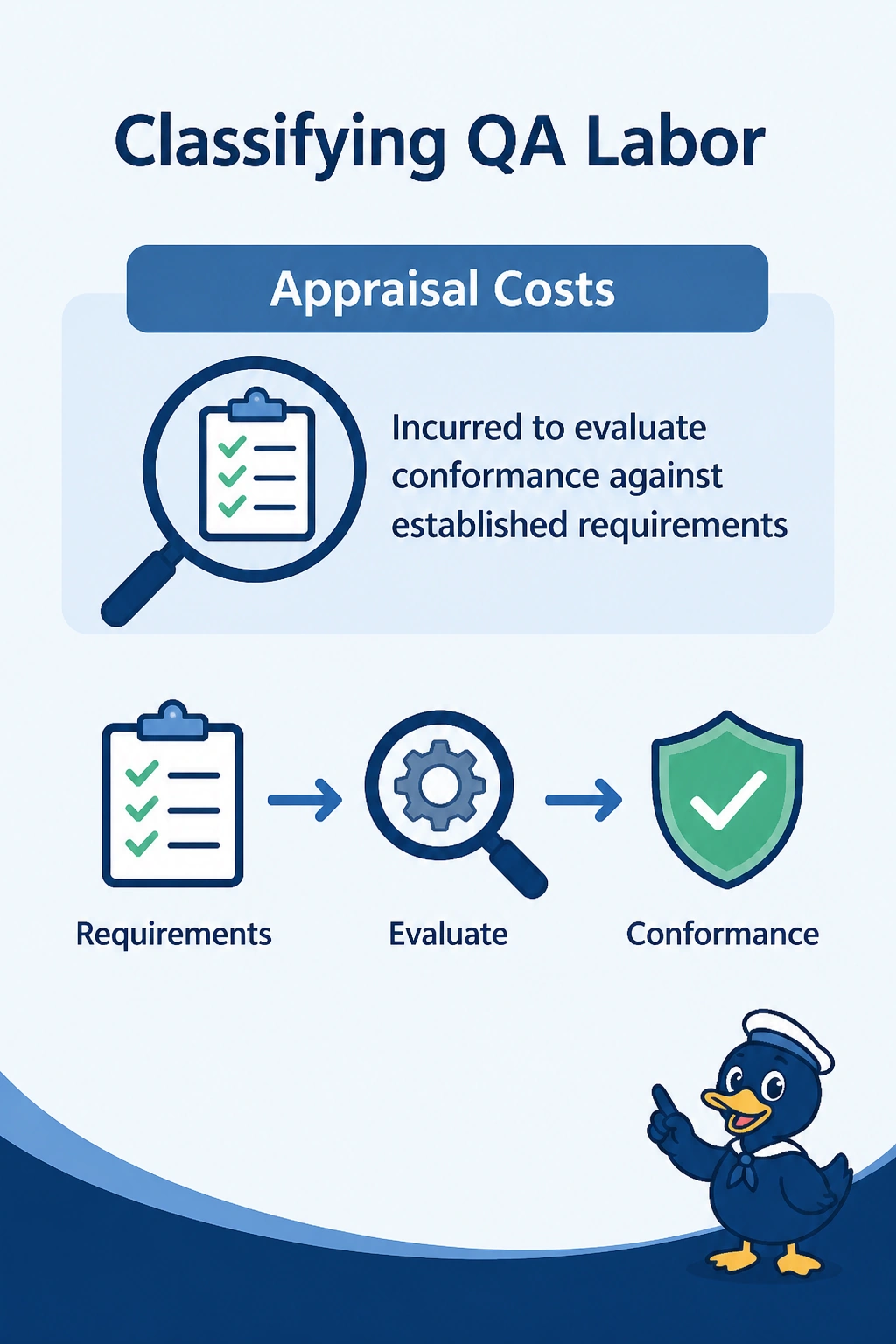
Classifying these activities as Appraisal costs incurred to evaluate conformance against established requirements is accurate because audits measure and verify whether existing systems, processes, and suppliers conform to specified standards. In the Cost of Quality framework, appraisal covers inspection, testing, and auditing activities designed to detect nonconformance. By contrast, Internal failure costs incurred when defects are caught prior to customer shipment represent scrap, rework, and re-inspection caused by nonconforming output rather than the audit activity itself. External failure costs resulting from field warranty claims and customer returns capture post-delivery failures, recalls, and lost customer goodwill. Prevention costs invested in mistake-proofing designs and operator training programs cover proactive engineering and capability-building efforts aimed at stopping errors from occurring in the first place, before appraisal is needed. Caveat: while routine audits are appraisal costs, executive coaching or risk-assessment workshops that redesign processes to stop future errors may be tracked under prevention. As an operational check, ensure finance and quality teams use consistent Cost of Quality category definitions when trending audit spend against failure reductions.
Prefer to study offline? Printable PDF study book + test engine ($7.50, unofficial). These questions stay free here.