
At a mid-sized medical-device manufacturer, the same internal auditor has audited the sterilization department every quarter for four consecutive years. Although the auditor is technically independent of sterilization, recent reports show zero findings despite rising scrap. What should the audit program manager do?
Select an answer to reveal the explanation.
Short Explanation
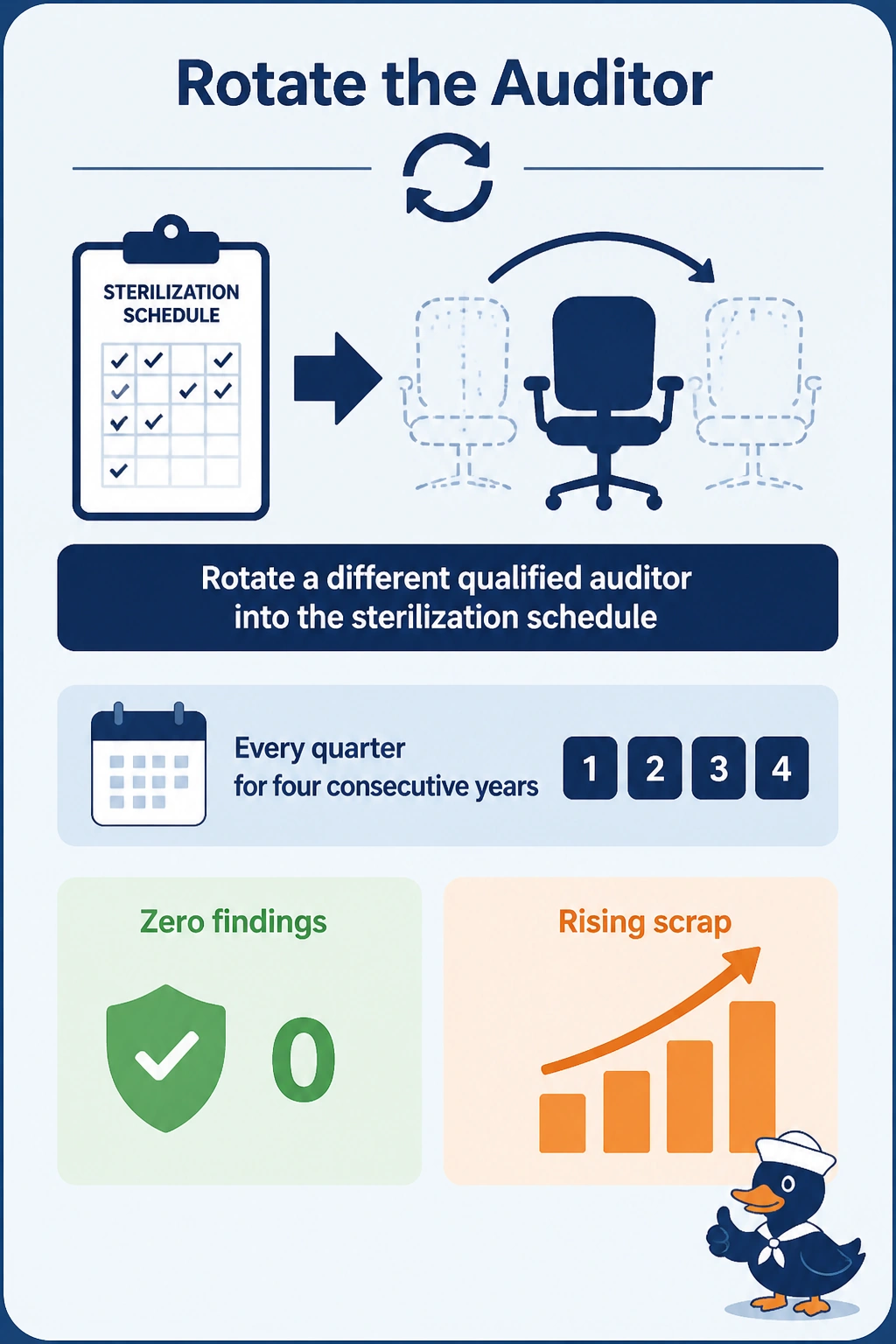
Even the sharpest auditor can develop blind spots after inspecting the exact same room for four years straight. The trap is assuming that formal independence alone keeps your audit fresh, when routine familiarity quietly dulls professional skepticism. Rotating qualified auditors brings fresh eyes to old habits before scrap turns into a customer crisis.
Full Explanation
Long-term assignments to the same department can erode objectivity through familiarity bias and predictable sampling routines. Choosing to Rotate a different qualified auditor into the sterilization schedule restores fresh perspective and professional skepticism while maintaining technical competence. Opting to Eliminate internal audits of sterilization to save program labor hours removes oversight from a high-risk process precisely when rising scrap signals potential control drift. Deciding to Assign the sterilization supervisor to self-audit the department instead violates basic auditor independence because operational leaders cannot objectively audit their own work. Meanwhile, choosing to Require the auditor to issue at least three findings per quarterly visit introduces an arbitrary quota that encourages trivial paperwork citations rather than risk-based evaluation. As a caveat, auditor rotation must still respect competence requirements so the incoming auditor understands sterilization controls. For an operational check, review the multi-year audit assignment matrix annually to verify that no single auditor covers the same high-risk process indefinitely, and pair incoming auditors with a qualified technical expert if needed.
Prefer to study offline? Printable PDF study book + test engine ($7.50, unofficial). These questions stay free here.