
An internal audit program manager is instructed to reduce annual audit travel and labor hours by twenty percent for the upcoming fiscal year. Which adjustment best protects the integrity and effectiveness of the quality audit program?
Select an answer to reveal the explanation.
Short Explanation
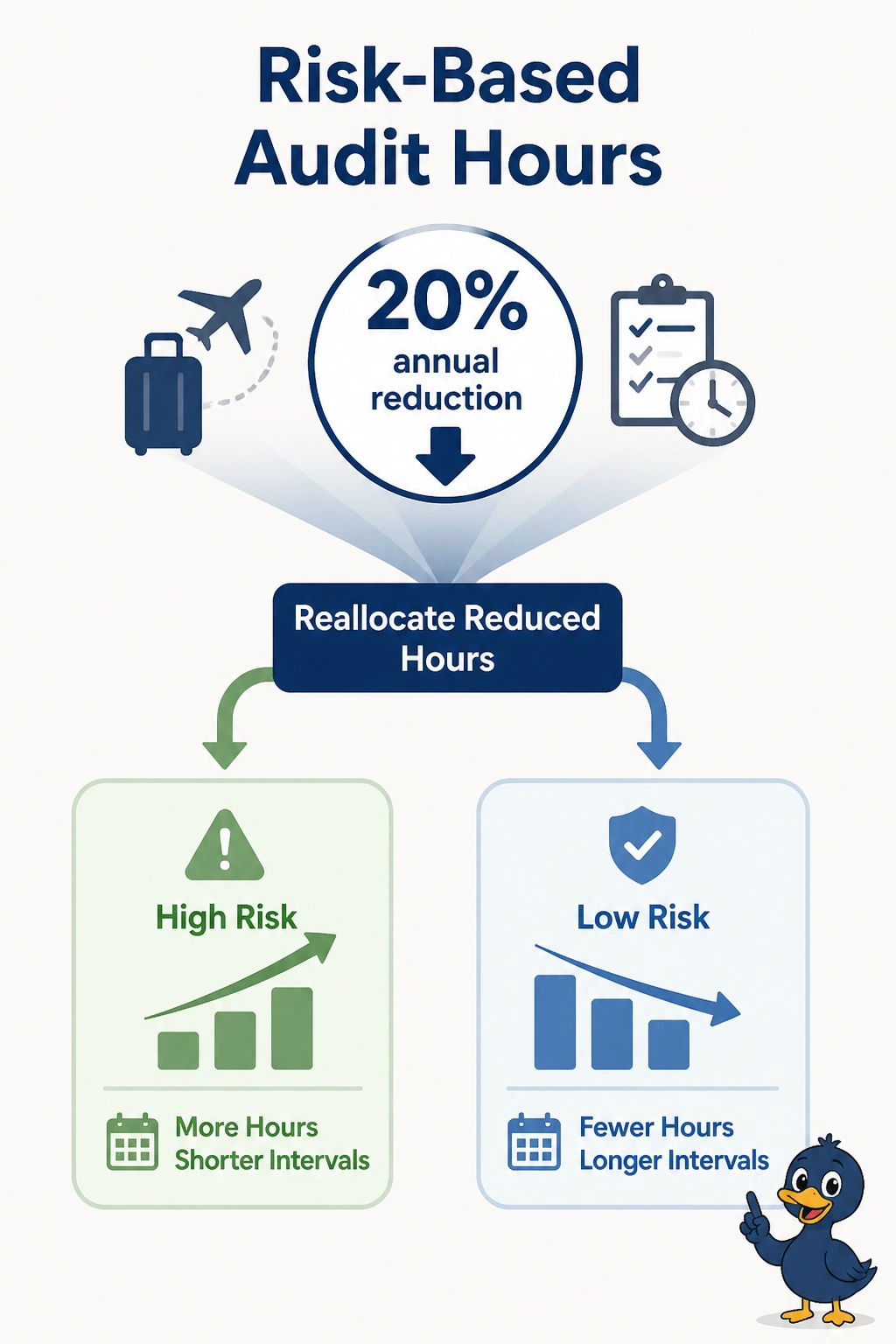
When leadership trims your audit budget, you can protect the program by prioritizing high-risk processes and suppliers and extending intervals for low-risk areas. Avoid uniform cuts or dropping follow-up verification, which can leave your most important risks unchecked.
Full Explanation
Reallocating reduced hours toward high-risk processes and suppliers while extending low-risk intervals applies risk-based program management, preserving audit depth where failures could cause the greatest harm. You can lengthen intervals for stable, low-risk areas while maintaining attention on safety-critical, customer-facing, and historically troubled processes. Cutting every scheduled audit’s duration by twenty percent across all departments reduces sampling time in complex, high-risk audits while spending hours on lower-risk areas that may not need the same scrutiny. Canceling all supplier audits and relying solely on self-assessments removes independent verification of external quality controls and increases the risk of incoming defects. Eliminating follow-up verification audits leaves corrective actions unverified and allows repeat nonconformities to persist. As a caveat, extending low-risk audit intervals must be supported by objective performance data, such as zero repeat findings and stable process metrics. As a practical check, present the revised risk-weighted schedule and its residual-risk rationale during management review for formal leadership sign-off.
Prefer to study offline? Printable PDF study book + test engine ($7.50, unofficial). These questions stay free here.