
An audit program manager is preparing for the annual executive management review of the internal quality audit program. Which action best helps leadership evaluate whether the audit program itself is achieving its governance objectives?
Select an answer to reveal the explanation.
Short Explanation
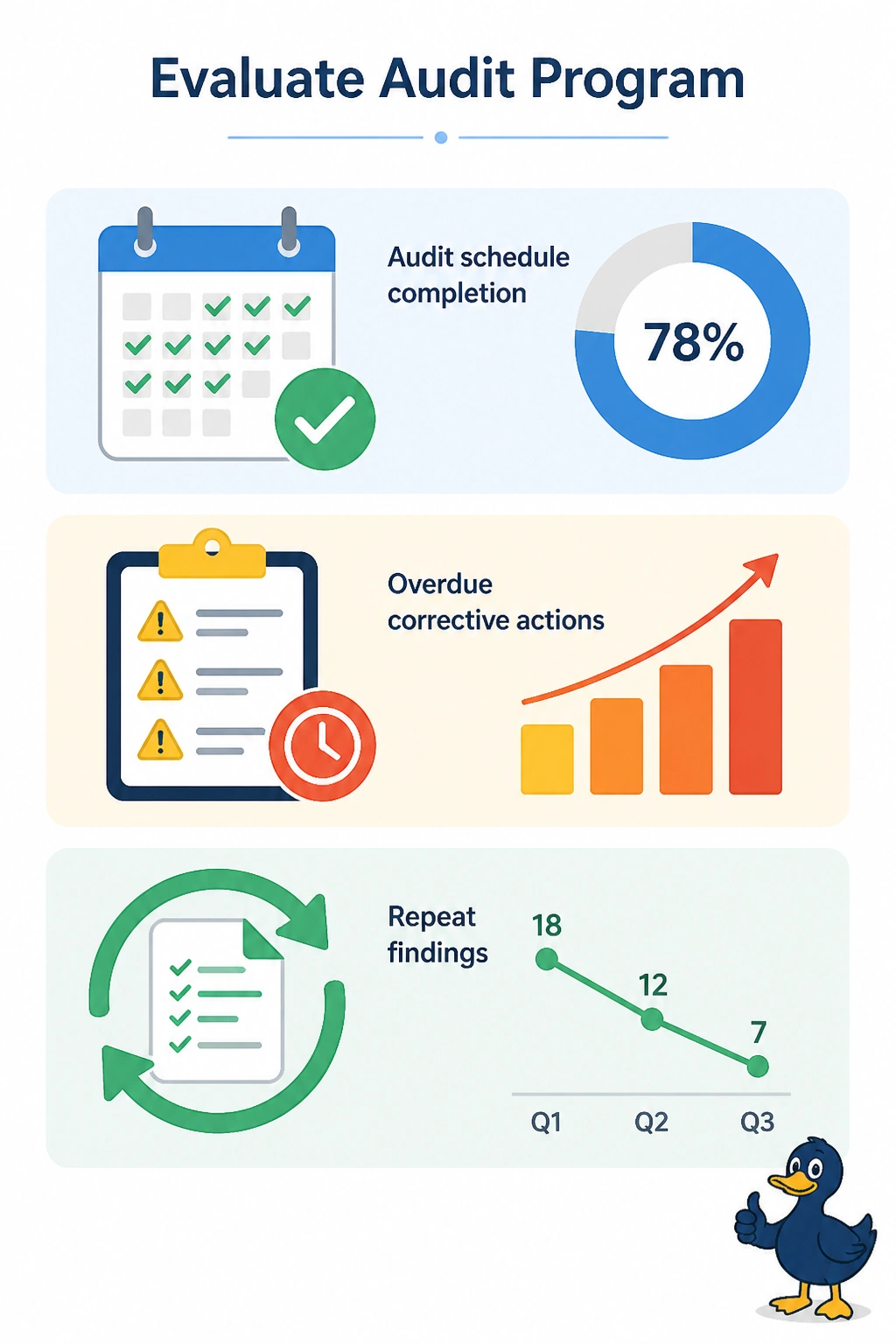
Executive management review is about steering the whole ship, not reading every sailor's daily logbook. The trap is handing leadership raw checklists or just a count of completed audits, when you need to show trends in schedule adherence, overdue actions, and repeat findings.
Full Explanation
Choosing Present trends in audit schedule completion, overdue corrective actions, and repeat findings gives executives actionable indicators of both program execution and whether audit findings are driving lasting organizational improvement. In contrast, Deliver copies of every individual audit checklist and raw interview note from the past year buries senior leaders in operational detail without synthesizing systemic patterns or resource needs. Report only the total number of audits completed on time without noting corrective action status measures activity rather than effectiveness, hiding whether identified problems are actually getting fixed. Recommend eliminating internal audits for departments that passed their most recent inspection removes ongoing assurance; high-performing areas may warrant reduced frequency under risk-based scheduling, not complete exemption from verification. Caveat: pair quantitative program metrics with context on resource constraints, emerging business risks, and auditor competence gaps so leadership can authorize adjustments. As an operational check, record management-review decisions and resource commitments as formal inputs into next year's audit program plan.
Prefer to study offline? Printable PDF study book + test engine ($7.50, unofficial). These questions stay free here.