
An audit program manager at a multi-site manufacturer is redesigning the internal audit governance charter to prevent operational leaders from canceling or softening audits in their own departments. Which reporting structure best protects program independence?
Select an answer to reveal the explanation.
Short Explanation
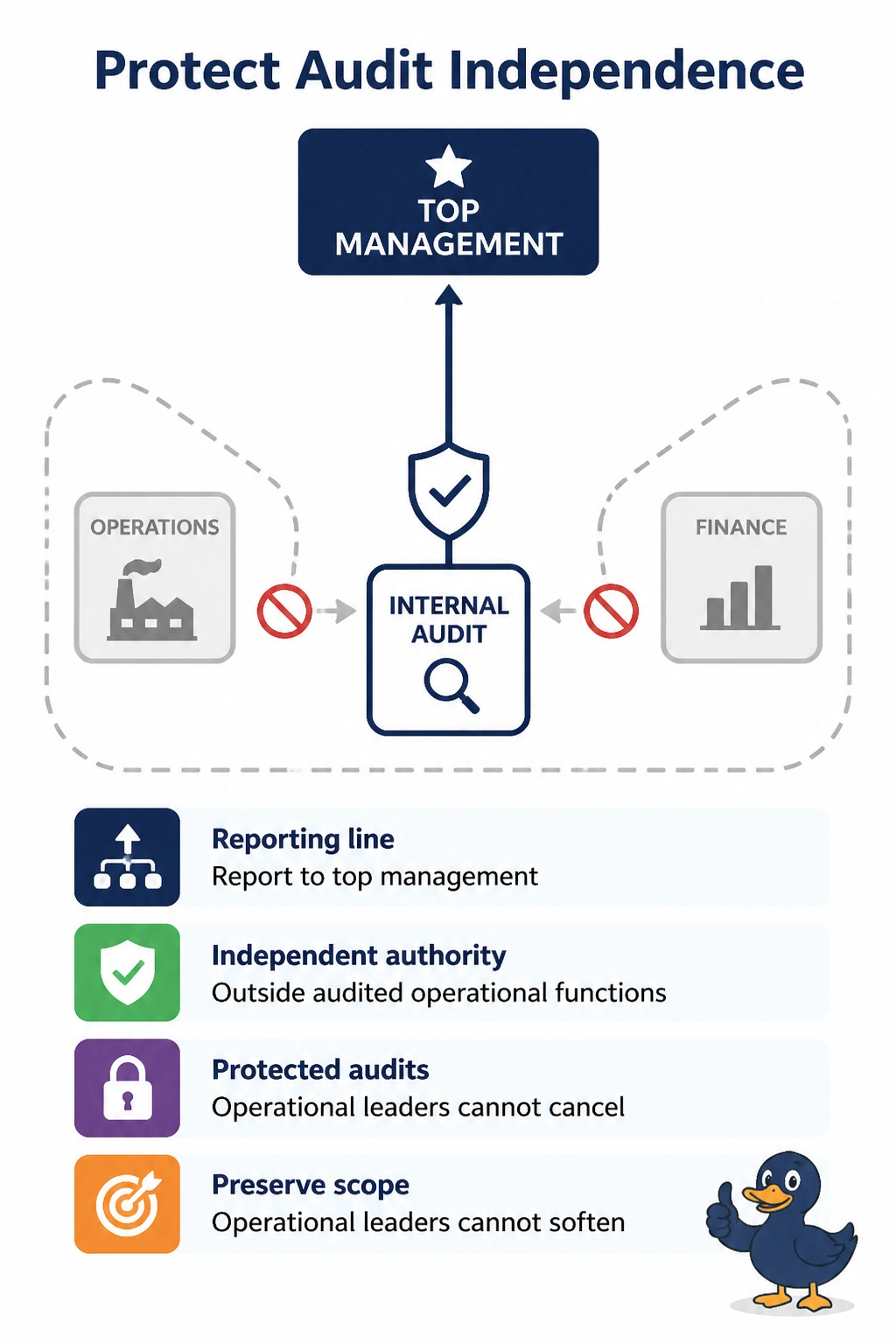
You would never ask a student to grade their own final exam, and the same logic governs audit program reporting lines. The trap is placing the program under operational managers who have a stake in the audit results. To keep schedules and findings free from interference, you need a reporting line to top management outside audited operations.
Full Explanation
Structuring the audit program to Report to top management independent of audited operational functions insulates audit scheduling, resource allocation, and finding escalation from the managers whose processes are under review. Having the program Report directly to the production plant manager creates an inherent conflict of interest, because that manager may pressure the team to defer audits or soften findings before executive reviews. Choosing to Rotate reporting each quarter between operations and finance still places the program under operational authority during operations-led quarters and disrupts governance continuity. Allowing the program to Let department heads approve their own audit schedules surrenders risk-based prioritization and lets high-risk areas delay scrutiny indefinitely. As a caveat, independence in reporting does not mean isolation from the business; the program manager should still solicit operational input on logistical timing and emerging risks. As an operational check, review the quality manual and organizational chart to confirm that the audit program manager has direct, unfiltered access to senior leadership or the quality steering committee.
Prefer to study offline? Printable PDF study book + test engine ($7.50, unofficial). These questions stay free here.