
An audit program manager is planning an annual internal quality audit for a 24-hour pharmaceutical packaging plant that operates three shifts across four high-speed lines, compared to a single-shift warehouse of the same headcount. How should the manager allocate audit resources?
Select an answer to reveal the explanation.
Short Explanation
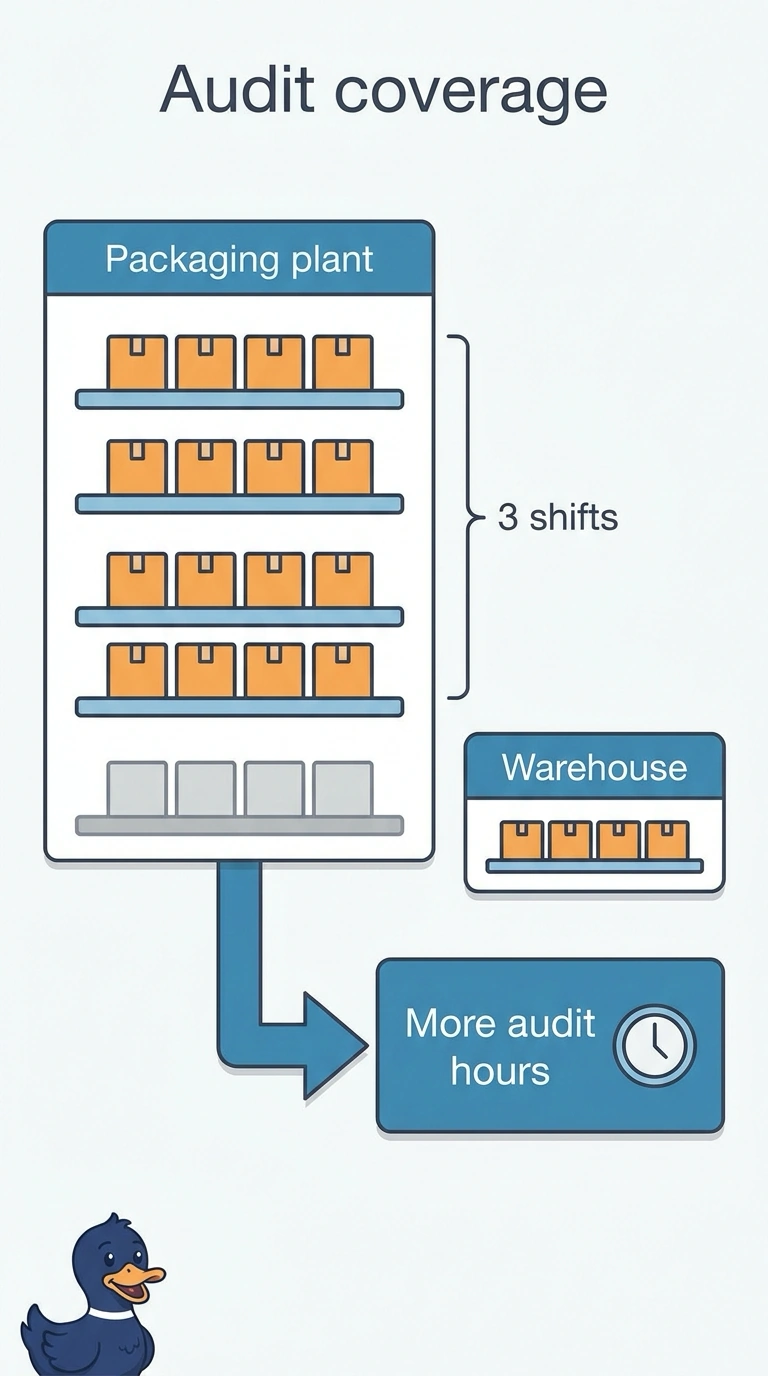
Headcount alone is a poor ruler for audit effort—a three-shift packaging plant has far more handoffs and risk than a single-shift warehouse. If you only audit the day shift, you miss the exact operational windows where controls often slip.
Full Explanation
Effective audit program planning requires the manager to Allocate more audit hours and multi-shift coverage to the complex packaging plant. Audit effort should scale with process complexity, regulatory risk, and shift structure so that night and weekend operations are directly verified rather than assumed compliant. Choosing to Assign equal audit hours to both sites based strictly on total facility headcount alone ignores operational risk and leaves high-speed packaging lines under-sampled. Deciding to Schedule all fieldwork during the first shift and extrapolate findings to night crews creates a blind spot, because shift handoffs, reduced supervision, and fatigue frequently drive off-shift nonconformities. Opting to Reduce the packaging plant's audit duration because automated lines require fewer interviews overlooks the need to verify equipment calibration, line clearance, alarm handling, and batch records across all active lines. As a caveat, multi-shift coverage does not always require full-day teams on every shift; targeted off-shift sampling windows can be effective if planned in advance. When building the annual schedule, review shift rosters, active line counts, and prior nonconformity patterns before locking in auditor-day budgets.
Prefer to study offline? Printable PDF study book + test engine ($7.50, unofficial). These questions stay free here.