
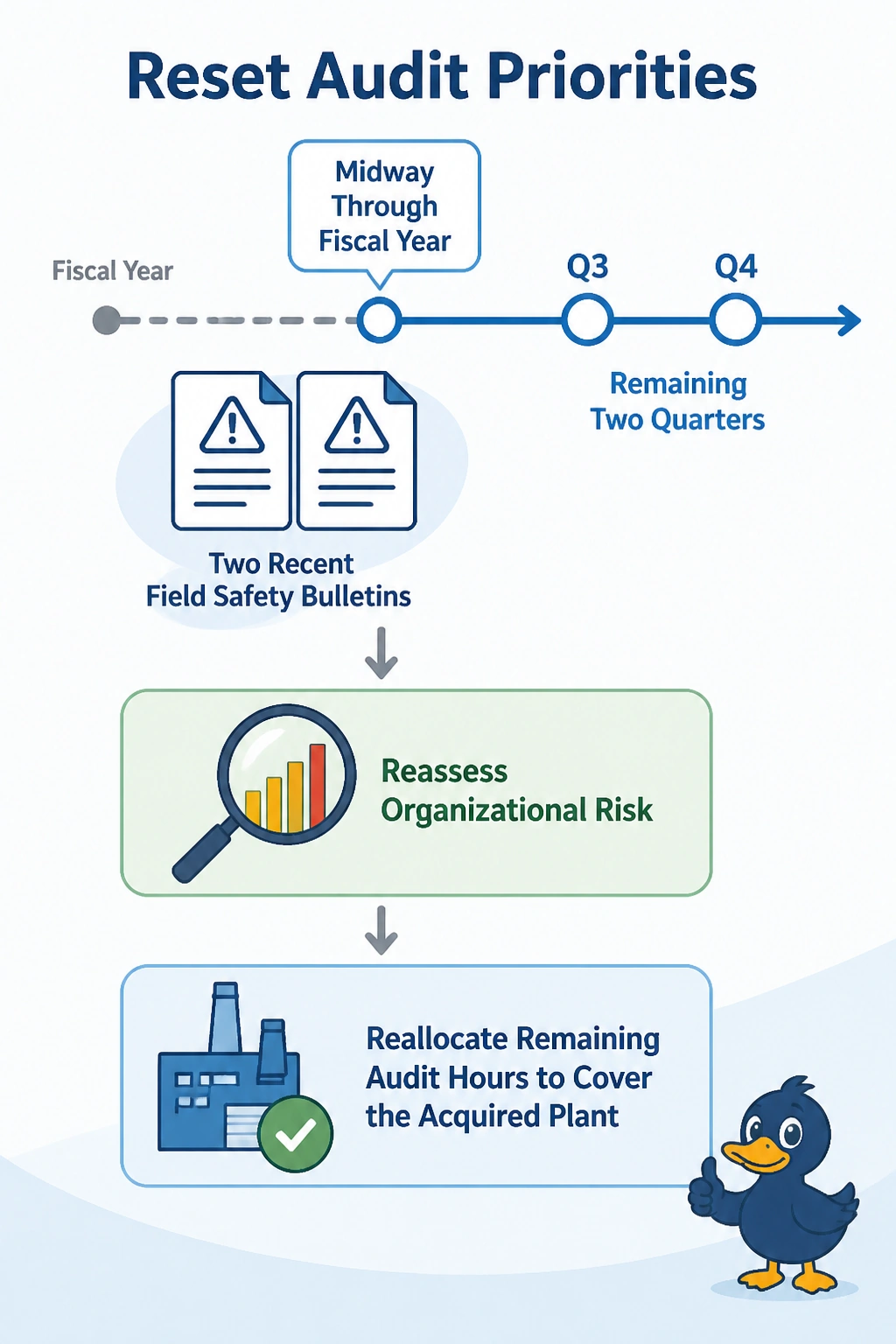
Midway through the fiscal year, an industrial valve manufacturer acquires a smaller hydraulic-cylinder plant that has experienced two recent field safety bulletins. The internal audit program manager has fixed auditor hours for the remaining two quarters. What should the manager do first?
Select an answer to reveal the explanation.
Short Explanation
An annual audit schedule is a living compass, not a stone tablet! When a high-risk acquisition enters your organization mid-year, leaving it unaudited until next cycle invites preventable failures. You should re-evaluate risk across the portfolio and shift hours from lower-risk areas to the new plant.
Full Explanation
Risk-based audit program management requires dynamic resource allocation whenever the organization's risk profile changes significantly. Choosing to Reassess organizational risk and reallocate remaining audit hours to cover the acquired plant ensures limited auditor capacity targets the highest-exposure operations first, particularly given the recent field safety bulletins. By contrast, choosing to Defer auditing the new plant until next year's planning cycle leaves unverified processes operating without independent oversight for months, exposing the parent company to warranty and regulatory risks. Similarly, deciding to Shorten every remaining audit by half to fit the new plant in dilutes sampling depth across all scheduled audits, turning meaningful evaluations into superficial check-the-box exercises. Finally, choosing to Ask the acquired plant's manager to self-certify compliance sacrifices audit independence because local management cannot objectively verify its own controls. As a program caveat, reallocating hours requires documenting the schedule change and communicating revised dates to affected stakeholders and executive sponsors. For an operational check, review the updated annual risk matrix and confirm that any deferred low-risk audits have stable performance metrics and no pending corrective actions.
Prefer to study offline? Printable PDF study book + test engine ($7.50, unofficial). These questions stay free here.