
An internal audit program manager reviews last year's audit results, auditor feedback, and missed operational risks in emerging software workflows, then updates auditor training and scheduling rules for the coming year. Which management approach does this illustrate?
Select an answer to reveal the explanation.
Short Explanation
Even your audit program needs its own tune-up, using past misses to sharpen next year's schedule and skills. The trap is thinking PDCA only applies to factory floors, when it is actually the engine that keeps your audit program relevant.
Full Explanation
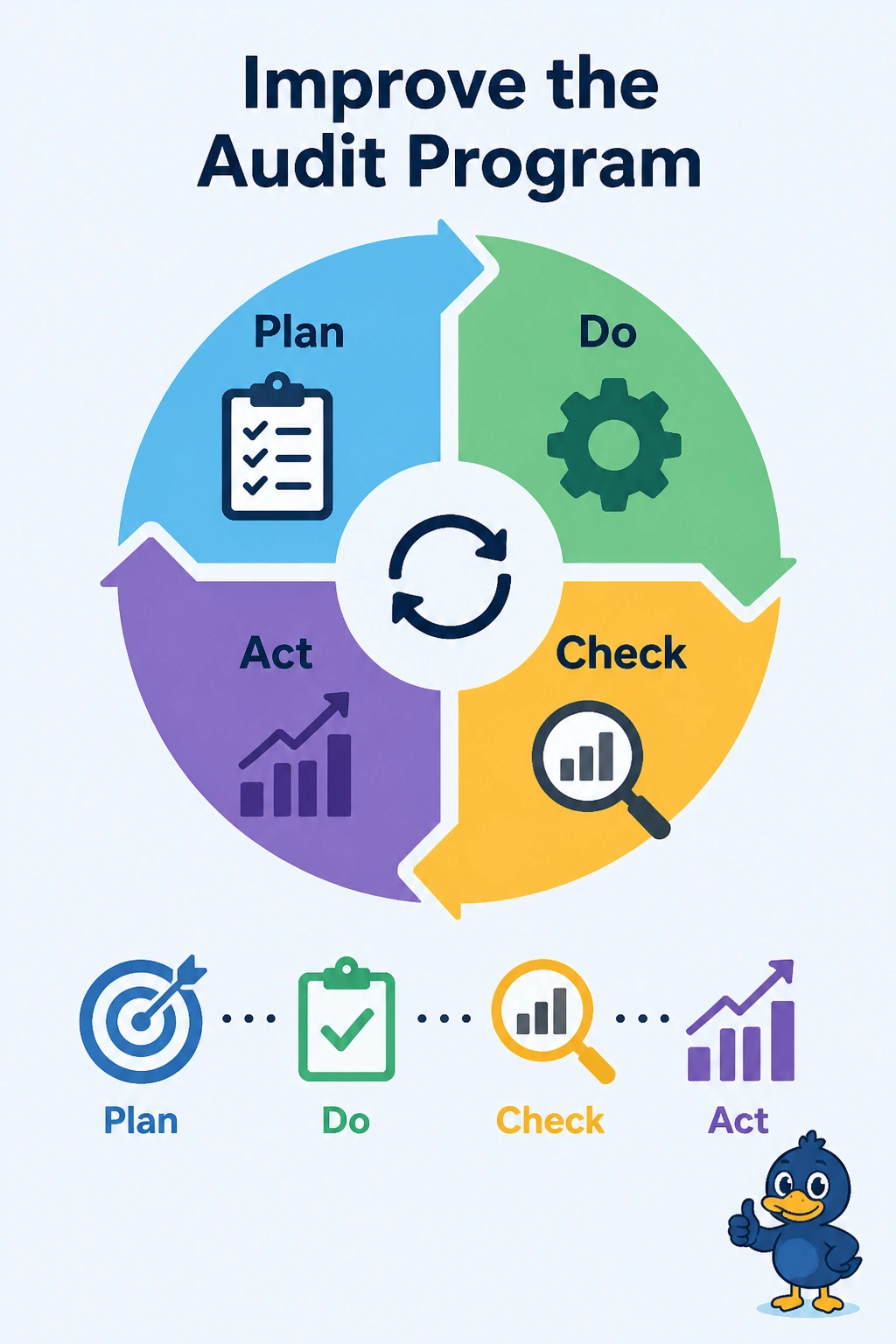
Reviewing audit program performance, spotting blind spots, and revising procedures for the next cycle demonstrates Applying the Plan-Do-Check-Act cycle to continually improve the audit program. In this framework, planning sets risk-based schedules, doing executes the audits, checking evaluates program metrics and missed risks, and acting updates training and scheduling rules. Selecting Performing a one-time desk audit to verify individual supplier compliance records fails because reviewing a single supplier's documents is an isolated audit activity rather than systemic program improvement. Selecting Issuing a corrective action request to an external registrar for missed findings fails because internal program managers improve their own internal processes rather than directing external registrars. Selecting Freezing the annual audit schedule permanently to preserve year-over-year metrics fails because rigid schedules ignore emerging risks and prevent the program from adapting to business changes. Caveat: program-level improvements should be tracked with measurable objectives so you can verify that revised training actually closes earlier blind spots. Operational check: document lessons learned from each audit cycle, update auditor competency criteria, and review the updated plan with leadership.
Prefer to study offline? Printable PDF study book + test engine ($7.50, unofficial). These questions stay free here.