
Trend analysis from an electronics manufacturer's supplier audit program reveals that most incoming inspection rejections and line stoppages stem from three mid-tier circuit-board suppliers lacking incoming component verification. How should management apply this business intelligence?
Select an answer to reveal the explanation.
Short Explanation
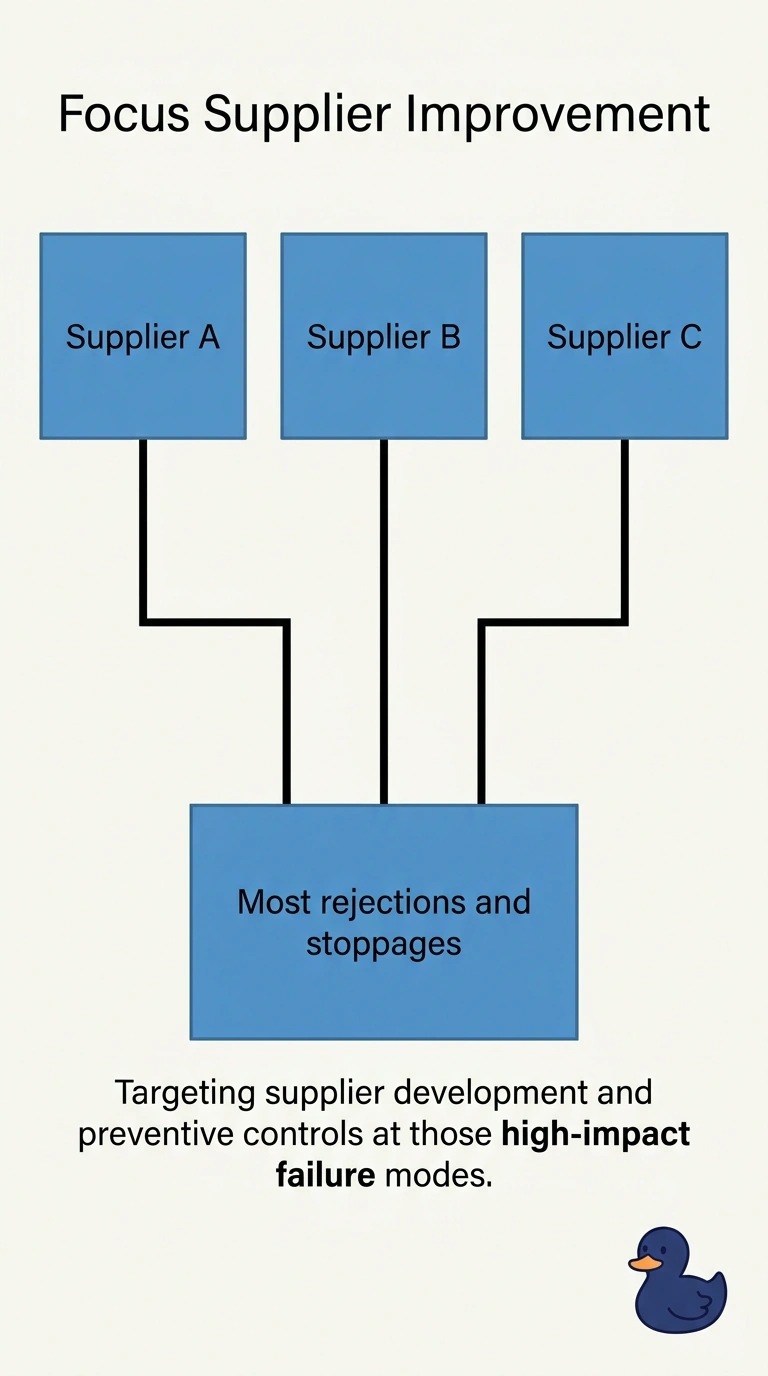
Audit data only pays off when you turn patterns into prevention instead of just filing another report. When three suppliers drive most of your line stoppages, targeting supplier development and preventive controls at those exact gaps cuts both defects and cost of poor quality. Don't fall into the trap of relying on downstream inspection, which only catches failures after money is already wasted.
Full Explanation
An effective audit program connects recurring findings to business risk and cost of poor quality so leadership can eliminate systemic waste. Targeting supplier development and preventive controls at those high-impact failure modes works because fixing incoming component verification at the three highest-risk suppliers prevents defects before boards reach assembly, reducing scrap, rework, and costly line stoppages. Canceling all future supplier audits because incoming inspection already catches some defects fails because inspection is an appraisal cost that cannot catch every defect and does nothing to correct root causes at the supplier. Raise incoming inspection on those three suppliers and hold their order volume until the next scheduled audit fails because tighter incoming inspection contains defects but does not fix the suppliers' missing component verification. Ranking suppliers only by the number of audit findings written, without weighting defect cost or line stoppages fails because raw finding counts ignore severity and cost impact, allowing minor issues to mask the suppliers driving scrap and stoppages. As a caveat, supplier development actions should include clear verification milestones rather than open-ended coaching alone. For an operational check, track incoming defect rates and line-stoppage hours from those three suppliers over the next two quarters to confirm measurable improvement.
Prefer to study offline? Printable PDF study book + test engine ($7.50, unofficial). These questions stay free here.