
An audit program manager wants to demonstrate the business value of internal audits to the CFO. Over the past year, audit-driven process fixes reduced customer billing errors by 40%, cutting credit-memo rework and customer churn, while audit program expenses rose slightly due to added training. Which financial framing best communicates this impact?
Select an answer to reveal the explanation.
Short Explanation
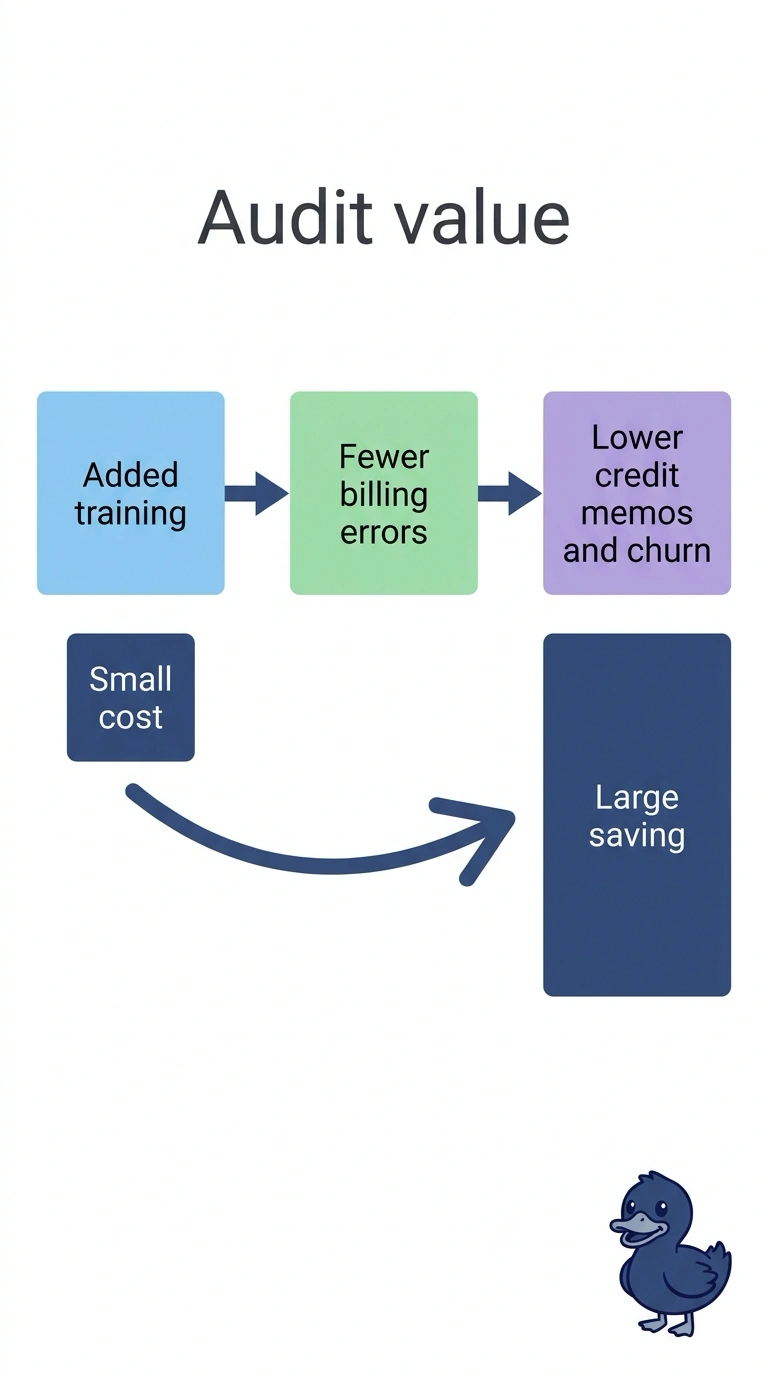
You win over a CFO when you translate audits into Cost of Quality dollars. Show how your small bump in prevention spending for training drove down big external failure costs from credit memos and churn. Don't hide behind raw budgets — connect your work to customer dollars saved.
Full Explanation
Demonstrating the business value of an audit program requires translating operational improvements into Cost of Quality terms that senior financial leaders recognize. The strongest approach is to Compare the modest prevention-cost increase from added auditor training against lower external failure costs. Routine audit labor is appraisal and the added auditor training is prevention; credit-memo labor and customer churn are external failure costs because the billing errors had already reached the customer. Showing that small upstream investment drove steep downstream savings proves net positive return. Choosing to Report only the total audit department budget to show strict cost control frames auditing purely as overhead and hides its value creation. Trying to Count only the hours auditors spent writing reports as direct cost savings misstates financial impact because report-writing hours are an audit expense, not a recovered business loss. Choosing to Exclude external failure costs because customer churn is a sales metric ignores one of the largest financial consequences of poor quality. As a caveat, financial attribution should be vetted with finance partners so savings are not double-counted across multiple initiatives. As an operational check, track baseline credit-memo labor and churn rates prior to corrective actions so post-audit comparisons are defensible.
Prefer to study offline? Printable PDF study book + test engine ($7.50, unofficial). These questions stay free here.