
While auditing a medical-packaging supplier's calibration program, an auditor notices the supplier uses a compliant electronic database that differs from the paper-tag system the auditor used at a previous employer. What should the auditor do?
Select an answer to reveal the explanation.
Short Explanation
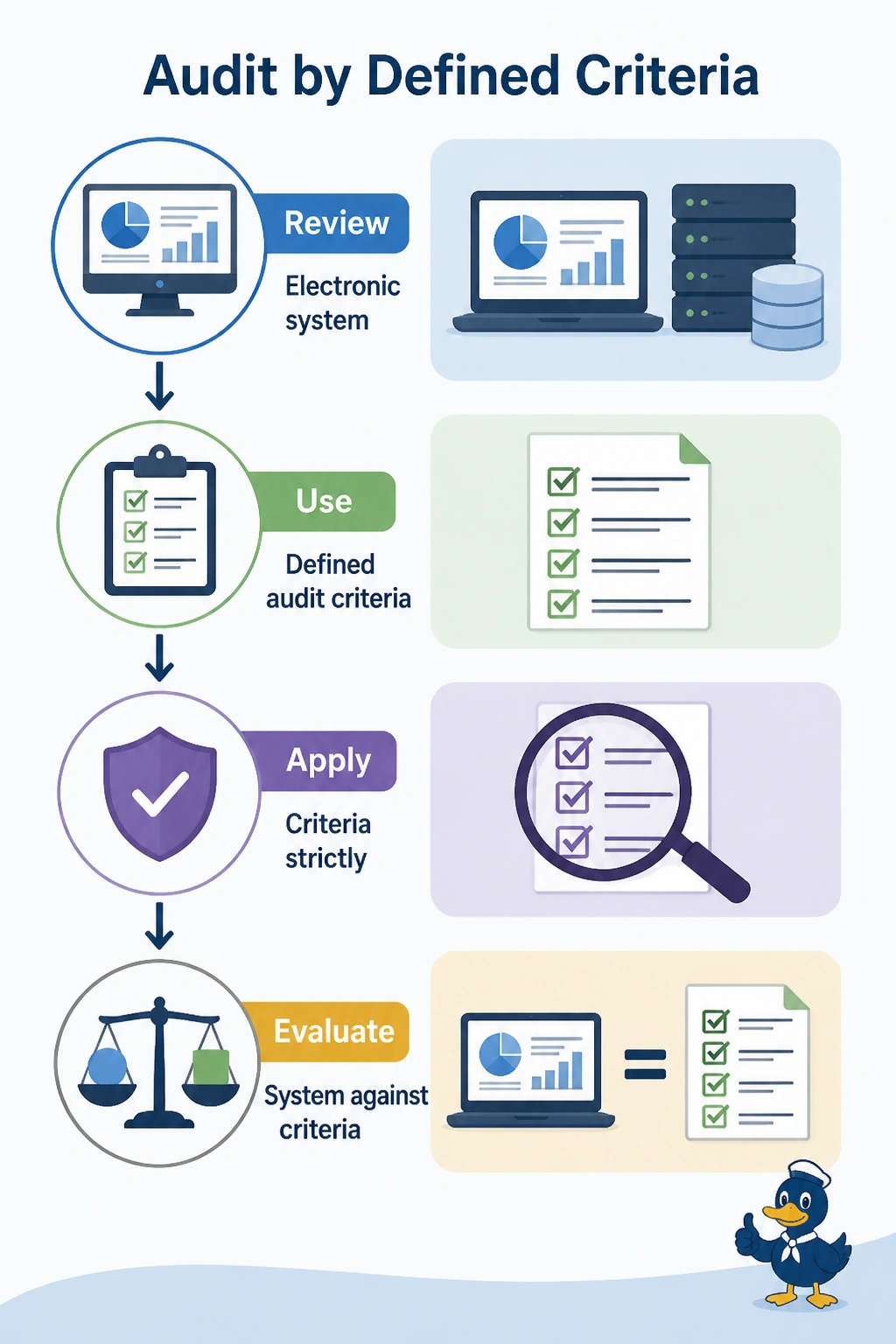
You don’t need to treat a different method as wrong just because you used another system before. Your role is to check whether the supplier meets the stated criteria, guided by objectivity rather than personal preference. That keeps your audit focused on requirements, not on remodeling the supplier’s process.
Full Explanation
Auditor objectivity means assessing performance against defined audit criteria, not personal habits, so you should evaluate the electronic system strictly against those criteria. If the database meets applicable standards, internal procedures, and traceability requirements, the supplier’s chosen method is conforming. Recommending that the supplier adopt your preferred paper system would be unsolicited consulting and could introduce personal bias into the audit record. Citing a minor nonconformity merely because digital workflows are unfamiliar is not justified unless a requirement has actually been breached. Asking the quality manager to justify rejecting traditional paper tags wastes interview time and puts the auditee on the defensive over a non-issue. One caveat: if you are unfamiliar with the electronic tool’s audit trail or access controls, ask the auditee to demonstrate how those specific criteria are met. As a practical check, trace two active gauges from the shop floor into the electronic database and verify their calibration status, due dates, and change history.
Prefer to study offline? Printable PDF study book + test engine ($7.50, unofficial). These questions stay free here.