
Midway through an on-site process audit of a specialty chemical plant, an auditor drafts a preliminary nonconformity after misreading a pressure gauge scale as bar instead of kilopascals. Upon reviewing the equipment specification sheet with the line engineer, the auditor realizes the reading was actually within specification. What should the auditor do?
Select an answer to reveal the explanation.
Short Explanation
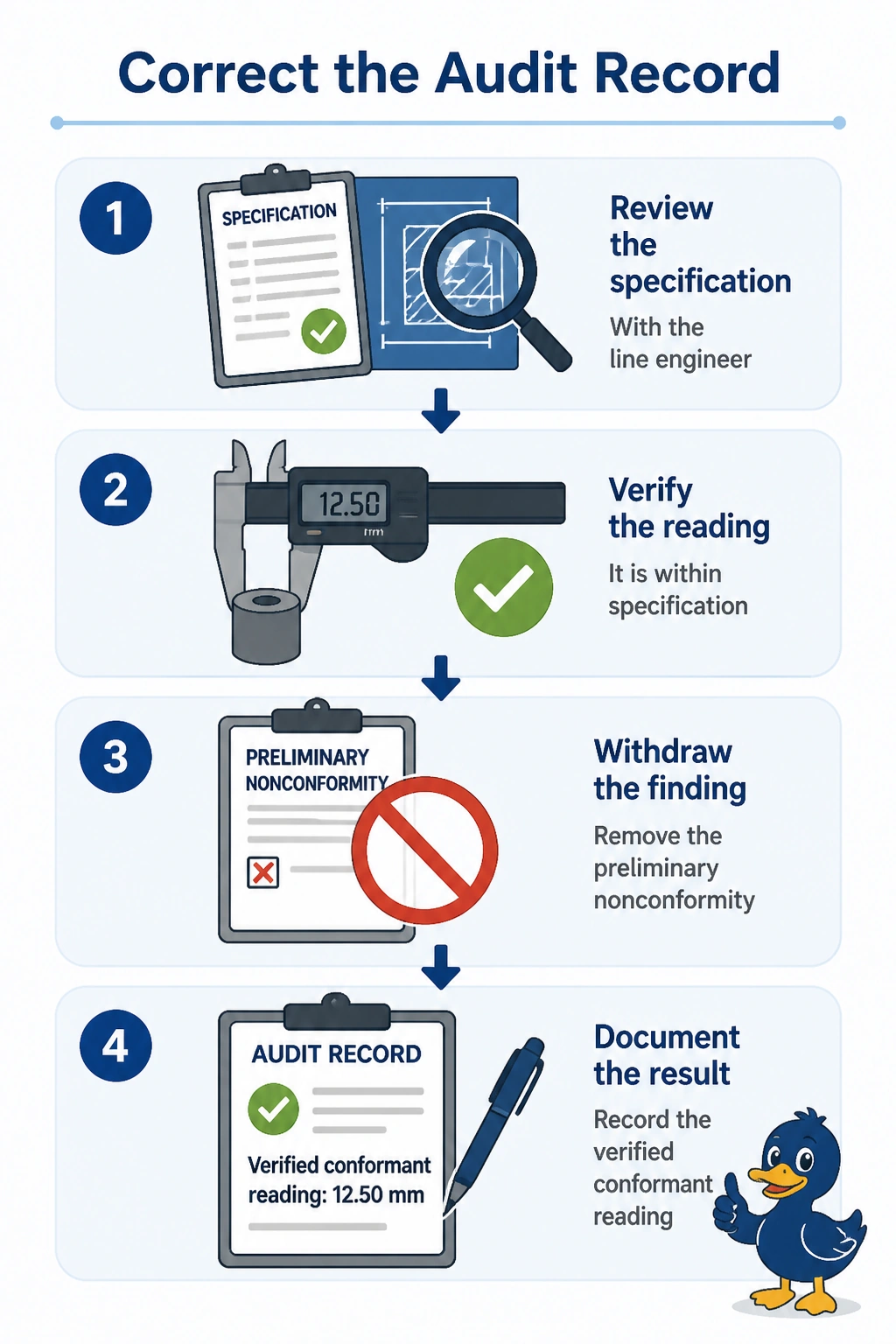
You can protect your credibility by correcting the record as soon as the specification confirms the gauge reading was within limits. Withdraw the preliminary finding and document the verified reading, rather than retaining it for consistency, requesting a gauge relabeling, or leaving it for management to dispute.
Full Explanation
Professional integrity and fair presentation require you to withdraw the preliminary finding and document the verified conformant reading once objective evidence shows that you misread the gauge scale. Recording the correct reading and its units keeps the audit record factual and demonstrates due professional care. Retaining the nonconformity as an observation merely to keep the finding count consistent compromises objectivity: it records a concern despite evidence that requirements were met. Asking the line engineer to relabel the gauge in bar oversteps your role by directing an equipment change when the existing scale and specification establish that the reading is conformant. Leaving the preliminary finding in the draft report for management to dispute at the closing meeting delays correction of a known error and undermines confidence in the audit team’s competence. As an exam caveat, genuine confusion about the gauge scale may warrant separate consideration, but it does not make this verified conformant reading a nonconformity. As a practical check, compare the gauge units and reading with the controlled equipment specification before drafting a finding.
Prefer to study offline? Printable PDF study book + test engine ($7.50, unofficial). These questions stay free here.