
During an evening team caucus at a multi-auditor supplier assessment, a junior auditor presents verified calibration records showing three out-of-tolerance gauges in active use. A senior auditor dismisses the records, noting the supplier has been a trusted partner for ten years. What should the lead auditor do?
Select an answer to reveal the explanation.
Short Explanation
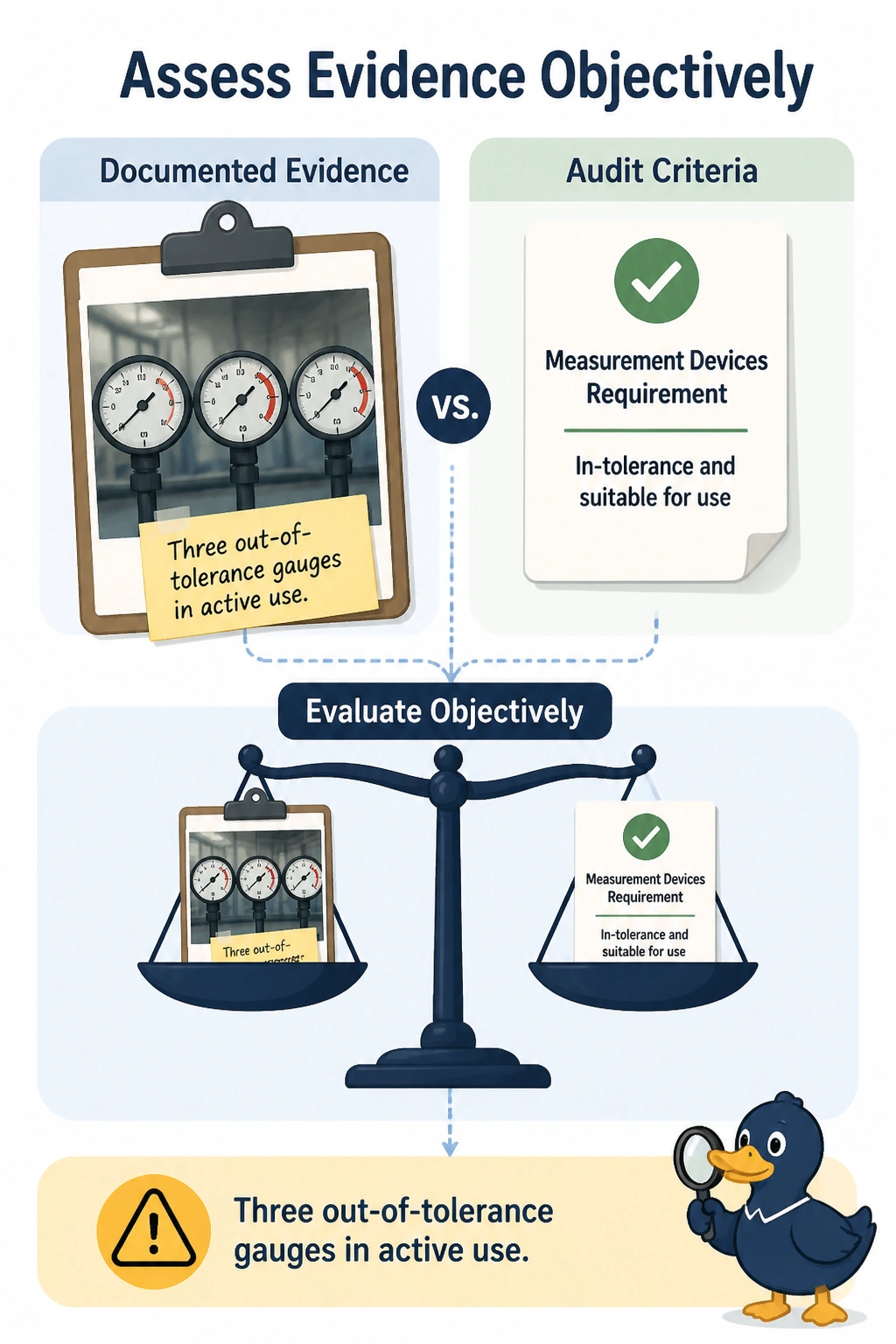
You’ve got verified records in hand, so don’t let a trusted supplier’s history or a senior colleague’s view outweigh the evidence. Objectivity means evaluating the documented gauge results against the audit criteria, whoever found them.
Full Explanation
Audit findings must rest on verifiable evidence, not reputation, hierarchy, or personal loyalty. The lead auditor should evaluate the junior auditor’s documented evidence objectively against the audit criteria, checking that the records identify the three gauges and establish their out-of-tolerance status and active use. Deferring to the senior auditor because of the supplier’s long-term reputation introduces halo and seniority bias, undermining audit integrity. Asking the supplier’s quality manager to resolve the auditors’ internal disagreement breaches team professionalism and gives the auditee a role in the team’s assessment. Excluding the calibration logs unless both auditors agree suppresses verified evidence and compromises fair presentation; unanimity is not a condition for reporting a supported finding. Caveat: if the records are confirmed as valid, consider whether products measured by the gauges require retrospective evaluation. As a practical check, review the calibration certificates and workstation logs together before the next morning’s opening briefing.
Prefer to study offline? Printable PDF study book + test engine ($7.50, unofficial). These questions stay free here.