
During a supplier audit of a commercial food-packaging printer, three department managers insist that skipping ink-viscosity checks during short production runs is standard practice across the entire industry and urge the auditor not to record it. Which auditor competency is most essential in this situation?
Select an answer to reveal the explanation.
Short Explanation
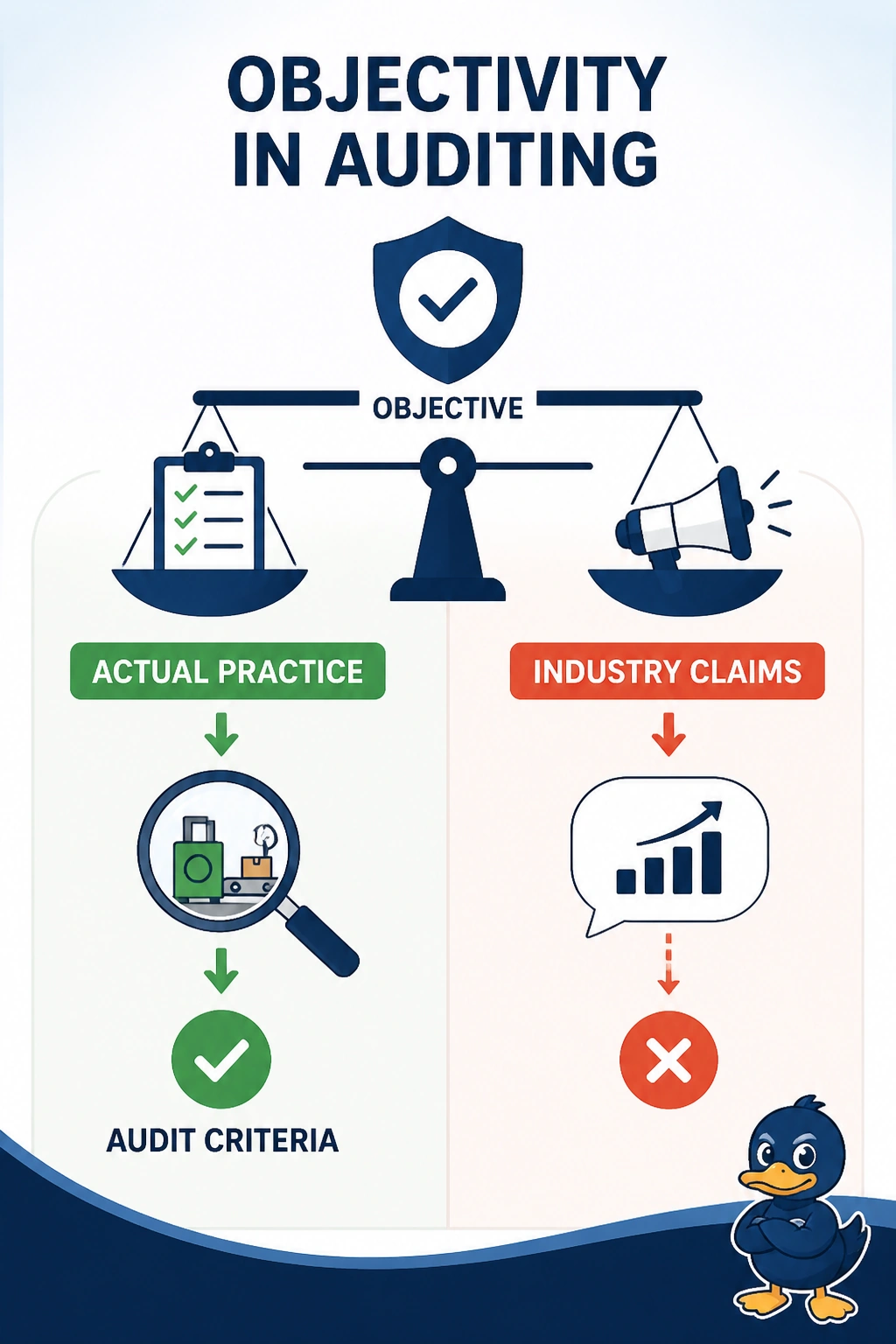
You can stay calm when managers confidently say that skipping ink-viscosity checks is standard practice. Keep your judgment anchored to objectivity: compare what actually happens with the defined audit criteria, not claims about competitors.
Full Explanation
Auditors must remain impartial and base conclusions on verifiable facts compared with agreed requirements. Objectivity to evaluate actual practice strictly against defined audit criteria rather than industry claims is essential: unverified appeals to common practice do not excuse noncompliance with customer or internal specifications. Flexibility to accept informal industry norms when procedures seem burdensome would compromise audit integrity and create inconsistent standards across suppliers. Diplomacy to delay the finding until the supplier surveys its competitors' practices would stall a valid nonconformity based on irrelevant external opinions. Consensus-building to align audit criteria with the managers' preferences would let the auditee rewrite the rules mid-audit to match its current habits. Exam caveat: if the supplier believes short-run viscosity checks are unnecessary, it must seek a formal specification waiver or procedure change through engineering and the customer, not through the auditor. Practical check: confirm the exact ink-viscosity requirement in the active purchase order and work instruction before presenting the finding.
Prefer to study offline? Printable PDF study book + test engine ($7.50, unofficial). These questions stay free here.