
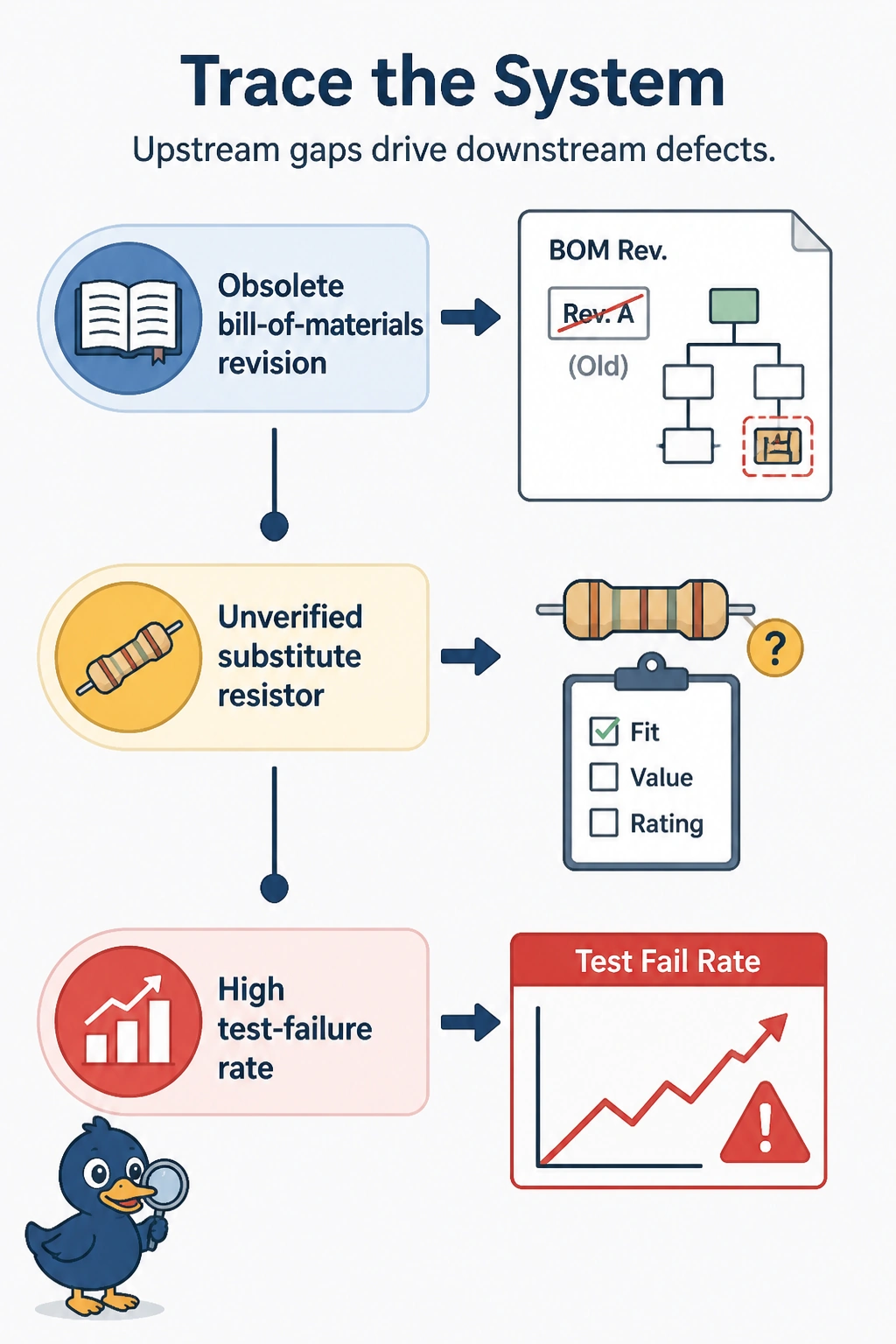
During an audit of a custom electronics manufacturer, an auditor finds an obsolete bill-of-materials revision in receiving inspection, an unverified substitute resistor on the kitting cart, and a high test-failure rate in final assembly. Which auditor competency best enables the auditor to connect these three observations?
Select an answer to reveal the explanation.
Short Explanation
Siloed auditing spots three small fires and misses the arsonist upstream. The trap is logging isolated discrepancies in each department—when you apply systems thinking, you connect how an outdated document at receiving cascades straight into final test failures.
Full Explanation
Processes in a quality management system interact as a chain, so connecting symptoms across departments requires Systems thinking to trace how upstream gaps drive downstream defects. When an auditor follows the flow of engineering change control from receiving into kitting and final test, the root breakdown becomes clear instead of appearing as three unrelated mistakes. Focusing on Memorizing every component part number listed in the engineering master catalog is unnecessary and misses the broader governance breakdown in document and material control. Settling for Writing three separate minor findings without checking upstream process handoffs obscures the systemic root cause and leads to piecemeal fixes that fail to stop repeat defects. Restricting interviews solely to final-assembly test technicians cuts off the audit trail before reaching the receiving and engineering controls where the breakdown began. As a caveat, tracing upstream links must stay within the authorized audit scope or receive client approval if it crosses into unscheduled functions. For an operational check, map input-output handoffs between receiving, kitting, and test during fieldwork to verify whether document revisions flow cleanly across department boundaries.
Prefer to study offline? Printable PDF study book + test engine ($7.50, unofficial). These questions stay free here.