
While observing a sterile-compounding pharmacy technician prepare a batch, an auditor notices an out-of-calibration balance and immediately sighs, shakes their head, and frowns. The technician abruptly stops speaking and gives minimal answers afterward. Which competency principle did the auditor violate?
Select an answer to reveal the explanation.
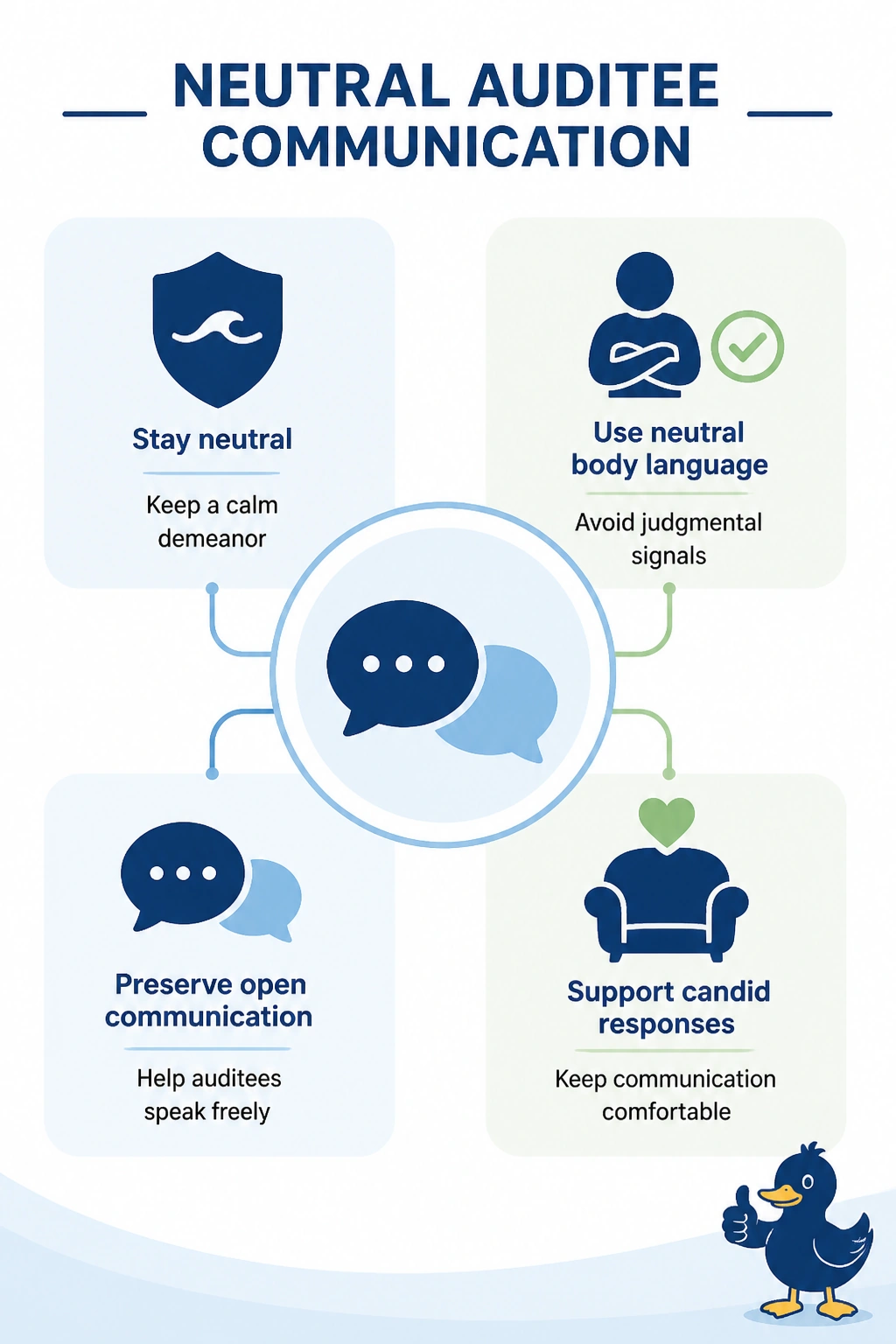
Short Explanation
Your face can speak louder than your notebook, and a single sigh can shut down an interview faster than a tough question. The trap is thinking only spoken words affect auditees, when visible frustration puts staff on the defensive and hides the real process story.
Full Explanation
Effective auditing relies on gathering candid, accurate information from frontline staff, which requires Maintaining neutral demeanor and body language to preserve open auditee communication. When an auditor sighs, shakes the head, or frowns after spotting an out-of-calibration balance, the technician perceives blame and withdraws, which shuts down the open dialogue needed to trace how the gap happened. Separating a technical judgment about the balance from the way the finding is discussed describes objectivity in reporting, not the nonverbal conduct that caused the technician to stop speaking. Asking neutral open-ended questions about how the balance is checked before use is appropriate fieldwork to understand the workflow, and the stem shows no flawed questioning, only flawed demeanor. Writing down the calibration status before raising it with the technician reflects good note-taking discipline, not the competency failure displayed here. Exam caveat: nonverbal cues such as sighing, frowning, or impatient gestures are tested as communication barriers just like leading questions. Operational check: when you spot a potential nonconformity, keep your expression calm, record the identifier neutrally, and invite explanation with open questions.
Prefer to study offline? Printable PDF study book + test engine ($7.50, unofficial). These questions stay free here.