
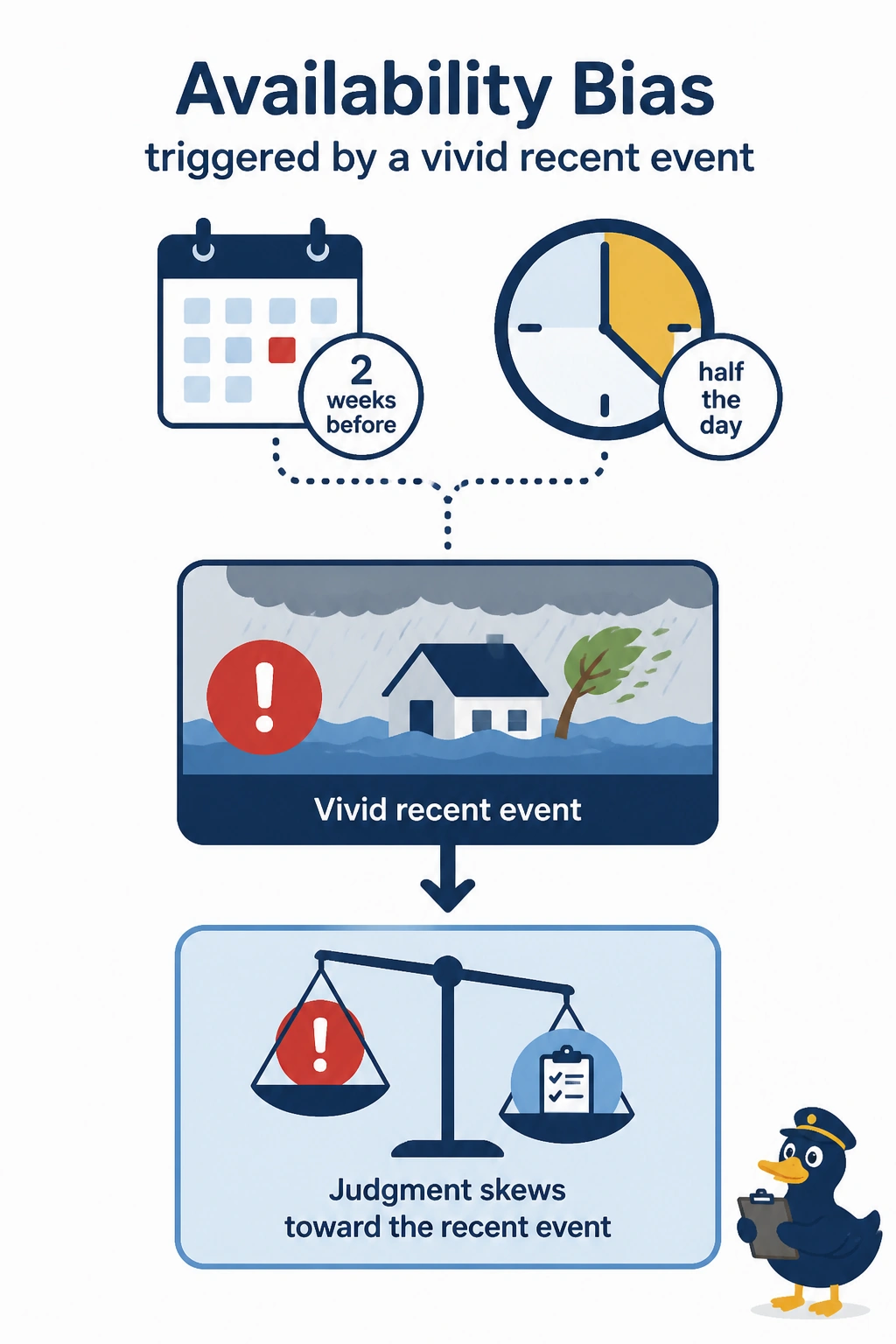
Two weeks before auditing a regional food distributor, an auditor reads news coverage about a major national recall caused by faulty dock-door seals. During the audit, the auditor spends half the day inspecting dock-door gaskets while neglecting higher-risk cold-chain temperature-monitoring controls listed in the audit plan. Which cognitive bias is affecting the auditor's judgment?
Select an answer to reveal the explanation.
Short Explanation
A dramatic headline can stick in your mind like a bright neon sign, pulling your attention away from the real risks on your checklist. When a vivid news story steers your sampling, you are experiencing availability bias. The trap is confusing this outside mental shortcut with halo or recency effects that happen inside the audit itself.
Full Explanation
Allowing a headline-grabbing recall to hijack fieldwork priorities is a classic case of Availability bias triggered by a vivid recent event. Availability bias occurs when decision-makers judge the likelihood or importance of a risk based on how easily dramatic examples come to mind rather than on objective risk data and the approved audit plan. Halo effect from strong initial impressions is incorrect because the halo effect happens when an auditor lets polished performance or a spotless area at the facility create an overly favorable view of other unverified areas. Familiarity bias toward a known facility fails because the scenario describes distraction from an external news story rather than complacency from auditing the same site repeatedly. Recency bias from end-of-audit observations is also wrong since recency bias gives undue weight to evidence seen late in the audit rather than a pre-audit media report. Exam caveat: cognitive biases often look similar in short stems, so match the specific trigger—outside vivid memory, first impression, end-of-audit timing, or repeat exposure. As an operational check, compare actual time spent per process against the risk-ranked audit plan at midday.
Prefer to study offline? Printable PDF study book + test engine ($7.50, unofficial). These questions stay free here.