
During a four-day second-party audit at a contract electronics supplier, the host team invites the auditor to social dinners each evening and jokes casually about overlooking minor paperwork gaps. How should the auditor maintain appropriate professional conduct?
Select an answer to reveal the explanation.
Short Explanation
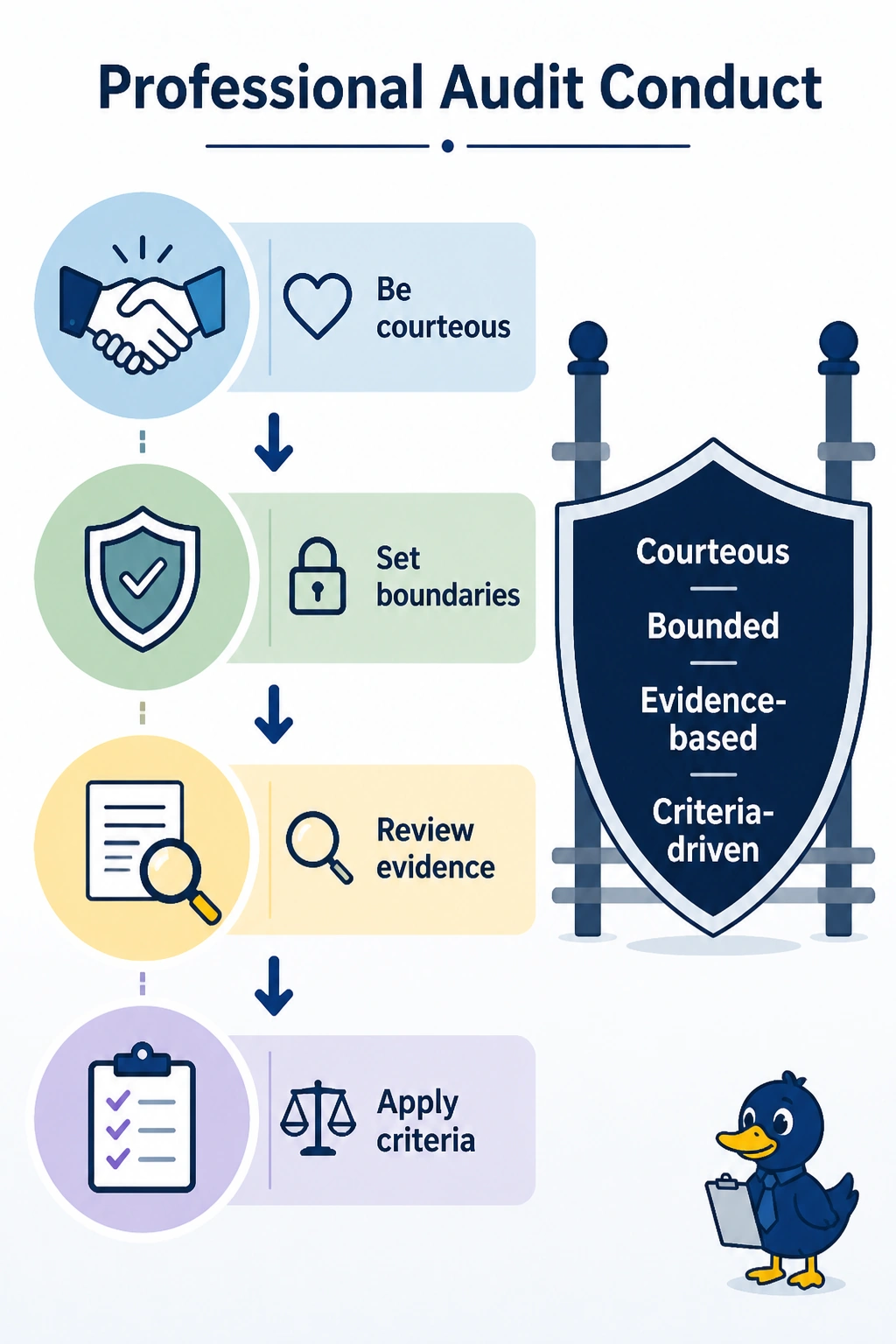
Friendly hosts can make your audit feel more like a business dinner than an objective evaluation, and that is the trap to watch for. You do not need to act cold or hostile, but social favors or jokes must not influence your judgment. Stay warm and respectful while keeping professional boundaries firm.
Full Explanation
Effective auditors balance approachable communication with independence so auditees can share accurate information without compromising audit integrity. Maintain courteous interactions while keeping firm boundaries and judging evidence strictly against criteria; this upholds ethical conduct, prevents perceived conflicts of interest, and ensures each finding rests on objective evidence. Declining all polite conversation during breaks and eating every meal alone creates unnecessary tension and may make frontline staff reluctant to speak openly during interviews. Attending social dinners and accepting complimentary entertainment introduces hospitality obligations that can bias your judgment or appear improper to the audit client. Softening minor documentation findings in the closing meeting to keep the supplier cooperative violates fair presentation and conceals real process gaps. An exam caveat is that courtesy is compatible with impartiality; the key is not to let hospitality or social pressure affect evidence-based decisions. As a practical check, review your organization’s hospitality policy before travel, pay your own off-site meal expenses, and document every paperwork gap objectively regardless of the host’s tone.
Prefer to study offline? Printable PDF study book + test engine ($7.50, unofficial). These questions stay free here.