
During an internal audit of a hospital laboratory, the lab supervisor admits that proficiency-testing records were not reviewed on time, but asks the auditor to overlook the gap because two senior technologists recently resigned and the team is exhausted. How should the auditor respond?
Select an answer to reveal the explanation.
Short Explanation
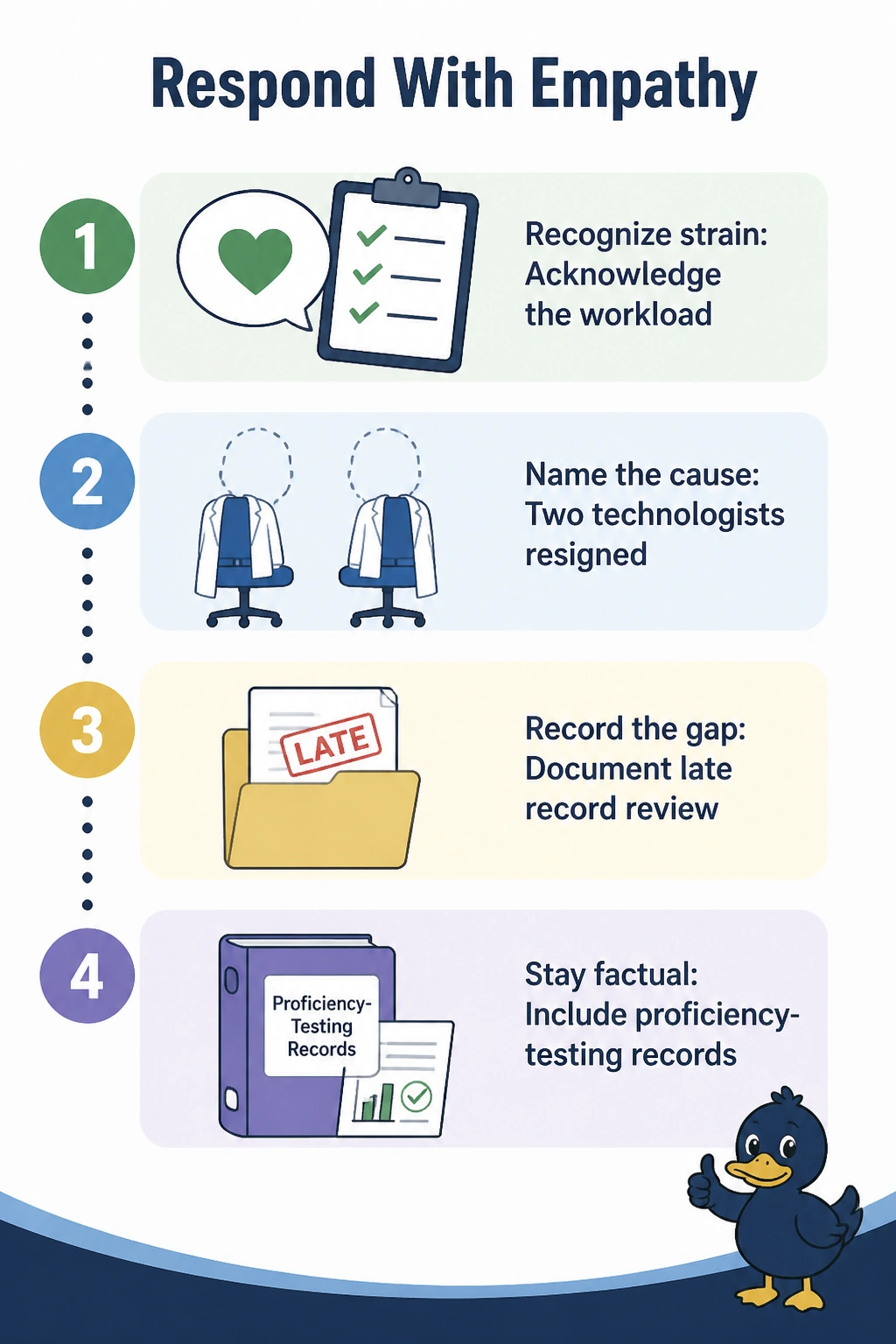
Feeling empathy for a short-staffed team makes you human, but bending audit criteria puts patients and data integrity at risk. When an auditee appeals to sympathy, you should listen respectfully while still recording the verified nonconformity. The trap is letting personal compassion override objective evidence.
Full Explanation
The auditor should Acknowledge the workload strain while documenting the gap. Empathy and professional courtesy keep communication open, but audit integrity requires recording verified nonconformities against established criteria regardless of staffing challenges; in fact, documenting the gap helps leadership see the operational risk of understaffing and allocate resources. Omit the finding from the report until new technologists are hired violates fair presentation and hides a known quality-system lapse from management. Extend the audit schedule to help the lab complete the reviews crosses the boundary from independent evaluator into operational staff, compromising auditor impartiality. Reclassify the missed review as compliant due to extenuating staff loss is also wrong because conformance depends on meeting defined requirements, not on whether an excuse is understandable. Exam caveat: audit criteria do not include undocumented hardship waivers; context belongs in the background discussion or root-cause analysis, never as a reason to erase a verified finding. As an operational check, note the supervisor's staffing explanation factually in the working papers so corrective action planning can address workload resilience.
Prefer to study offline? Printable PDF study book + test engine ($7.50, unofficial). These questions stay free here.