
During a closing meeting at a small family-owned food processor, the quality manager becomes visibly upset when the auditor presents a major nonconformity on allergen cross-contact controls. How should the auditor communicate the finding?
Select an answer to reveal the explanation.
Short Explanation
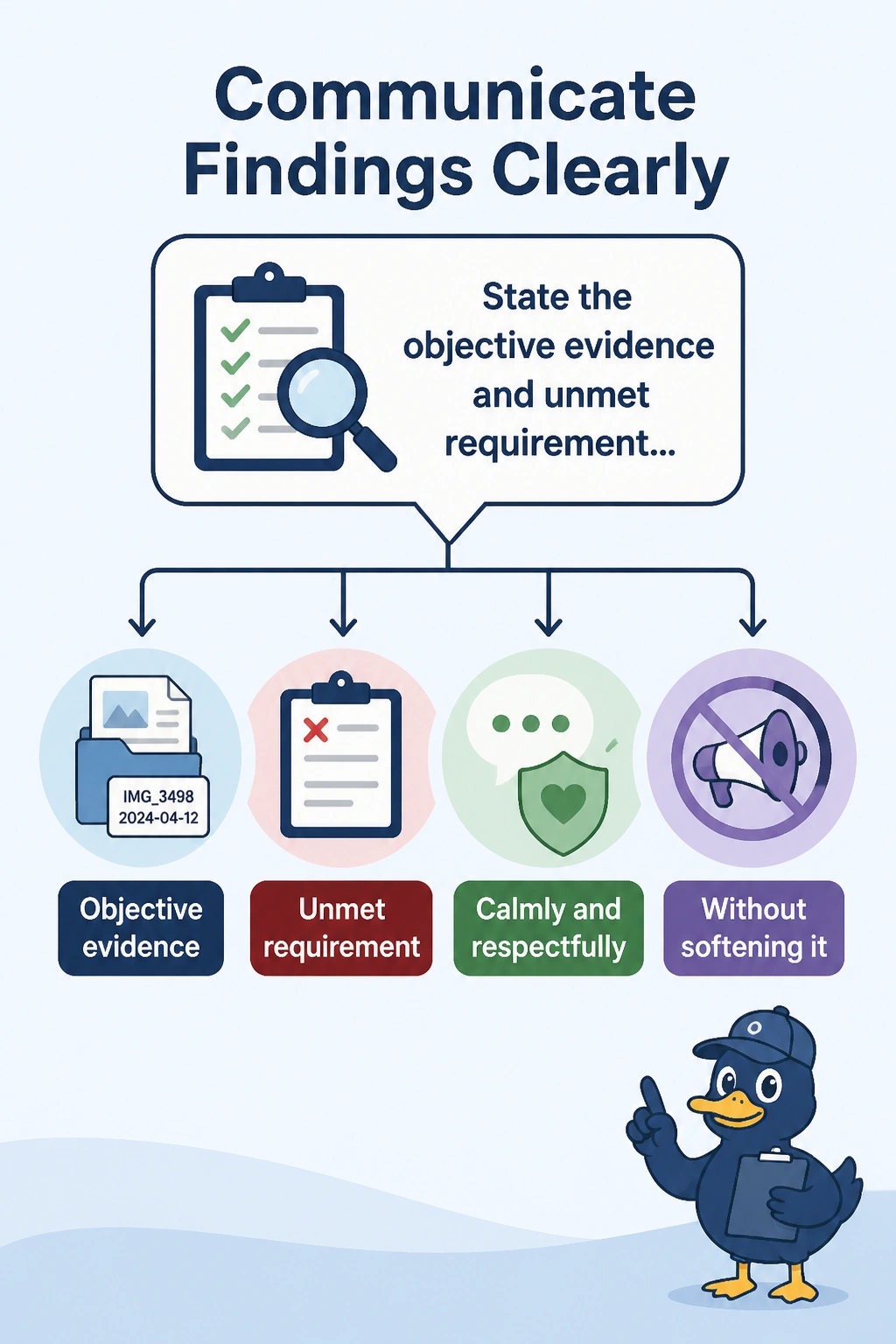
You can be empathetic while still stating the verified finding clearly and respectfully. Keep the evidence intact; the quality manager’s distress is no reason to water down a real food-safety risk.
Full Explanation
Professionalism during a closing meeting means respecting people while staying committed to the facts. State the objective evidence and unmet requirement calmly and respectfully without softening it; focusing on observed records, physical conditions, and specific criteria avoids personal blame while preserving the audit’s integrity. Downgrading the nonconformity to an observation temporarily so the quality manager remains cooperative compromises objectivity and misleads management about a serious allergen-control gap. Pausing the meeting to ask the company president to replace the emotional quality manager oversteps the auditor’s authority and unnecessarily escalates interpersonal tension. Apologizing for the disruption and promising to omit the finding if the plant fixes it by Friday violates fair presentation and audit ethics: a verified nonconformity must be reported even if corrected quickly. Exam caveat: empathy changes how you deliver a message, never the classification of verified evidence. Practical check: if emotions run high, pause briefly so the auditee can review the physical evidence at their own pace, then confirm the agreed response timeline.
Prefer to study offline? Printable PDF study book + test engine ($7.50, unofficial). These questions stay free here.