
During a software change-control audit, a release manager responds to every question with rapid-fire internal acronyms and shorthand tool names, leaving the real approval steps unclear. Which interviewing approach should the auditor use?
Select an answer to reveal the explanation.
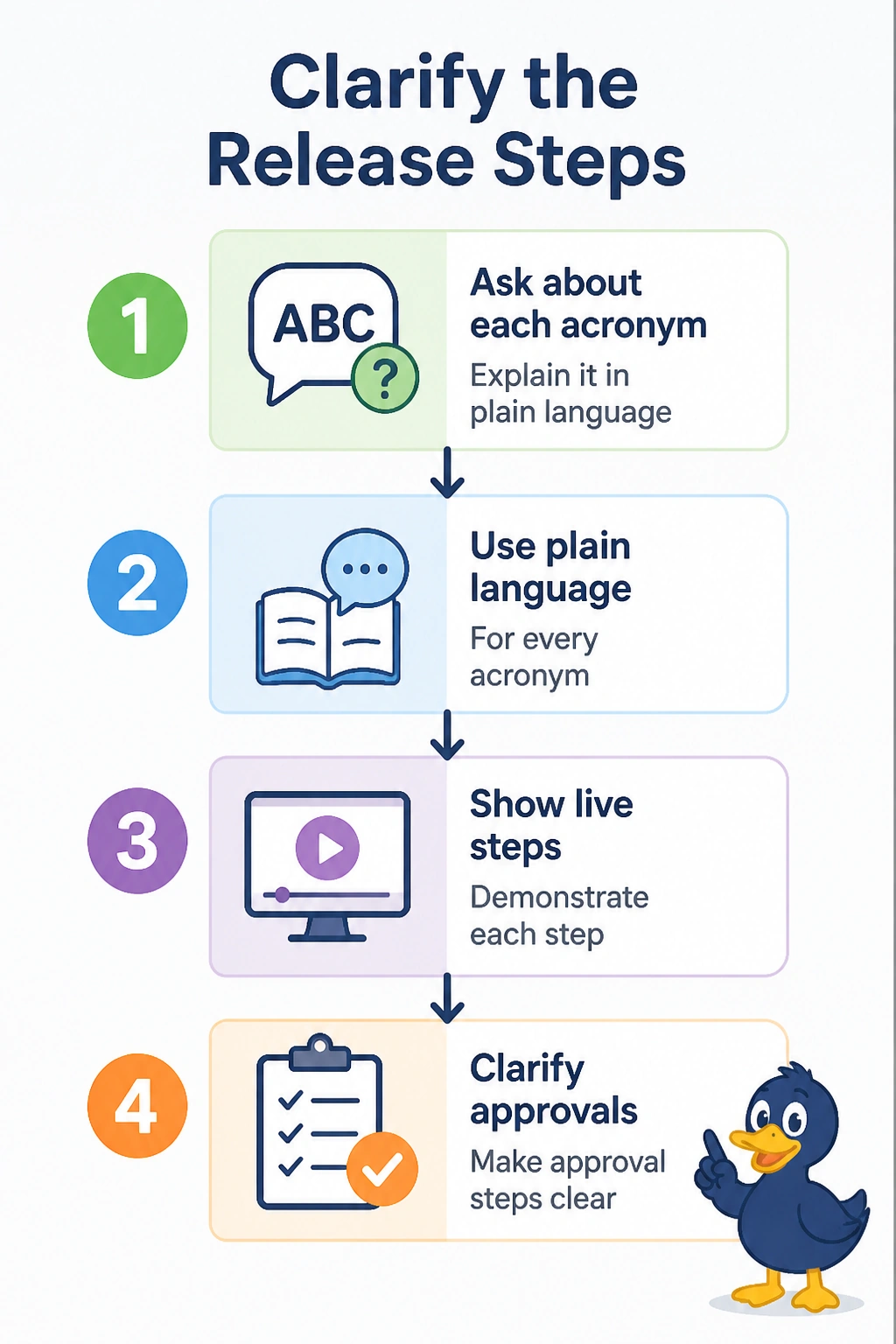
Short Explanation
Acronym soup can sound impressive while hiding a broken workflow underneath. You might be tempted to nod along or record shorthand you cannot verify, but politely ask for plain-language explanations and a live walkthrough so your notes capture evidence of real control steps, not buzzwords.
Full Explanation
Effective auditing requires turning vague or jargon-heavy statements into verifiable facts. Asking the manager to explain each acronym in plain language and show live steps clarifies the actual workflow and lets you compare real system behavior with documented change-control criteria. Copying the acronyms verbatim into the report without clarification produces an unintelligible audit trail and fails to establish whether approvals occurred. Ending the interview immediately and citing a nonconformity for poor communication is improper because internal jargon alone does not violate quality requirements; the process must fail applicable criteria. Assuming the process is compliant because the manager sounds confident substitutes auditee confidence for objective evidence. As an exam caveat, technical experts or pre-audit glossaries can help you prepare, but a live demonstration remains essential when workflows use custom tooling. For a practical check, trace one recent production change ticket from request through approval in the live system while the manager explains each status transition in plain language.
Prefer to study offline? Printable PDF study book + test engine ($7.50, unofficial). These questions stay free here.