
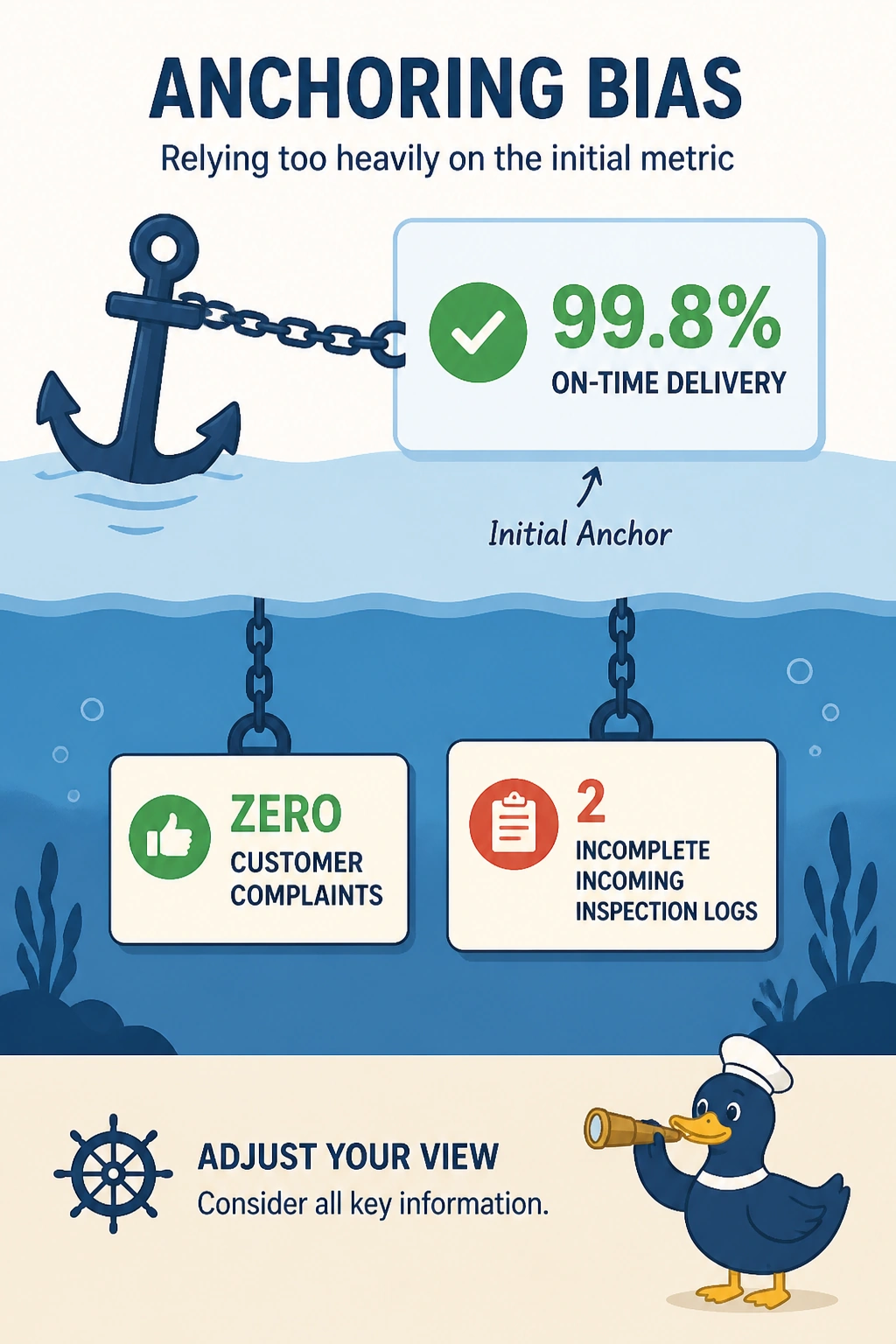
At the start of a supplier audit, the host quality manager presents a glowing dashboard showing 99.8% on-time delivery and zero customer complaints. Later, when the auditor spots two incomplete incoming inspection logs, the auditor feels inclined to dismiss them as minor clerical slips. The initial metric sets a reference point that later evidence is judged against. Which cognitive bias is affecting the auditor?
Select an answer to reveal the explanation.
Short Explanation
First impressions stick like glue, especially when a supplier opens with a spotless scorecard. The trap is letting your brain anchor to that early 99.8% number and downplay real record gaps you find later on the floor. Treat every sample on its own objective evidence, no matter how rosy the opening slide deck looks.
Full Explanation
Auditors must guard against mental shortcuts that distort how objective evidence is weighed. In this scenario, the auditor is experiencing Anchoring bias caused by relying too heavily on the initial metric, because the impressive opening dashboard set a mental reference point that made subsequent inspection gaps seem trivial by comparison. By contrast, Recency bias caused by weighting only the final hour of the closing review happens when the most recent observations overshadow earlier findings, which is the opposite of being swayed by an opening presentation. Similarly, Confirmation bias caused by seeking only records that prove a pre-set theory describes selectively hunting for evidence to support an existing suspicion rather than reacting to an opening metric. Finally, Groupthink caused by deferring to the consensus of an audit team panel requires pressure from multiple team members to conform, whereas this scenario involves a solo auditor's judgment. As a caveat, high-level delivery metrics never prove that underlying quality records are compliant. For an operational check, review each sampled record against written acceptance criteria independently before looking at summary dashboards, and verify whether missing inspection logs reflect a wider control gap.
Prefer to study offline? Printable PDF study book + test engine ($7.50, unofficial). These questions stay free here.