
During a second-party supplier audit in a country with strong workplace hierarchy, an auditor notices that junior lab technicians stay silent whenever their department director is in the room, making it hard to verify actual test practices. How should the auditor handle this situation?
Select an answer to reveal the explanation.
Short Explanation
You can respect local workplace norms by changing how and where you ask questions, while keeping the evidence standard consistent. Direct technician interviews help you avoid relying on a manager’s account or creating an unnecessary confrontation.
Full Explanation
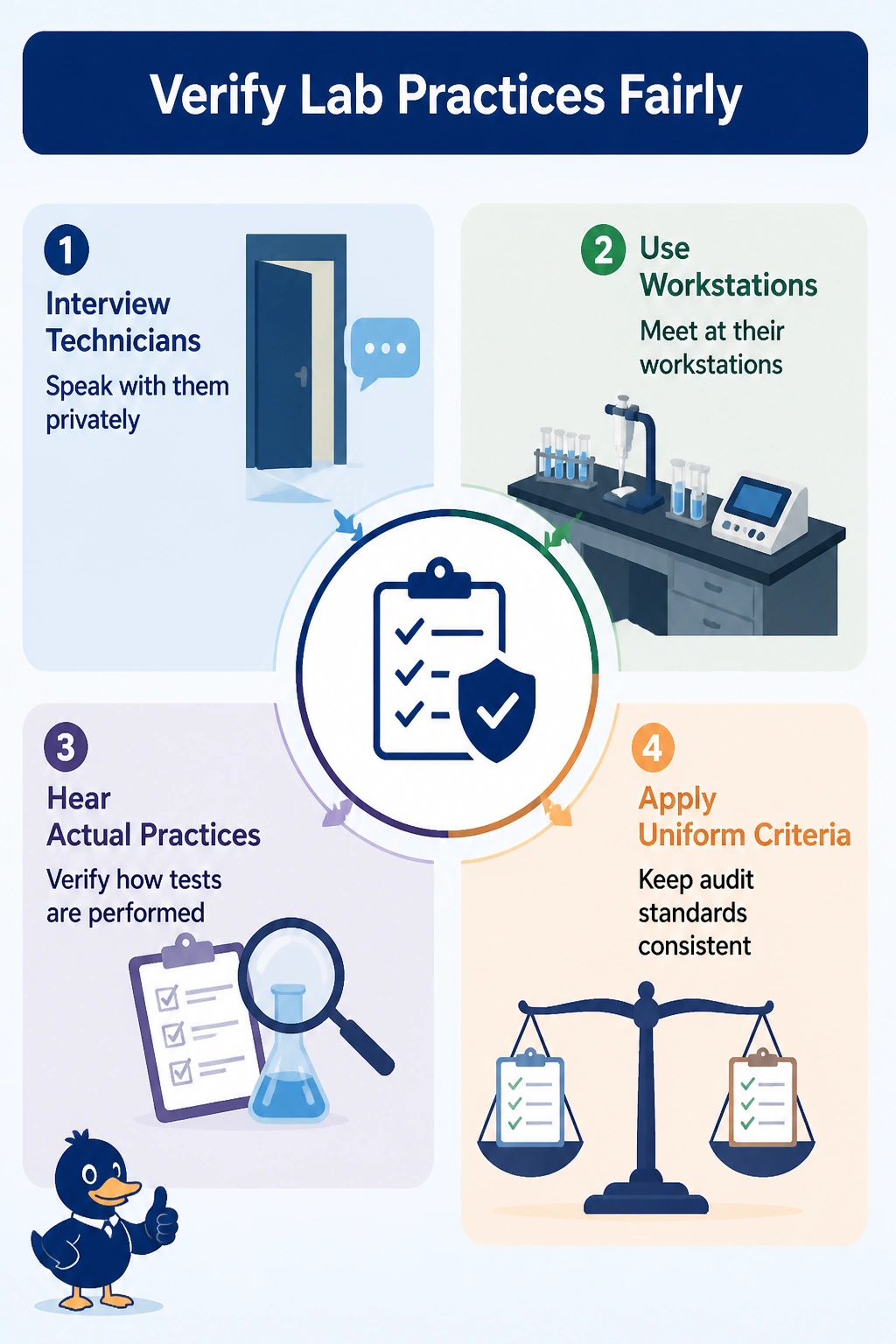
Skilled auditors respect local workplace norms while still gathering direct, reliable evidence from the people performing the work, so you should conduct private workstation interviews with technicians while maintaining uniform audit criteria. Requesting brief, private discussions at the test bench and asking technicians to demonstrate routine steps can reduce hierarchical pressure while keeping the audit objective and respectful. Insisting that the department director leave the facility for the remainder of the audit is unnecessarily confrontational and exceeds an external auditor’s authority over host personnel. Accepting the director’s verbal summaries instead of interviewing technicians substitutes management opinion for firsthand verification of actual lab practice. Relaxing technical verification standards because junior staff may not speak openly compromises audit impartiality and leaves product-quality risks unchecked. Caveat: if a translator or escort is required for safety or language reasons, use a neutral interpreter rather than the technician’s direct supervisor. As a practical check, corroborate technician demonstrations against timestamped instrument logs.
Prefer to study offline? Printable PDF study book + test engine ($7.50, unofficial). These questions stay free here.