
During a scheduled one-day audit of a regional logistics hub, a department manager brings twelve thick binders of unrequested historical shipping manifests to the conference room and encourages the auditor to read through them page by page. How should the auditor respond to maintain control of evidence gathering?
Select an answer to reveal the explanation.
Short Explanation
When an auditee buries you in binders, it is easy to lose half your audit day reading yesterday's paperwork instead of testing today's controls. The trap is either drowning in irrelevant pages or overreacting by skipping records altogether.
Full Explanation
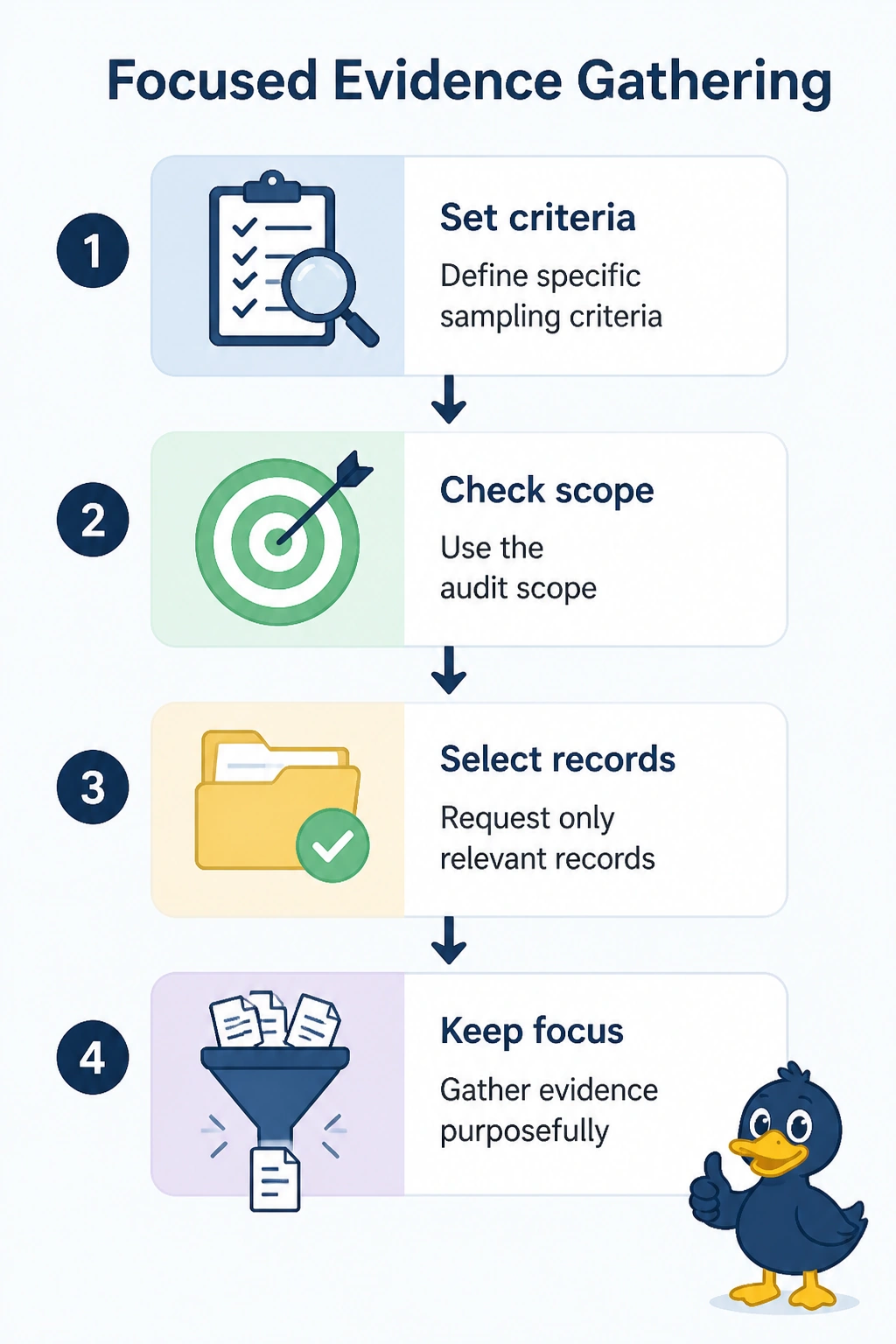
To keep fieldwork focused and impartial, you should "Define specific sampling criteria and request only the records relevant to the audit scope". Auditors control their own sampling strategy so that limited time is spent verifying high-risk processes, recent transactions, and representative lots rather than wading through unrequested volume. Trying to "Review every binder sequentially so no potential discrepancy is overlooked" surrenders schedule control and threatens coverage of other planned areas. Choosing to "Decline all physical binders and rely solely on management interviews" leaves you with uncorroborated verbal statements instead of objective documentary evidence. Meanwhile, deciding to "Record a nonconformity immediately for deliberate obstruction of the audit" is premature and unprofessional because providing excessive records is not an automatic violation unless access to requested records is actually denied. As a practical caveat, remain courteous and explain clearly why you are narrowing the request so the auditee does not perceive the redirection as dismissive. As an operational check, log the exact record identifiers, date ranges, and sample sizes you select in your working papers to demonstrate unbiased sampling.
Prefer to study offline? Printable PDF study book + test engine ($7.50, unofficial). These questions stay free here.