
During an internal audit of a hospital central sterile supply department, a newly hired technician appears anxious and hesitant to answer questions about instrument-washer cycles, fearing personal reprimand. Which approach best helps the auditor gather accurate information?
Select an answer to reveal the explanation.
Short Explanation
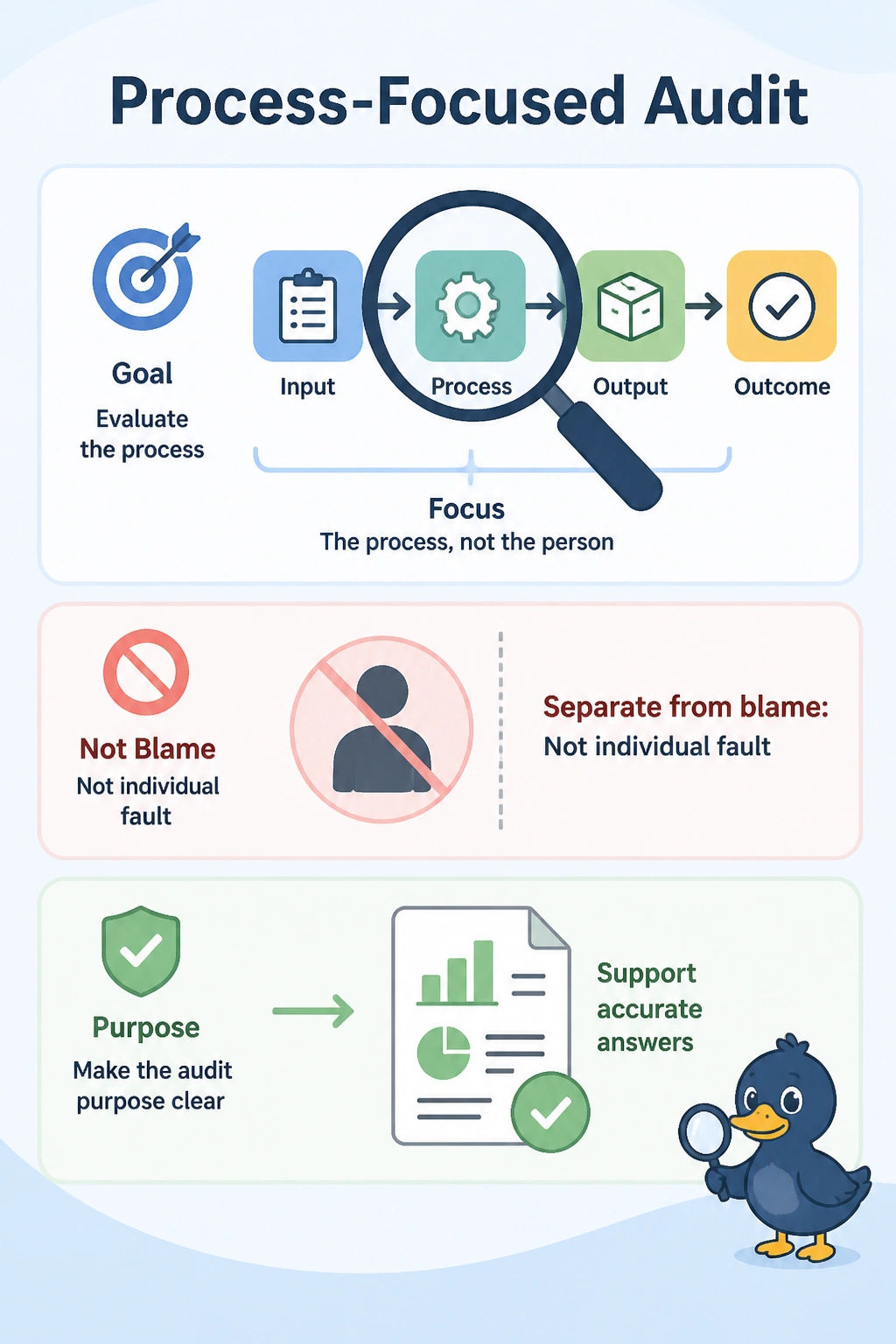
A nervous technician who thinks you are hunting for someone to blame will clam up or tell you only what sounds safe. The trap is bringing in higher-ups or rushing through yes-or-no questions, which only hides how the work really happens.
Full Explanation
To build rapport and obtain candid answers, you should "Clarify that the audit evaluates the process rather than individual fault". When frontline staff understand that an audit tests whether procedures, training, and equipment support reliable work—not whether an employee deserves punishment—they are far more willing to describe actual practices and bottlenecks. Choosing to "Have the department director sit beside the technician to verify every answer" usually increases intimidation and prompts the technician to defer to management rather than speak freely. Deciding to "Switch to rapid closed-ended questions so the interview finishes quickly" restricts the conversation to brief confirmations and misses valuable context about daily workarounds. Opting to "Skip frontline interviews and rely solely on the supervisor's written summary" cuts off direct evidence from the person actually operating the washer. As a caveat, reassuring an auditee never means promising to ignore a genuine safety or compliance failure if one is observed. As an operational check, begin frontline interviews with a calm, neutral introduction and follow up verbal explanations by watching a live cycle or checking washer printouts.
Prefer to study offline? Printable PDF study book + test engine ($7.50, unofficial). These questions stay free here.