
During a remote audit of a distributed medical software team, an engineer shares a static slide deck of test-approval screenshots instead of opening the live issue-tracking system. Which interviewing practice should the auditor use?
Select an answer to reveal the explanation.
Short Explanation
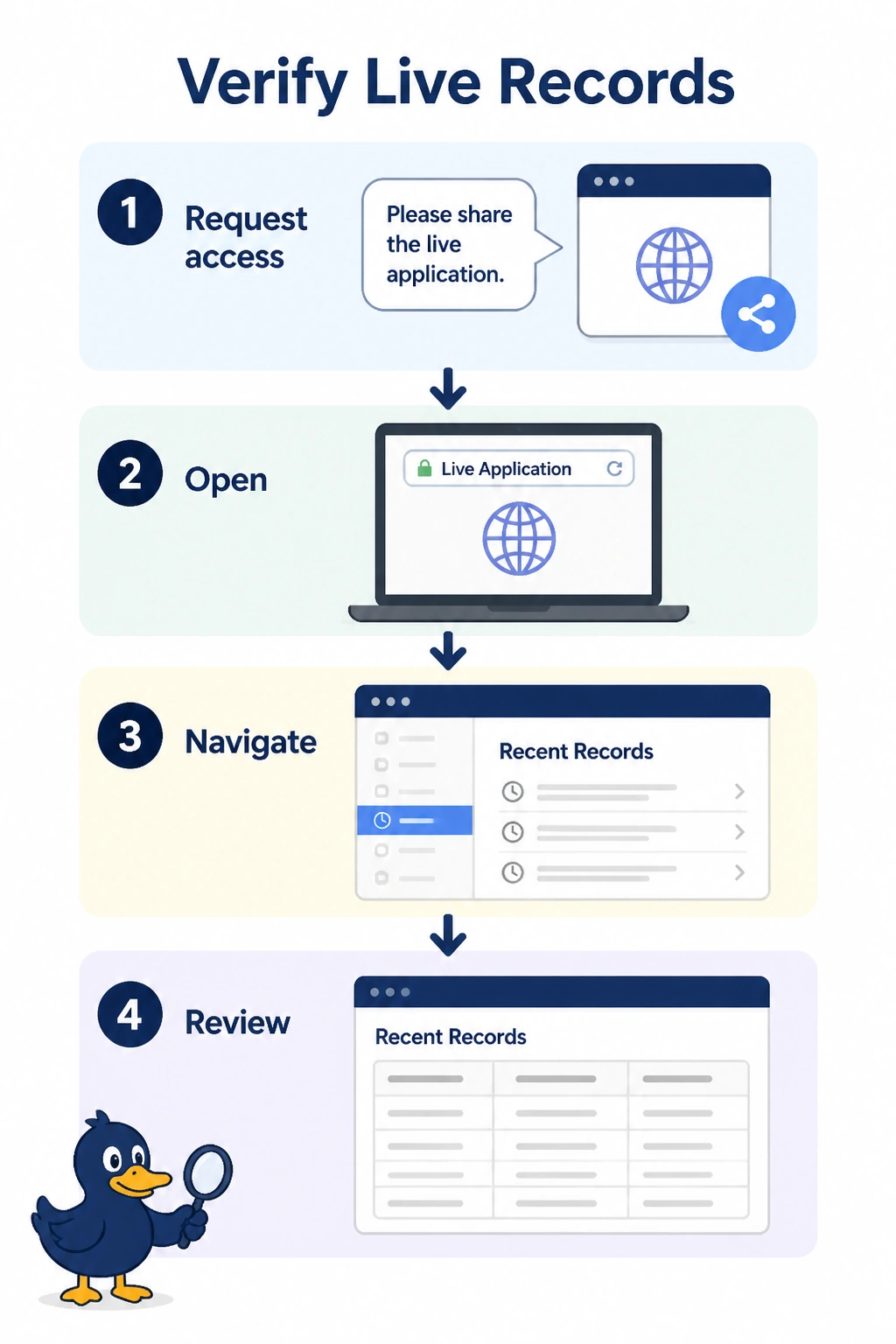
You’re right to look beyond a static slide deck, which shows only the screenshots someone chose to include. Ask the engineer to share the live application and navigate to recent records so you can verify authenticity, current system states, and real workflow behavior.
Full Explanation
To verify authenticity during a virtual interview, ask the engineer to share the live application and navigate to recent records. Live navigation lets you select sample IDs on the spot, observe real system timestamps, and confirm how controls operate in practice rather than relying on pre-selected visuals. Accepting the slide deck as sufficient proof to avoid slowing down the scheduled video call leaves you vulnerable to outdated or cherry-picked examples that cannot be independently corroborated. Requesting that the engineer email PDF copies of the slides after the closing meeting concludes merely duplicates the same static, unverified presentation without testing live system behavior. Ending the remote interview and classifying the entire software release process as nonconforming jumps to an unsupported conclusion before giving the auditee a fair chance to demonstrate live records. As an exam caveat, if bandwidth or security restrictions prevent live screen sharing, arrange an alternative verification method with the audit client rather than guessing. As a practical check before any virtual interview, test screen-sharing permissions and prepare two or three specific record identifiers to request live.
Prefer to study offline? Printable PDF study book + test engine ($7.50, unofficial). These questions stay free here.