
During an audit interview, a software release manager rapidly describes a multi-step emergency rollback workflow using unfamiliar internal acronyms and branching conditions. Which communication technique should the auditor use to verify accurate understanding before moving on?
Select an answer to reveal the explanation.
Short Explanation
If you assume you understood a burst of unfamiliar acronyms, you risk writing a finding based on a misunderstanding. Your best move is to mirror the explanation back in plain words, avoiding the trap of nodding along just to save time.
Full Explanation
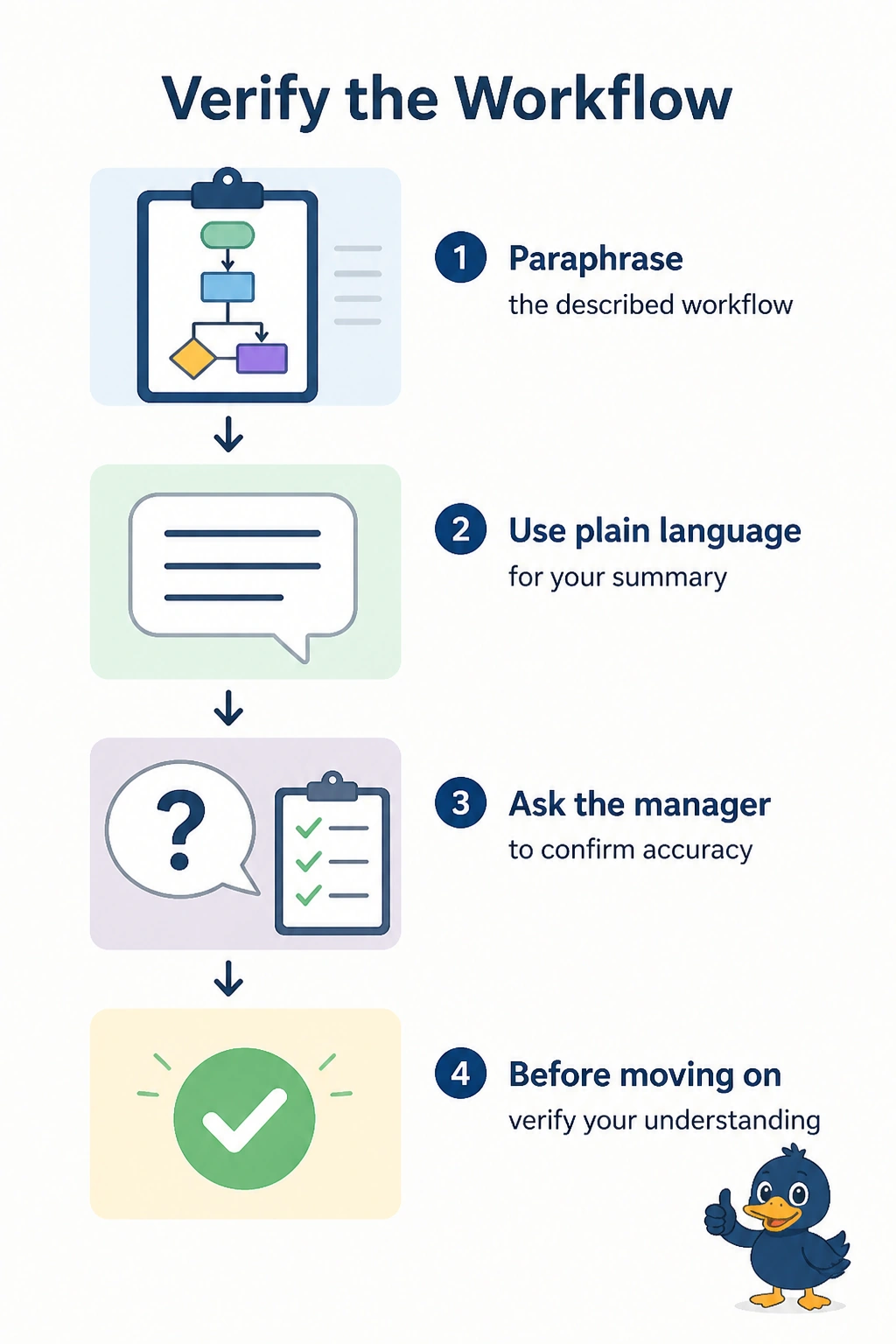
When technical jargon or fast-paced explanations create ambiguity, the auditor should Paraphrase the described workflow in plain language and ask the manager to confirm accuracy. Reflective paraphrasing surfaces misunderstandings immediately, builds rapport, and ensures that recorded audit notes reflect what the auditee actually meant before corroborating with records. Choosing to Interrupt the manager mid-sentence to demand a printed copy of the entire software architecture manual fails because abrupt demands create defensiveness and documents alone do not confirm how the manager executes emergency steps. Choosing to Nod politely without asking follow-up questions so the interview finishes ahead of the scheduled block fails because unverified assumptions lead to inaccurate evidence and disputed findings later. Choosing to Ask a closed yes-or-no question about whether the team always follows the documented rollback policy fails because closed questions invite superficial agreement rather than revealing actual workflow steps. Caveat: paraphrasing confirms the auditee's intended meaning, not objective truth, so you must still verify claims against change tickets and logs. Operational check: summarize the sequence step by step, confirm each acronym's meaning, and then inspect two recent rollback tickets.
Prefer to study offline? Printable PDF study book + test engine ($7.50, unofficial). These questions stay free here.