
During an internal audit of a medical-device complaint-handling process, the customer-service lead claims delayed escalations are entirely engineering's fault, while the engineering manager blames customer service for incomplete intake forms. How should the auditor respond?
Select an answer to reveal the explanation.
Short Explanation
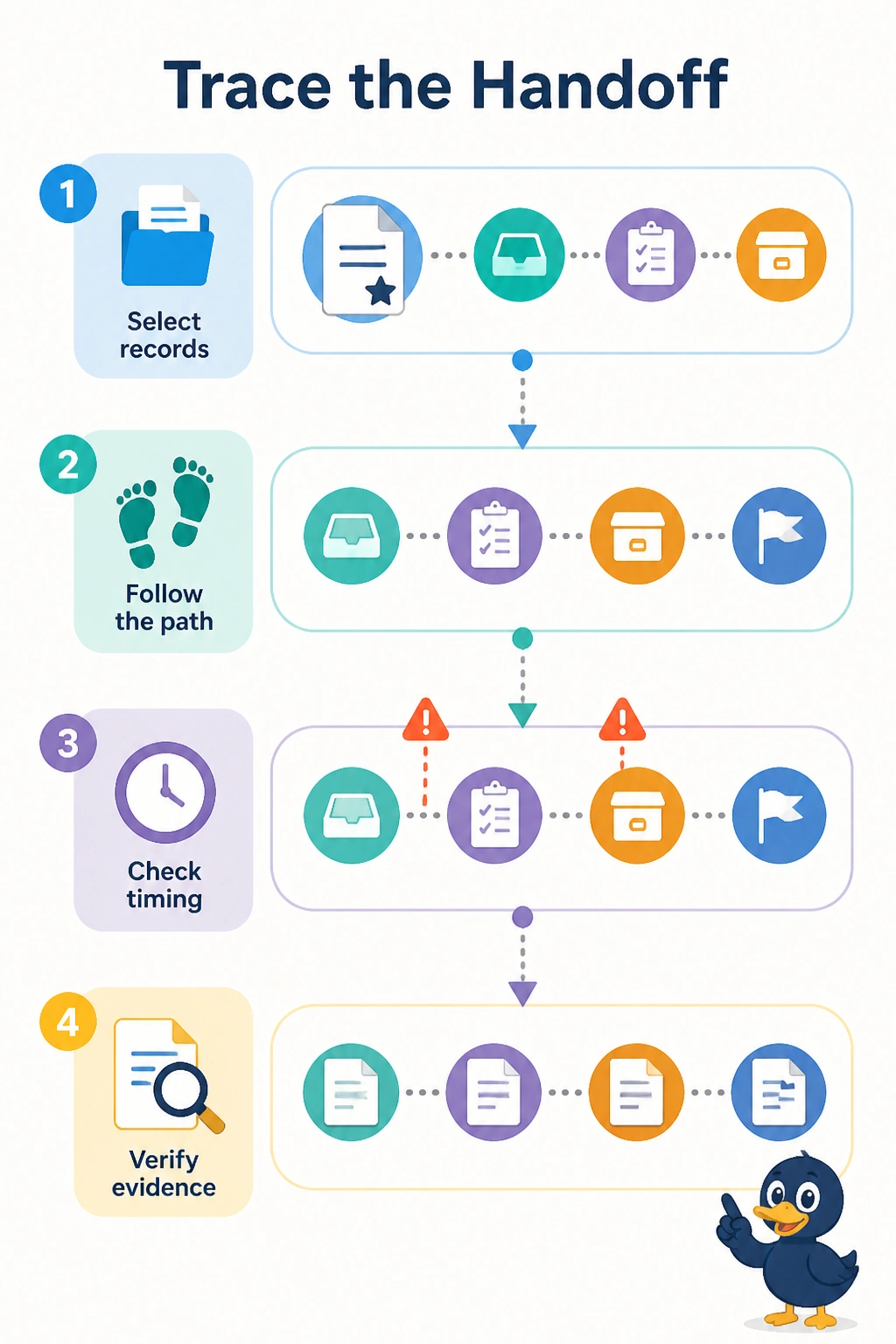
When two departments point fingers across a handoff, taking sides or splitting the blame only fuels the argument. Your best move is to pull real records and let timestamps show where the baton actually dropped.
Full Explanation
When auditees blame another department for a breakdown, the auditor should Trace specific complaint records across the handoff to verify where delays occur. Following concrete transactions through intake, transfer, and engineering review replaces finger-pointing with objective evidence of missing criteria, unclear ownership, or broken handoff gates. Choosing to Accept both managers' explanations and close the topic as an interpersonal conflict leaves a potential systemic process failure unexamined. Deciding to Issue separate nonconformities to both departments based on their mutual accusations violates the fundamental rule that findings must rest on verified evidence against criteria, not hearsay or blame. Opting to Ask the two managers to resolve the disagreement privately and email a joint summary surrenders audit control and risks receiving a smoothed-over narrative instead of factual root causes. As a caveat, cross-departmental friction often reveals a gap in defined interface procedures rather than individual misconduct, so check process ownership documents carefully. Select three to five recent closed and open complaint IDs and compare submission timestamps against documented escalation SLA limits.
Prefer to study offline? Printable PDF study book + test engine ($7.50, unofficial). These questions stay free here.