
During a laboratory audit, an analyst hesitates, avoids eye contact, and glances repeatedly at the supervisor when asked how out-of-specification test results are documented. What is the auditor's best next step?
Select an answer to reveal the explanation.
Short Explanation
Body language is like a flashing dashboard light: it tells you where to look, not what is actually broken. The trap is either treating nervousness as proof of a violation or politely backing off instead of checking the real records.
Full Explanation
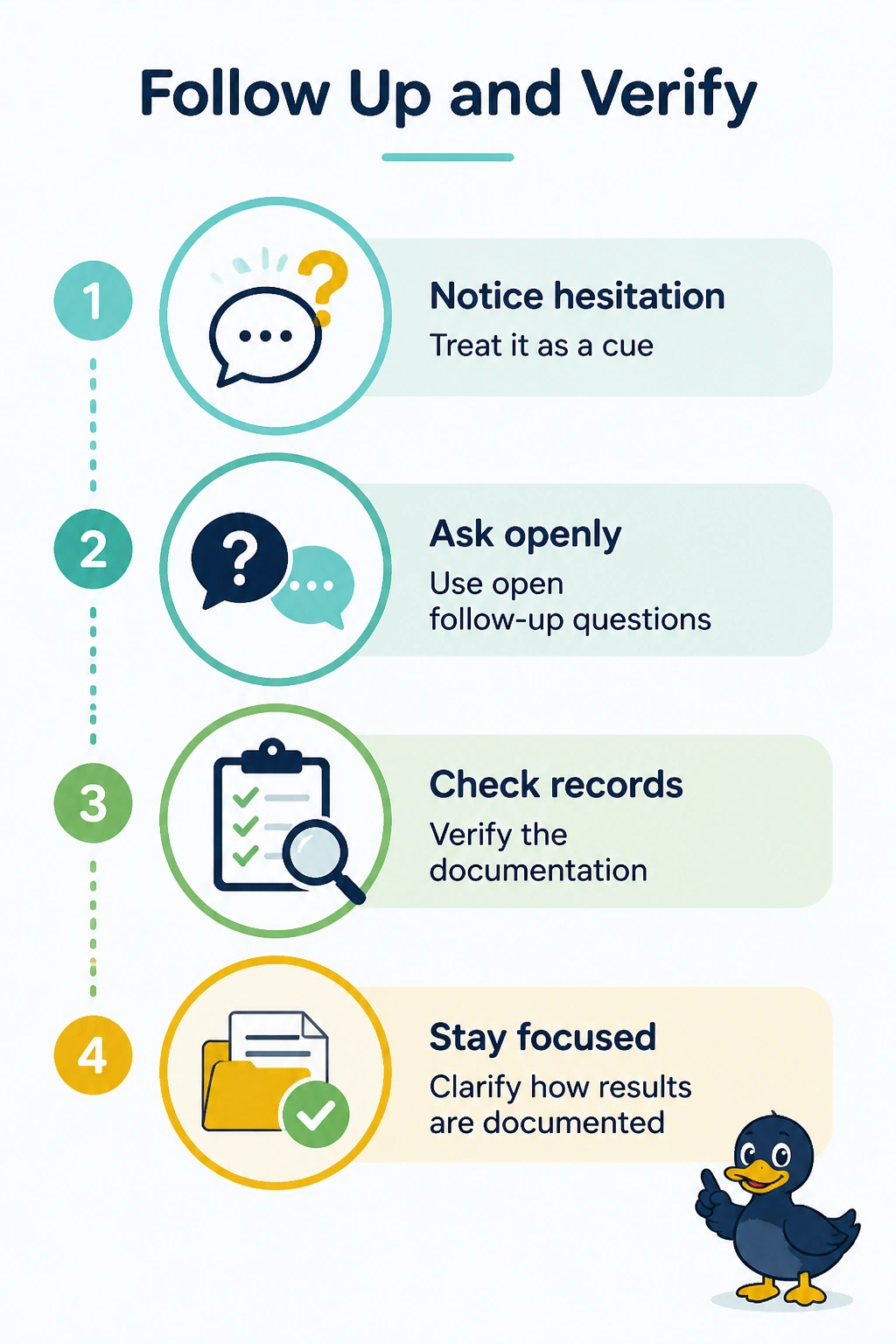
Effective auditors read non-verbal cues as signals to probe deeper with neutral questions and physical verification, which is why you should Use the hesitation as a cue to ask open follow-up questions and check records. Asking the analyst to walk through a recent out-of-specification investigation log reveals whether the procedure is understood and followed in practice. Document the analyst's nervous demeanor as objective evidence of a training gap fails because facial expressions and posture are subjective impressions, not verifiable audit evidence. End the interview immediately and question the supervisor privately instead bypasses the person performing the task and risks receiving a rehearsed management summary rather than actual floor practice. Accept the analyst's eventual verbal answer to avoid causing discomfort compromises audit rigor by leaving a potential control breakdown unverified. As a caveat, hesitation can stem from ordinary interview anxiety rather than noncompliance, so maintain a calm, non-accusatory tone while checking facts. As an operational check, corroborate any interview response involving critical controls with at least one independent record or live demonstration.
Prefer to study offline? Printable PDF study book + test engine ($7.50, unofficial). These questions stay free here.