
While conducting a supplier audit at an electronics assembly plant in another country, an auditor notices that engineers consistently nod and say "yes" during questioning even when they look uncertain about a test specification. How should the auditor respond to verify true understanding?
Select an answer to reveal the explanation.
Short Explanation
Polite nods do not always mean agreement—sometimes they just mean someone wants to be respectful while feeling unsure. When words leave you guessing, watching the actual work cuts right through the fog. The trap is either taking nods at face value or assuming bad faith.
Full Explanation
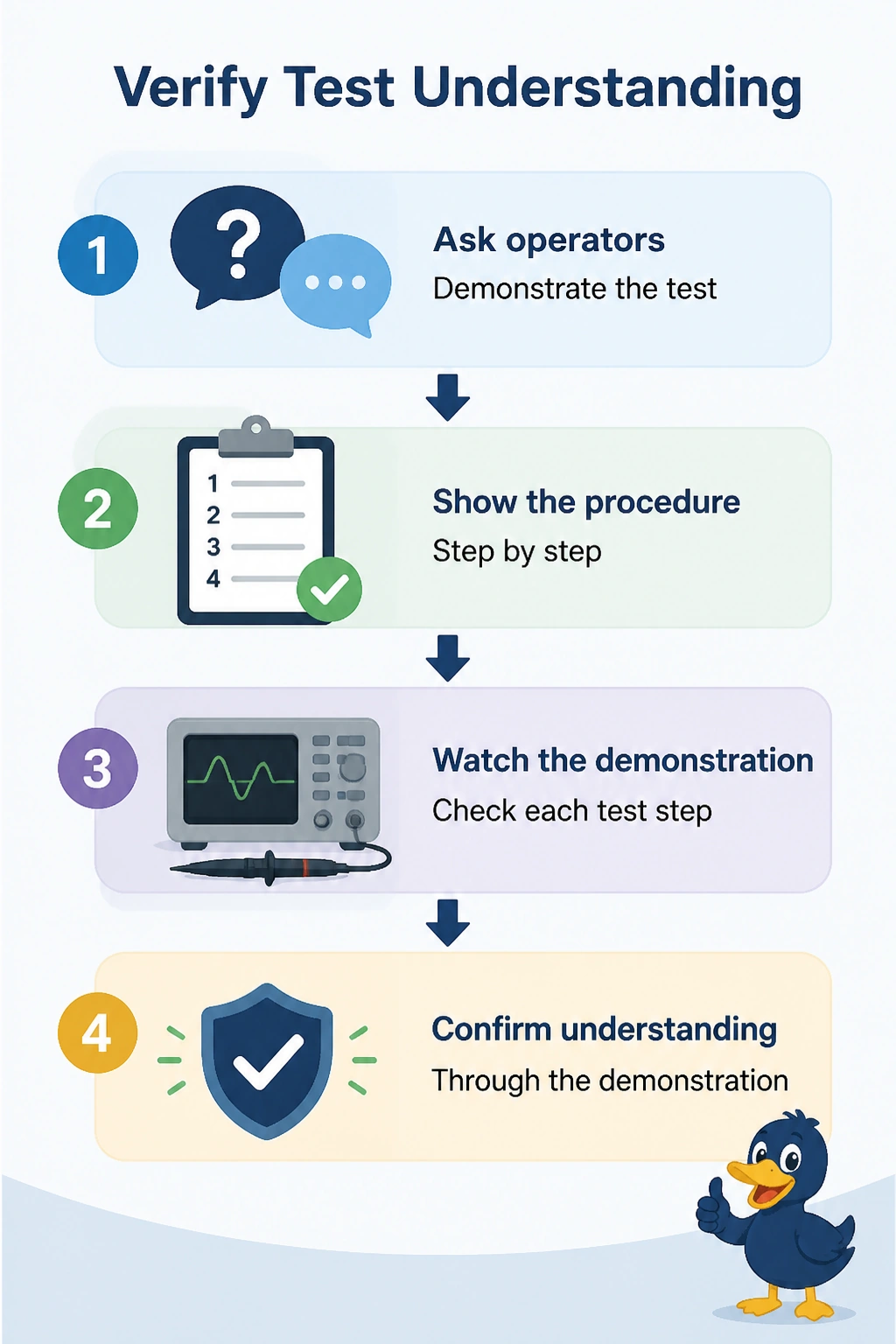
When cultural norms or language discomfort make polite agreement common, the most reliable way to verify competence is to ask engineers to demonstrate the test step-by-step at the workstation while referencing the controlled work instruction. Physical demonstration produces objective, observable evidence of whether the test specification is understood and followed. Choosing to accept the verbal confirmation and move to the next item leaves the auditor relying on unverified statements that may mask real nonconformities. To escalate the behavior as intentional audit obstruction misinterprets a common cross-cultural communication pattern as hostility and damages audit rapport without evidence. Meanwhile, choosing to switch to written yes-or-no questionnaires for the team invites the exact same polite agreement bias in written form rather than testing actual execution. As an exam caveat, never confuse cultural deference with deliberate deception unless objective evidence proves falsification. As a concrete operational check, pair the hands-on demonstration with an open-ended prompt asking the engineer to point out the pass/fail limit on the gauge or screen.
Prefer to study offline? Printable PDF study book + test engine ($7.50, unofficial). These questions stay free here.