
Midway through day one of an audit at an injection-molding supplier, the lead auditor realizes that lengthy tours and side discussions with engineering have put the team two hours behind schedule, threatening coverage of shipping and final inspection. What should the lead auditor do?
Select an answer to reveal the explanation.
Short Explanation
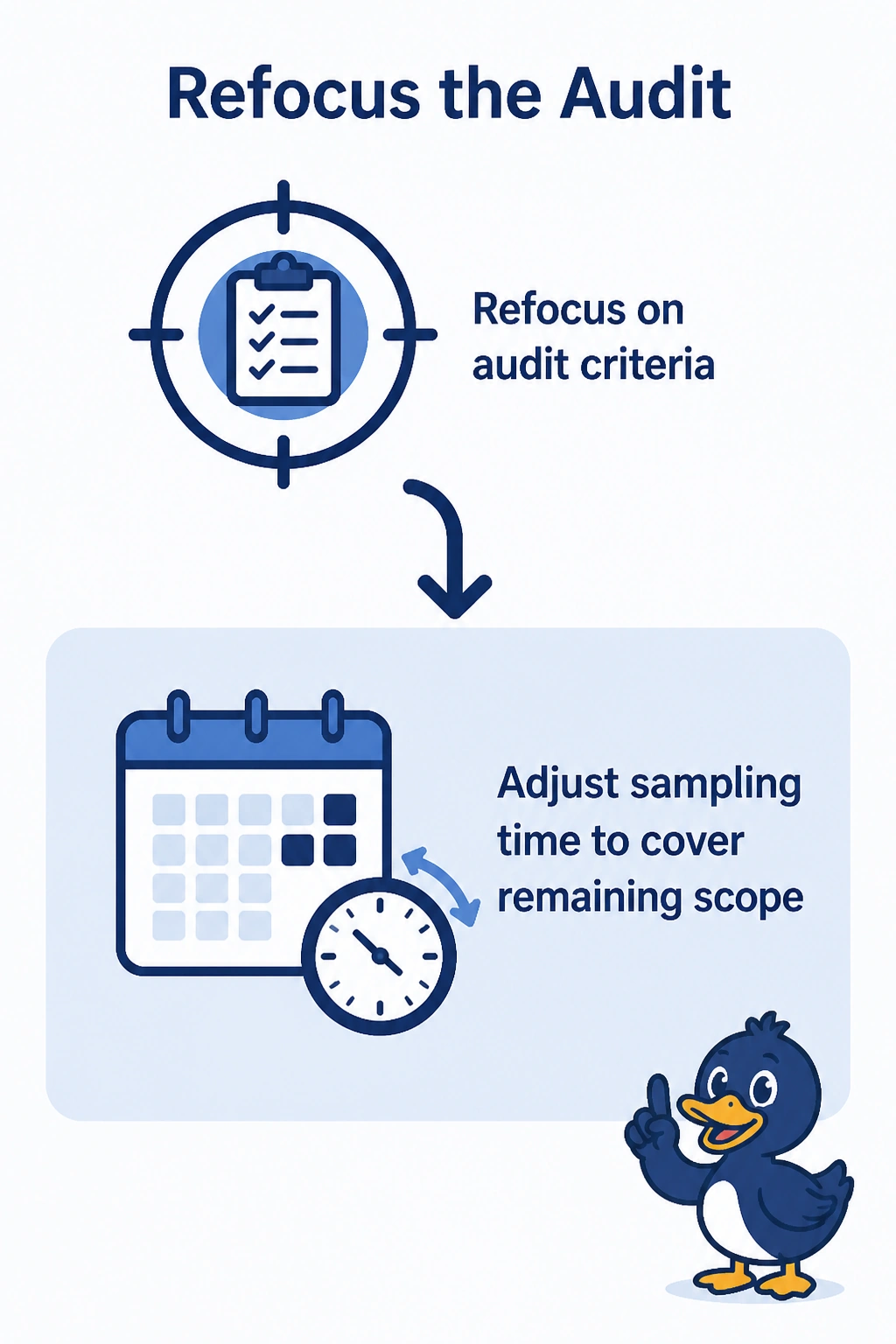
When you fall two hours behind, you still need to examine critical areas such as final inspection and shipping. Refocusing discussions on the audit criteria and adjusting your sampling protects coverage; keeping the closing meeting on time is not a reason to leave planned areas unexamined.
Full Explanation
Refocusing discussions on audit criteria and adjusting sampling time to cover the remaining scope demonstrates active lead-auditor time management without compromising audit integrity. You can politely park off-topic engineering debates, trim non-essential walkthroughs, and reallocate team members so high-risk processes such as final inspection and shipping still receive objective evaluation. Skipping final inspection and shipping to keep the closing meeting on time leaves major release controls unverified and creates a misleading impression of full scope coverage. Allowing side discussions to continue and leaving unfinished areas unexamined relinquishes control of the schedule and reduces the audit’s value. Converting the remaining on-site audit into an informal phone call sacrifices direct observation of physical product segregation, labeling, and shipment release verification. If time compression becomes too severe to gather adequate evidence, transparently document any scope limitations or request an agreed schedule extension rather than implying that full coverage occurred. As a practical check, use the next midday team huddle to review remaining checkpoints and assign specific time boxes to each auditor.
Prefer to study offline? Printable PDF study book + test engine ($7.50, unofficial). These questions stay free here.