
At the end of day one of a three-day multi-auditor assessment at a pharmaceutical packaging site, two auditors have visited separate lines and collected preliminary observations. What should the lead auditor do before day two begins?
Select an answer to reveal the explanation.
Short Explanation
A daily team huddle is like a pit stop where drivers sync notes before heading back onto the track. You want your audit team to compare evidence and spot cross-line patterns early, rather than waiting until the closing meeting to discover conflicting findings.
Full Explanation
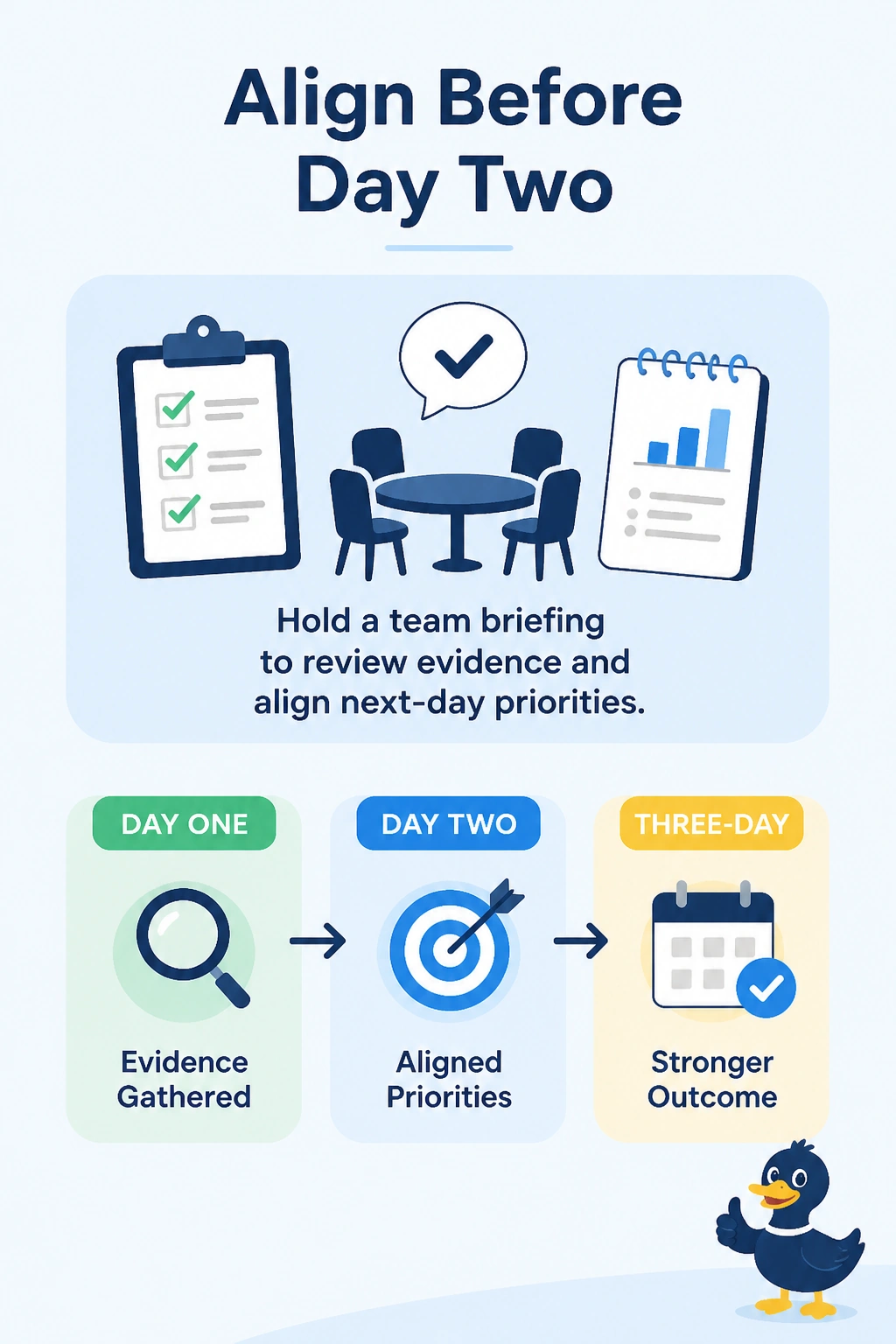
Multi-auditor assessments stay coherent and efficient when the lead auditor chooses to Hold a team briefing to review evidence and align next-day priorities. Comparing observations at the end of each day lets the team verify whether an issue seen on one line also appears elsewhere, identify missing evidence, and rebalance time for remaining interviews. Choosing to Send all unverified notes directly to the plant manager for immediate sign-off risks circulating incomplete or uncorroborated claims before the team has agreed on the facts. Choosing to Keep each auditor's observations isolated until the final closing meeting creates fragmented conclusions, duplicated questions, and last-minute contradictions in front of the auditee. Choosing to Cancel remaining scheduled interviews so the team can draft the final report abandons planned audit scope and leaves critical areas unexamined. As a caveat, keep daily briefings focused on factual evidence and next-day logistics so the team does not drift into premature judgment without proof. As an operational check, reserve a short daily team debrief slot on the audit schedule and log any follow-up threads assigned to specific auditors for the next morning.
Prefer to study offline? Printable PDF study book + test engine ($7.50, unofficial). These questions stay free here.